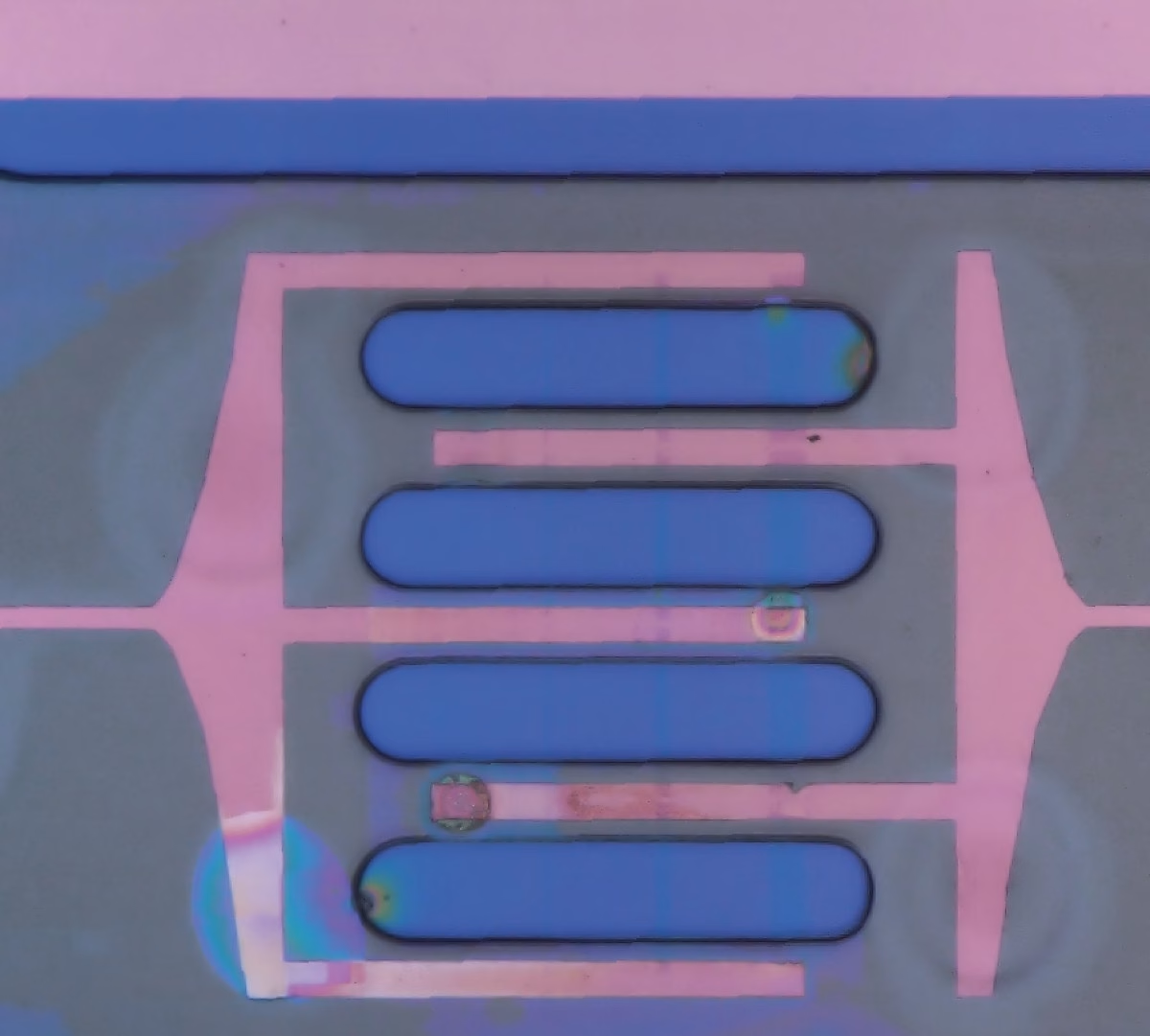
Archer Materials, an innovative technology company, has made significant strides in developing its Biochip graphene field effect transistor (gFET) sensors to detect and monitor chronic kidney disease. The company’s breakthrough involves directly growing graphene surfaces on devices, eliminating the need for transferring graphene from a wafer, which can lead to degradation. This proprietary process, based on molecular organic chemical vapour deposition (MOCVD), allows for the creation of high-sensitivity gFET devices that can be stored in normal air conditions without performance loss.
Archer’s team has successfully decorated the graphene surfaces with molecules that selectively bind to targets such as potassium ions, a crucial indicator of chronic kidney disease. This achievement builds upon previous work on protecting transferred graphene with ultra-thin films, addressing the common storage problem faced by commercial devices built using this technology. According to Greg English, Executive Chair of Archer, this milestone marks an important step towards developing at-home sensing and monitoring systems for renal patients, aligning with the company’s mission to improve healthcare accessibility through its Biochip technology.
Graphene-Based Biosensors: A Breakthrough in Chronic Kidney Disease Detection
Archer Materials has made a significant breakthrough in the development of graphene-based biosensors, specifically designed to detect and monitor chronic kidney disease. The company’s innovative Biochip technology utilizes graphene field effect transistor (gFET) sensors, which have shown promising results in initial experiments.
The gFET sensors are fabricated using a proprietary process based on molecular organic chemical vapor deposition (MOCVD), a traditional semiconductor technique. This method allows for the direct growth of graphene surfaces, eliminating the need for transferring graphene from a wafer to a device. The resulting devices have demonstrated enhanced performance and stability, with no significant degradation observed over a two-month period when stored in normal air conditions.
The Archer team has successfully decorated the gFET devices with molecules that selectively bind to specific targets, such as potassium ions, which are crucial in monitoring chronic kidney disease patients. This achievement builds upon previous work done by the team, where they protected transferred graphene with ultra-thin films to enable sensor storage in air without degradation.
Overcoming Storage Challenges
One of the significant advantages of Archer’s gFET sensors is their ability to be stored in normal air conditions without suffering from performance degradation. This addresses a common concern in the field, where devices built using traditional methods typically degrade over time when not stored in a nitrogen-controlled environment or vacuum. The proprietary growth process developed by Archer enables the mass production of high-sensitivity gFET devices, making them suitable for commercial applications.
The scalability of Archer’s process is critical in enabling the widespread adoption of graphene-based biosensors. By maintaining the high sensitivity of the as-fabricated gFET devices, the company can produce large quantities of these sensors while ensuring their performance and reliability.
Towards At-Home Sensing and Monitoring
In the coming months, Archer plans to build upon its initial success by producing first demonstrator data on the detection of relevant ions in liquid. This milestone marks a crucial step towards the development of at-home sensing and monitoring systems for chronic kidney disease patients. The ability to detect potassium levels in real-time could revolutionize the management of this condition, enabling patients to take proactive measures to prevent complications.
Greg English, Executive Chair of Archer, emphasized the significance of this breakthrough, stating that it brings the company closer to its mission of improving accessibility to healthcare through its Biochip technology. By integrating these biosensors on mobile electronic devices, Archer aims to empower individuals to take control of their health and wellbeing.
The Future of Graphene-Based Biosensing
The successful development of gFET sensors for chronic kidney disease detection opens up new avenues for the application of graphene-based biosensing in various fields. The ability to detect specific biomarkers or ions in real-time could have far-reaching implications for healthcare, environmental monitoring, and food safety.
As Archer continues to advance its Biochip technology, it is likely that we will see the emergence of novel applications and use cases for graphene-based biosensors. With their high sensitivity, scalability, and stability, these devices hold tremendous potential for transforming the way we approach disease diagnosis and management.
External Link: Click Here For More