

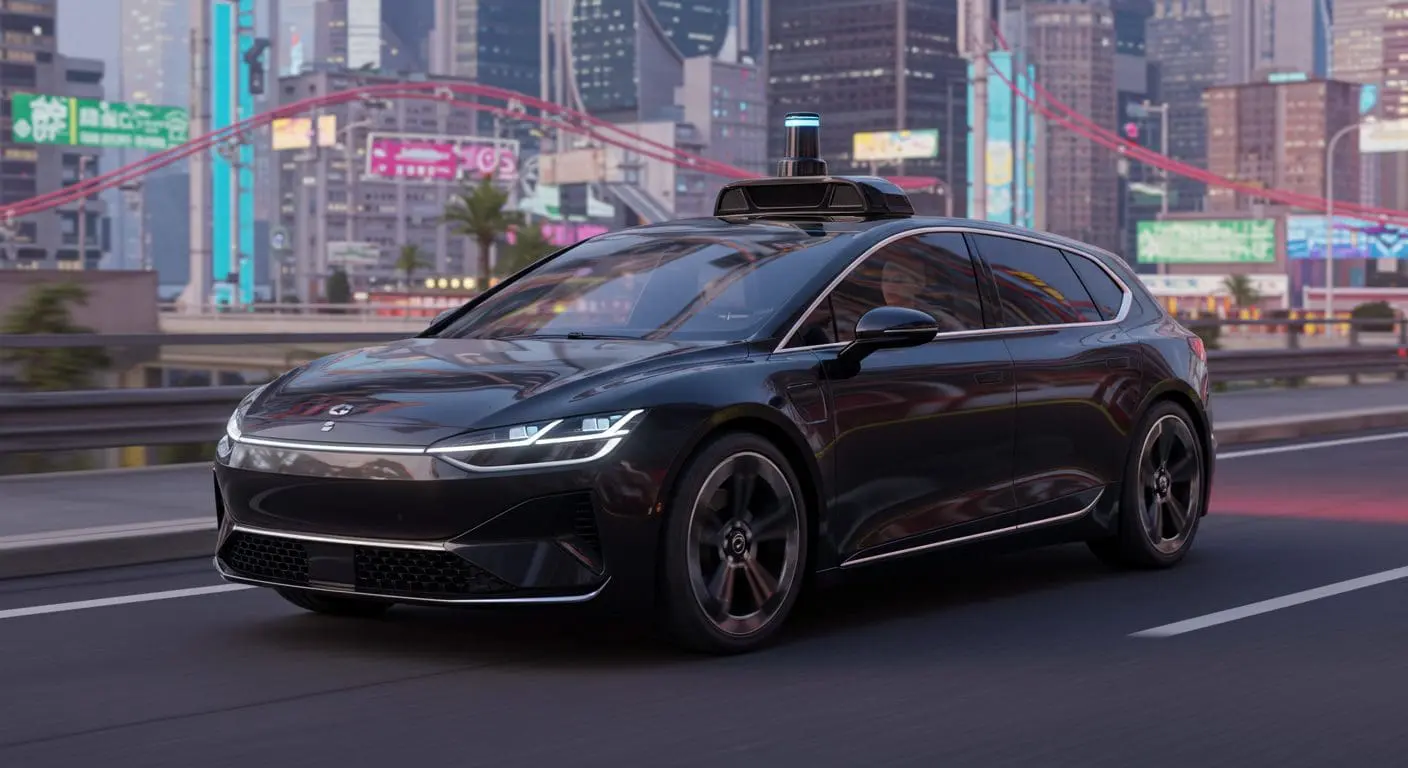
A recent industry survey, conducted in June 2025, reveals that automotive businesses are prioritising investment in artificial intelligence (AI), over-the-air (OTA) software updates, and advanced software capabilities. The study indicates a sector-wide expectation that these technologies will be central to future vehicle functionality and revenue streams, despite acknowledged challenges in implementation and scalability. The survey sampled multiple businesses within the automotive ecosystem to assess current strategies and anticipated developments in software-defined vehicles (SDVs).
AI Adoption in Automotive Software Defined Vehicles
The automotive industry increasingly relies on artificial intelligence (AI) within the development of Software-Defined Vehicles (SDVs). Researchers at Stanford University, alongside engineers at companies like Bosch and NVIDIA, are actively developing and refining these AI-driven systems. This collaborative effort between academia and industry is crucial for accelerating the development and deployment of SDV technology. This transition allows vehicles to evolve beyond their initial configuration, adapting to changing needs and incorporating new features throughout their lifespan.
OTA updates are essential for continuous improvement and feature addition in SDVs, facilitating the efficient and secure delivery of these updates while managing complexity and ensuring compatibility across diverse vehicle architectures. AI-driven diagnostics proactively identify and resolve software anomalies, reducing the need for physical servicing and minimising vehicle downtime. This proactive approach to maintenance not only enhances customer satisfaction but also lowers lifecycle costs for vehicle owners.
The integration of AI extends beyond core vehicle functions to encompass advanced driver-assistance systems (ADAS) and, ultimately, autonomous driving capabilities. Machine learning algorithms are employed for perception, decision-making, and control, enabling vehicles to navigate complex environments and respond to dynamic situations. Validating and verifying these AI-powered systems presents substantial engineering challenges, requiring rigorous testing and validation methodologies to ensure safety and reliability.
Over the Air Updates and Industry Challenges
The efficacy of OTA updates in Software-Defined Vehicles is intrinsically linked to robust cybersecurity protocols, preventing unauthorised access and mitigating the risk of data breaches. Automotive manufacturers are investing heavily in intrusion detection systems and encryption technologies to safeguard against increasingly sophisticated cyber threats, protecting both vehicle systems and user data. These investments are crucial for building trust and ensuring the widespread adoption of SDV technology.
Managing diverse vehicle populations, varying network conditions, and regional regulatory requirements presents a logistical challenge for manufacturers deploying Software-Defined Vehicles globally. Sophisticated orchestration tools and automated deployment strategies are necessary to ensure seamless updates and minimise disruption to vehicle owners. Optimising update delivery schedules and minimising data transfer volumes are critical for providing a positive user experience.
The scalability of OTA update infrastructure requires careful planning and investment, particularly as manufacturers expand their global reach. Maintaining a reliable and secure update system across diverse geographical regions and network infrastructures demands robust infrastructure and skilled personnel. The convergence of automotive and telecommunications technologies is driving the development of 5G-enabled OTA update systems, facilitating faster and more reliable software deployments.
Future Directions and Economic Viability
The integrity of AI algorithms within SDVs is subject to increasing scrutiny regarding bias and fairness, as machine learning models trained on limited or skewed datasets can exhibit unintended behaviours. Addressing these concerns requires rigorous testing and validation procedures, alongside the development of robust data governance frameworks. Ensuring fairness and transparency in AI-driven systems is crucial for building trust and promoting responsible innovation.
The development of formal verification techniques for AI-powered systems is gaining traction within the automotive industry, allowing for the mathematical proof of software correctness. These methods reduce the risk of undetected errors or vulnerabilities, offering a higher level of assurance compared to traditional testing methods. While computationally intensive, formal verification offers a promising approach to enhancing the safety and reliability of AI-driven systems.
Establishing secure and efficient data exchange mechanisms between vehicles, infrastructure, and cloud platforms is crucial for the economic viability of Software-Defined Vehicles. Data monetisation strategies, such as the sale of anonymised driving data or the provision of value-added services, offer potential revenue streams for manufacturers. However, concerns regarding data privacy and ownership must be addressed to foster consumer trust and ensure responsible data practices.
More information
External Link: Click Here For More


