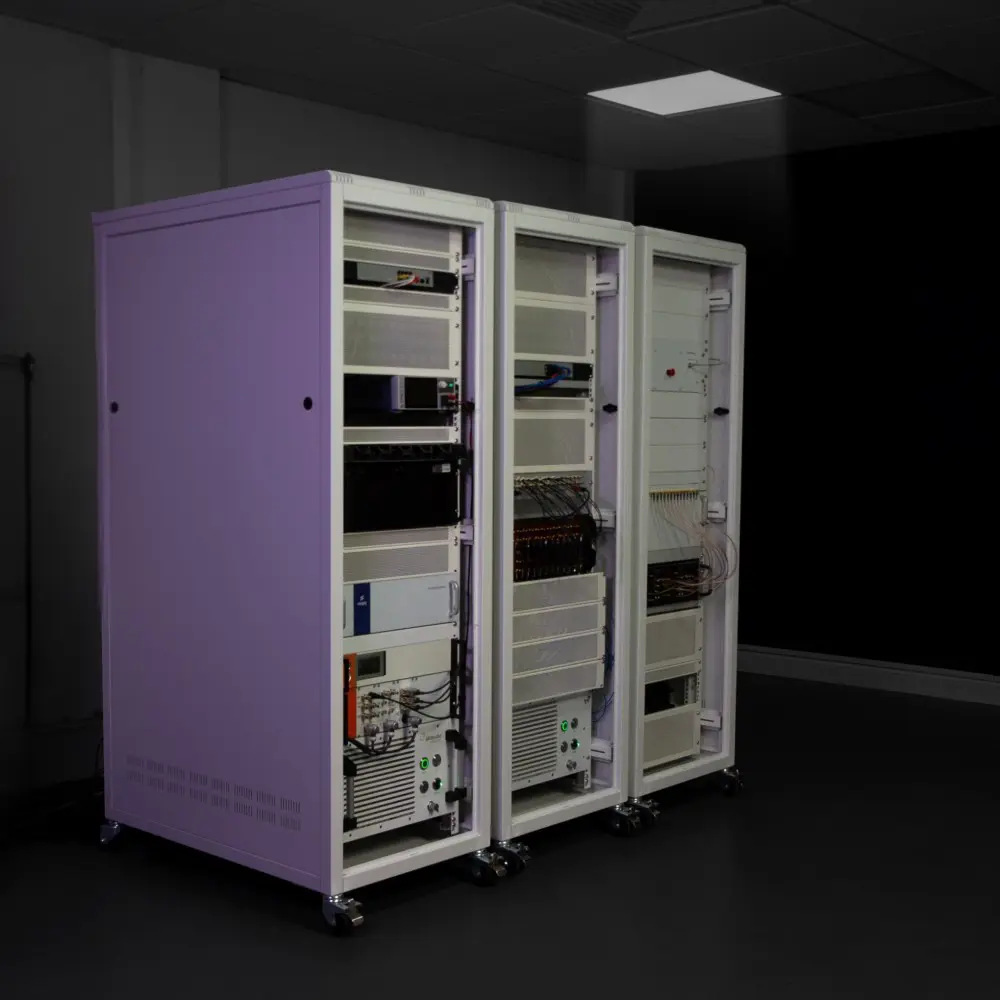
The race to harness quantum mechanics for practical computation has entered a new chapter. In late September, a photonic quantum computer was commissioned at the National Quantum Computing Centre (NQCC) in Oxfordshire, marking the first time a company‑owned, on‑premises system has been deployed in a national facility. The installation, led by Aegiq, demonstrates that light‑based processors can be integrated into existing research infrastructure and run complex algorithms without the need for specialised, remote access. It also signals a broader shift toward modular, developer‑ready quantum platforms that can be customised and scaled by the end user.
Building the On‑Premises Photonic Engine
At the heart of Aegiq’s system lies a hybrid architecture that marries compound‑semiconductor single‑photon emitters with silicon‑photonic waveguides. The emitters, engineered to release photons in the telecom band, feed directly into low‑loss silicon‑nitride circuits fabricated by LioniX International. This combination eliminates the need for cryogenic cooling and reduces the footprint of the quantum processing unit (QPU). The entire stack is reconfigurable through Aegiq’s Lightworks software development kit, which allows developers to upload quantum circuits and schedule runs remotely. In practice, a researcher can define a photonic circuit in code, push it to the NQCC network, and observe the results within minutes, sidestepping the long turnaround times that have historically hampered quantum experimentation.
The modularity of the design is a key differentiator. Each component , the photon source, the photonic chip, the interconnects , is an independent module that can be upgraded or replaced without re‑engineering the whole system. This approach mirrors the evolution of classical computing, where silicon chips, memory, and processors are assembled into a coherent architecture. By adopting a similar philosophy, Aegiq has created a platform that can evolve alongside advances in photonics, such as the forthcoming on‑demand telecom‑band sources that promise to push error rates below the thresholds required for fault‑tolerant operation.
From Lab to National Facility: De‑risking and Accelerating Deployment
Deploying a quantum computer in a national research centre carries more than a symbolic weight; it translates to tangible progress for the UK’s quantum ambitions. The NQCC’s partnership with Aegiq is guided by the Quantum Missions Pilot Programme, which prioritises projects that can deliver near‑term solutions to industry challenges. By co‑developing use cases with aerospace, defence, energy, and telecommunications stakeholders, the team can validate the platform against real‑world workloads. For instance, a pilot project with an energy company is already testing photonic circuits that optimise grid stability, while a defence partner explores quantum‑enhanced cryptographic protocols.
These collaborations serve to de‑risk the technology by exposing it to diverse operating conditions and identifying bottlenecks early. The modular architecture means that any performance shortfall can be addressed by swapping out a single module, rather than redesigning the entire machine. This agility reduces the time between research breakthroughs and commercial deployment. Moreover, the fact that the system runs entirely on‑premises means that sensitive data can be processed locally, alleviating concerns about data sovereignty and cyber‑security that often accompany cloud‑based quantum services.
Supply Chain and Collaboration: A UK‑centric Ecosystem
The successful commissioning of the photonic QPU is a testament to the strength of the UK’s quantum supply chain. Funding from Innovate UK’s Small Business Research Initiative (SBRI) enabled the NQCC to acquire a custom QPU from QuiX Quantum, while low‑loss photonic components were supplied by LioniX International. Razor and Fraunhofer CAP contributed critical expertise in photonic integration and system optimisation. Together, these partners form a tightly knit ecosystem that spans academia, industry, and government.
This collaborative model is not only efficient but also strategically important. By keeping key capabilities , from photon source fabrication to photonic chip design , within the UK, the country can maintain control over the intellectual property and supply chain resilience of its quantum technology. The partnership also creates a pipeline for talent development, as engineers and scientists work side by side on cutting‑edge hardware. The resulting knowledge transfer ensures that the UK remains competitive as the quantum industry matures and expands into sectors such as artificial intelligence, logistics optimisation, and secure communications.
Concluding Insight
The commissioning of a fully on‑premises photonic quantum computer at the National Quantum Computing Centre marks a decisive step toward practical, scalable quantum technology. By combining a modular, reconfigurable hardware stack with a developer‑friendly software interface, Aegiq has delivered a platform that can be customised, upgraded, and deployed across a range of industries. The close collaboration between national research institutions, private companies, and government funding bodies demonstrates a model for accelerating quantum adoption while safeguarding critical supply chains. As the UK continues to invest in quantum missions and nurture its domestic ecosystem, the lessons learned from this deployment will inform the next generation of quantum processors, bringing the promise of quantum advantage closer to reality.