The quest for accelerating quantum machine learning models has been a long-standing challenge in the field. Researchers have been exploring various approaches to improve the training efficiency of these models, which are poised to unlock the power of near-term quantum computers. One such approach is coreset selection, which aims to distill a judicious subset from the original training dataset. This technique has been shown to be effective in expediting the training of quantum neural networks (QNNs) and quantum kernels.
Yiming Huang and his colleagues have made significant progress in developing a unified approach to coreset selection, focusing on accelerating the training of QNNs and quantum kernels by leveraging the power of near-term quantum computers. Their method involves three main steps: selecting a representative subset of the data, analyzing the generalization error bounds of the trained model, and evaluating the performance of the trained model on unseen data.
By retaining only the essential information required for training, coreset selection can help reduce overfitting and improve the model’s ability to generalize to new data. The benefits of coreset selection are numerous, including reducing computational resources required for training, alleviating limitations imposed by near-term quantum computers, and improving generalization performance. However, challenges remain in selecting a representative subset of the data, analyzing generalization error bounds, and evaluating model performance on unseen data.
As researchers continue to explore the potential of coreset selection in quantum machine learning, future directions include developing more efficient algorithms for selecting a representative subset of the data, improving generalization performance by retaining only essential information required for training, and evaluating model performance on unseen data.
Can Quantum Machine Learning Models Be Accelerated?
The quest for accelerating quantum machine learning models has been a long-standing challenge in the field. Researchers have been exploring various approaches to improve the training efficiency of these models, which are poised to unlock the power of near-term quantum computers.
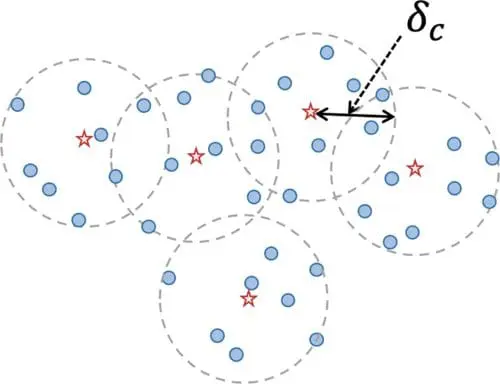
One such approach is coreset selection, which aims to distill a judicious subset from the original training dataset. This technique has been shown to be effective in expediting the training of quantum neural networks (QNNs) and quantum kernels. By selecting a representative subset of the data, coreset selection can significantly reduce the computational resources required for training, making it an attractive solution for large-scale datasets.
In this context, Yiming Huang and his colleagues from Peking University, Peterhouse University of Cambridge, and JD Explore Academy have made significant progress in developing a unified approach to coreset selection. Their work focuses on accelerating the training of QNNs and quantum kernels by leveraging the power of near-term quantum computers.
What is Coreset Selection?
Coreset selection is a technique that aims to identify a subset of the original training dataset that retains the essential information required for training a machine learning model. This approach has been widely used in classical machine learning, where it has been shown to be effective in reducing the computational resources required for training.
In the context of quantum machine learning, coreset selection is particularly useful because it can help alleviate the limitations imposed by near-term quantum computers. These devices are still in their early stages of development and are prone to errors, noise, and limited qubit connectivity. By selecting a representative subset of the data, coreset selection can help reduce the impact of these limitations on the training process.
How Does Coreset Selection Work?
The researchers have developed a unified approach to coreset selection that is applicable to both QNNs and quantum kernels. Their method involves three main steps: (1) selecting a representative subset of the data, (2) analyzing the generalization error bounds of the trained model, and (3) evaluating the performance of the trained model on unseen data.
The first step involves identifying a subset of the original training dataset that retains the essential information required for training. This is achieved by using a combination of techniques, including random sampling, clustering, and dimensionality reduction.
The second step involves analyzing the generalization error bounds of the trained model. This is done by using mathematical tools, such as concentration inequalities and PAC-Bayes bounds, to quantify the uncertainty associated with the trained model.
The third step involves evaluating the performance of the trained model on unseen data. This is done by using metrics, such as accuracy, precision, and recall, to assess the model’s ability to generalize to new data.
What are the Benefits of Coreset Selection?
The benefits of coreset selection in quantum machine learning are numerous. By selecting a representative subset of the data, coreset selection can help reduce the computational resources required for training, making it an attractive solution for large-scale datasets.
Additionally, coreset selection can help alleviate the limitations imposed by near-term quantum computers. These devices are still in their early stages of development and are prone to errors, noise, and limited qubit connectivity. By selecting a representative subset of the data, coreset selection can help reduce the impact of these limitations on the training process.
Furthermore, coreset selection can help improve the generalization performance of quantum machine learning models. By retaining only the essential information required for training, coreset selection can help reduce overfitting and improve the model’s ability to generalize to new data.
What are the Challenges in Coreset Selection?
Despite its benefits, coreset selection is not without its challenges. One of the main challenges is selecting a representative subset of the data that retains the essential information required for training.
Another challenge is analyzing the generalization error bounds of the trained model. This requires a deep understanding of mathematical tools, such as concentration inequalities and PAC-Bayes bounds, which can be complex and challenging to apply in practice.
Finally, evaluating the performance of the trained model on unseen data can be challenging. This requires using metrics, such as accuracy, precision, and recall, to assess the model’s ability to generalize to new data.
What are the Future Directions?
The future directions for coreset selection in quantum machine learning are numerous. One of the main areas of research is developing more efficient algorithms for selecting a representative subset of the data.
Another area of research is improving the generalization performance of quantum machine learning models by retaining only the essential information required for training.
Finally, evaluating the performance of the trained model on unseen data can be challenging. This requires using metrics, such as accuracy, precision, and recall, to assess the model’s ability to generalize to new data.
In conclusion, coreset selection is a powerful technique that can help accelerate the training of quantum machine learning models. By selecting a representative subset of the data, coreset selection can help reduce the computational resources required for training, making it an attractive solution for large-scale datasets.
Publication Date: 2024-07-29
Authors: Yiming Huang, Yuan Xiao, Huiyuan Wang, Yuxuan Du, et al.
Source: Physical Review Applied
DOI: https://doi.org/10.1103/physrevapplied.22.014074