

Various collaborations and partnerships are forming among vendors, academic institutions, governments, and large enterprises in the quantum computing industry. These partnerships are driven by the need for quantum-native skills and the recognition that collaboration is critical for the technology to reach its full potential.
A survey of UK executives found that 65% of respondents were highly interested in quantum computing, with 18% believing it would significantly impact their industry by 2022 and 33% thinking it would arrive between 2026 and 2030. Enterprises in diverse sectors, such as media and advertising, recognize the potential advantages of quantum computing and explore its use in search algorithms and other applications such as optimization, logistics, finance, security, and materials science.
Quantum Vendor Insight from Technology Business Research
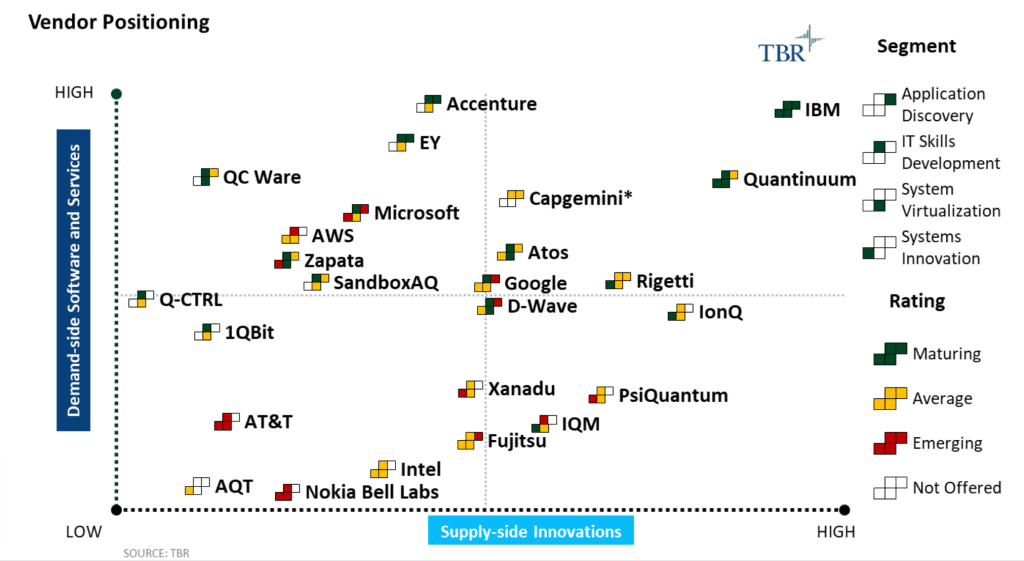
The report’s authors have provided an infographic on vendor positioning in the Quantum Sector. On a national front, the US government is focusing on establishing industry standards for quantum technology and protecting the nascent quantum ecosystem through proposed legislation. Private sector companies are competing to create commercial quantum systems. In Europe, individual countries such as France, Germany, the UK, and the Netherlands invest in quantum technology, while the EU backs startups such as IQM. China is making significant investments in quantum technology, which has raised concerns about its potential national security implications. Japan has invested $270 million over ten years and is leading in developing quantum information science career tracks. South Korea invests $40 million over the next five years to develop core quantum technologies and establish a research ecosystem.
Read more on the Quantum Insight study from Technology Business Research.