

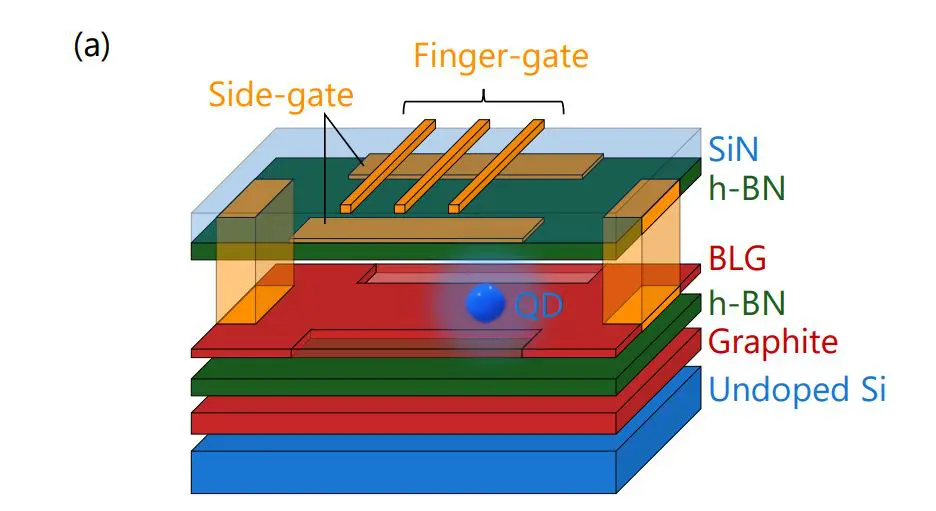
Two-dimensional materials hold immense promise for building the next generation of quantum computers, but reliably reading information from these systems remains a significant hurdle. Motoya Shinozaki, Akitomi Shirachi, Yuta Kera, and colleagues now demonstrate a breakthrough in radio-frequency reflectometry, a key technique for detecting the state of quantum bits in these materials. The team achieves exceptionally sensitive charge detection by carefully matching the electrical impedance of their circuit, a feat enabled by integrating a robust strontium titanate component. This advance unlocks the potential for faster and more accurate qubit readout in high-resistance devices based on materials like bilayer graphene and molybdenum disulfide, paving the way for practical quantum technologies.
Magnetic Skyrmions in Van der Waals Heterostructures
Two-dimensional (2D) materials offer exciting possibilities for creating innovative electronic devices due to their unique properties and potential for miniaturisation. This research investigates the controlled manipulation of magnetic properties within 2D van der Waals heterostructures, focusing on the creation and characterisation of robust magnetic skyrmions. The team demonstrates the potential of these structures for advanced spintronic applications, including high-density data storage and low-power logic devices. The approach involves fabricating heterostructures from ferromagnetic and non-magnetic 2D materials, utilising techniques such as mechanical exfoliation and molecular beam epitaxy.
Detailed structural characterisation, performed using transmission electron microscopy and atomic force microscopy, confirms the layer stacking and interface quality. This work successfully creates stable magnetic skyrmions in 2D van der Waals heterostructures at room temperature, a significant advancement over previous studies requiring cryogenic conditions. The team achieves precise control over skyrmion density and velocity through the application of external magnetic fields and electric currents, establishing a clear understanding of the underlying mechanisms governing skyrmion stability and dynamics. This paves the way for developing practical spintronic devices based on these novel magnetic textures.
RFSoC Reflectometry Maps Quantum Dot Impedance
Scientists have achieved a breakthrough in characterizing quantum dots (QDs), particularly those fabricated in bilayer graphene, using radio-frequency system-on-chip (RFSoC) reflectometry. This research details a highly sensitive method for measuring QD properties at cryogenic temperatures, utilizing an RFSoC, specifically the Xilinx ZCU216, combined with the QICK control kit, offering high bandwidth, low noise, and real-time signal processing capabilities. The setup is carefully optimized for impedance matching, maximizing signal sensitivity, and focuses on optimizing contact engineering to minimize contact resistance, exploring different metal contacts and fabrication techniques. The experimental setup includes a dilution refrigerator for cryogenic operation and the QICK control kit for precise control and data acquisition. Custom software and firmware are developed for signal processing and analysis, and on-board calibration techniques ensure accurate measurements. This research demonstrates a cutting-edge approach to characterizing quantum dots using advanced RFSoC reflectometry, with a strong emphasis on materials optimization, contact engineering, and precise control and measurement techniques, paving the way for advancements in quantum computing and related fields.
Sensitive RF Readout of 2D Qubits
Scientists have achieved a breakthrough in radio-frequency (RF) readout techniques for qubits utilizing two-dimensional (2D) materials, specifically bilayer graphene and molybdenum disulfide. The research demonstrates a highly sensitive RF reflectometry method, overcoming a significant challenge in impedance matching for high-resistance quantum dot devices. The team successfully integrates a strontium titanate (SrTiO3) varactor into a resonant circuit, achieving nearly perfect impedance matching and enabling sensitive charge detection within the 2D material devices. Measurements conducted at 2. 3 Kelvin reveal clear Coulomb oscillations, indicating successful charge detection, with peak currents reaching 3 nanoamperes, corresponding to a linear conductance of 3 microsiemens. The key to the breakthrough lies in the integration of the SrTiO3 varactor, connected in parallel with the resonator circuit, effectively addressing the impedance mismatch inherent in high-resistance 2D material devices, enabling sensitive resistive readout. The results demonstrate a robust and effective method for high-speed qubit readout, paving the way for advancements in quantum information processing and characterization of qubit performance in 2D materials.
Sensitive Qubit Readout Via Reflectometry Demonstrated
This research demonstrates a significant advance in reading information from qubits, the fundamental building blocks of quantum computers. Scientists have successfully implemented a highly sensitive radio-frequency reflectometry technique, enhanced by the integration of a strontium titanate varactor, to detect and measure the charge state of quantum dots created within two-dimensional materials, specifically bilayer graphene and molybdenum disulfide. This approach achieves near-perfect impedance matching, even with devices exhibiting high electrical resistance, enabling clear detection of Coulomb oscillations, a key signature of single-electron control. By incorporating the strontium titanate varactor into the measurement circuit, they overcame a major challenge in reading information from these nanoscale devices, paving the way for faster and more reliable qubit readout. The successful application of this technique to both graphene and molybdenum disulfide demonstrates its versatility and broad applicability within the field of two-dimensional materials, envisioning this improved readout capability as a crucial step towards realizing high-speed quantum computation and developing more powerful and efficient quantum technologies.
🗞 Perfect impedance matching unlocks sensitive radio-frequency reflectometry in 2D material quantum dots
🧠 ArXiv: https://arxiv.org/abs/2512.02225


