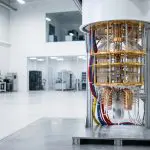
Alessandra Lo Fiego, Felix Donaldson, Umesh Vivekananda, Mete Atatüre, John J.L. Morton, and Molly M. Stevens detail recent advances in quantum biosensing and its potential to transform healthcare in a Nature Reviews Physics commentary published November 13, 2025. Their review highlights emerging technologies leveraging quantum phenomena, including nitrogen-vacancy (NV) centers in nanodiamonds, luminescent organic radicals, and MXene quantum dots, to achieve ultrasensitive detection of biological signals. These approaches, demonstrated through advancements like optically pumped magnetoencephalography and intracellular nanorheometry, promise enhanced diagnostic capabilities and functional biological imaging at scales previously unattainable with classical methods.
Quantum Biosensing: An Overview
Quantum biosensing represents a rapidly developing field leveraging quantum mechanics to dramatically enhance biological detection. Unlike classical methods, it aims for sensitivity at the single-molecule level. Technologies employed include nitrogen-vacancy (NV) centers in diamonds, fluorescent nanoparticles, and even protein-based qubits. Recent advances demonstrate detection of biomarkers with unprecedented precision – for example, nanodiamond sensors are achieving sensitivities down to zeptomolar (10-21 molar) concentrations, promising earlier disease diagnosis and more effective personalized medicine.
A key advantage of quantum sensors lies in their ability to function non-invasively. Magnetoencephalography (MEG) utilizing optically pumped sensors is a prime example, offering improved spatial resolution (down to millimeters) compared to traditional MEG systems. Furthermore, researchers are developing biocompatible integrated chips – like the Q-BiC platform – enabling in vitro and in vivo spin-based quantum sensing. This allows real-time monitoring of cellular processes, including temperature and mechanical properties, at the nanoscale.
While still largely in the research phase, quantum biosensing is moving towards clinical translation. Current efforts focus on overcoming challenges like sensor stability, biocompatibility, and signal processing complexity. Beyond diagnostics, applications extend to drug discovery, fundamental biological research, and even real-time monitoring of individual cell behavior. Funding initiatives, such as the UK’s Quantum Biomedical Sensing Research Hub, are accelerating progress towards widespread adoption of these revolutionary technologies.
Key Quantum Sensing Technologies
Quantum sensing is rapidly advancing biomedical diagnostics, leveraging phenomena like superposition and entanglement to achieve unprecedented sensitivity. Nanodiamonds containing nitrogen-vacancy (NV) centers are key, functioning as nanoscale sensors detecting minute changes in magnetic fields, temperature, and even mechanical stress. Recent work demonstrates in vivo measurements of neuronal activity via optically-pumped magnetoencephalography, and simultaneous nanorheometry/nanothermometry within cells – pushing the boundaries of what’s measurable at a cellular level.
Another promising avenue utilizes spin-enhanced diagnostics. Researchers are developing sensors based on organic radicals and fluorescent proteins engineered to exhibit quantum properties. These approaches aim for single-molecule detection, offering potential for early disease biomarkers. Furthermore, MXene quantum dots are emerging as highly sensitive optoelectronic sensors, showing promise in both diagnostics and environmental monitoring, demonstrating versatility beyond traditional biomedical applications.
Integrated, biocompatible chips like the Q-BiC platform are crucial for translating these technologies in vivo. These systems combine quantum sensors with microfluidics and electronics, enabling real-time monitoring within living systems. Sensitivity is being achieved at the attomolar level, meaning detection of just a few molecules. This level of precision has the potential to revolutionize early disease detection and personalized medicine.
Challenges and Future Directions
Quantum biosensing, while promising, faces significant hurdles in translating lab results to clinical impact. Current limitations center around maintaining quantum coherence – the delicate state enabling enhanced sensitivity – within noisy biological environments. Researchers are actively exploring strategies like optimizing sensor materials (nanodiamonds, MXene quantum dots) and employing advanced shielding techniques to extend coherence times. Achieving robust, repeatable signals in vivo requires overcoming decoherence, which currently limits detection of subtle biomarkers and precise physiological measurements.
A key challenge lies in scaling up quantum sensor fabrication and integration with existing biomedical devices. Many sensors require cryogenic cooling or complex control systems, hindering portability and widespread use. The development of “Q-BiC” – biocompatible integrated chips – represents progress, but further miniaturization and simplification are crucial. Simultaneously, improving data acquisition and analysis methods is essential to extract meaningful signals from the complex data streams generated by these highly sensitive devices.
Future directions prioritize biocompatibility and long-term stability. Researchers are investigating novel coatings and surface modifications to minimize immune responses and biofouling, ensuring sensors can function reliably in vivo for extended periods. Furthermore, exploring multi-parameter sensing – simultaneously detecting temperature, pH, and specific biomarkers – promises a more comprehensive understanding of biological processes. This will require sophisticated signal processing algorithms and integrated sensor arrays.


See today’s quantum computing news on Quantum Zeitgeist for the latest breakthroughs in qubits, hardware, algorithms, and industry deals.