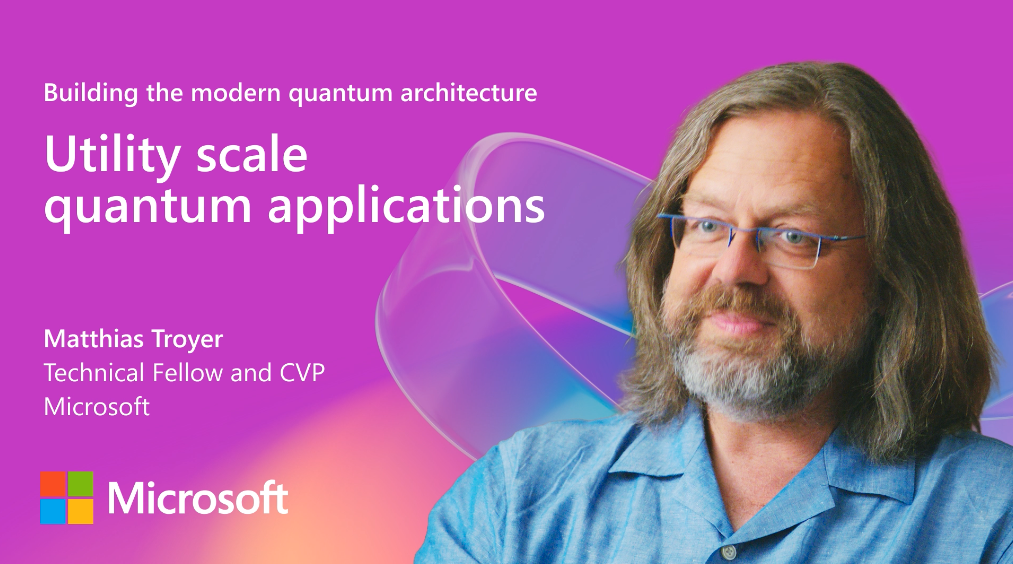
Insights Industry Insights has launched “Building the Modern Quantum Architecture,” a lecture series detailing the foundational elements of scalable quantum computing, beginning with Part 1 exploring current system designs. The series analyzes approaches from leading institutions including Google, IBM, IonQ, and Quantinuum, focusing on differing qubit modalities, superconducting transmon qubits, trapped ions, and neutral atoms, and their respective control and interconnectivity challenges. This detailed examination of architectural trade-offs, including cryogenic requirements and control plane complexity, aims to provide a comprehensive understanding of the engineering hurdles in realizing fault-tolerant quantum processors exceeding 1,000 qubits.
Quantum Architecture: Series Overview
This “Building the Modern Quantum Architecture” lecture series dives into the crucial infrastructure underpinning practical quantum computing. Unlike simply building qubits, the focus is on controlling them at scale. Initial modules explore cryogenic control systems – vital as superconducting qubits require temperatures near absolute zero (approximately 15 millikelvin). Understanding thermal budgets, wiring complexity (hundreds of coaxial lines per chip), and signal integrity are paramount. This isn’t just about cooling; it’s about maintaining qubit coherence, the fragile quantum state, for usable computation times.
The series emphasizes the shift from lab-scale prototypes to modular, scalable architectures. Current quantum processors typically feature tens to hundreds of qubits. Achieving the millions needed for fault-tolerant quantum computation demands interconnectivity. Specifically, modules detail cryogenic co-processors, essentially specialized control electronics placed within the dilution refrigerator. These minimize signal latency and reduce heat load, allowing for denser qubit arrays and faster gate operations, critical for complex algorithms.
Beyond hardware, the series investigates software-defined control stacks. A key challenge is precisely calibrating and controlling each qubit, often requiring complex pulse shaping and feedback loops. Researchers are exploring techniques like cross-resonance gates, allowing for two-qubit operations with fidelities exceeding 99.9%. This focus on control software is vital; it bridges the gap between the physics of qubits and the algorithms they run, enabling more efficient resource allocation and error mitigation strategies.
Exploring Foundational Quantum Building Blocks
Quantum computation hinges on qubits, fundamentally different from classical bits. Instead of representing 0 or 1, qubits leverage superposition, existing as a probabilistic combination of both states simultaneously. This is quantified by the Bloch sphere, a unit sphere visualizing qubit state, with poles representing 0 and 1. Crucially, this allows a single qubit to encode far more information than a bit. Achieving stable superposition, however, requires isolating qubits from environmental noise – a major engineering hurdle impacting coherence times, currently measured in microseconds for many leading platforms.
Beyond superposition, entanglement forms another cornerstone. When two qubits are entangled, their fates are intertwined, measuring the state of one instantly determines the state of the other, regardless of distance. Mathematically, this correlation isn’t simply statistical; it violates Bell’s inequalities, experimentally verified with photons since the 1980s. Building systems with many entangled qubits, necessary for complex calculations, is exceptionally challenging, as entanglement is easily degraded by decoherence and interactions with the environment.
Current qubit technologies vary significantly. Superconducting transmon qubits, operating near absolute zero (~15mK), are a leading contender, with IBM‘s ‘Osprey’ processor boasting 433 qubits. Trapped ions, using individual ionized atoms controlled by lasers, offer longer coherence times (seconds) but scaling remains difficult. Topological qubits, theoretically robust against noise, are still largely in the research phase. Progress in any of these foundational building blocks directly impacts the feasibility of realizing powerful, fault-tolerant quantum computers.
See today’s quantum computing news on Quantum Zeitgeist for the latest breakthroughs in qubits, hardware, algorithms, and industry deals.