

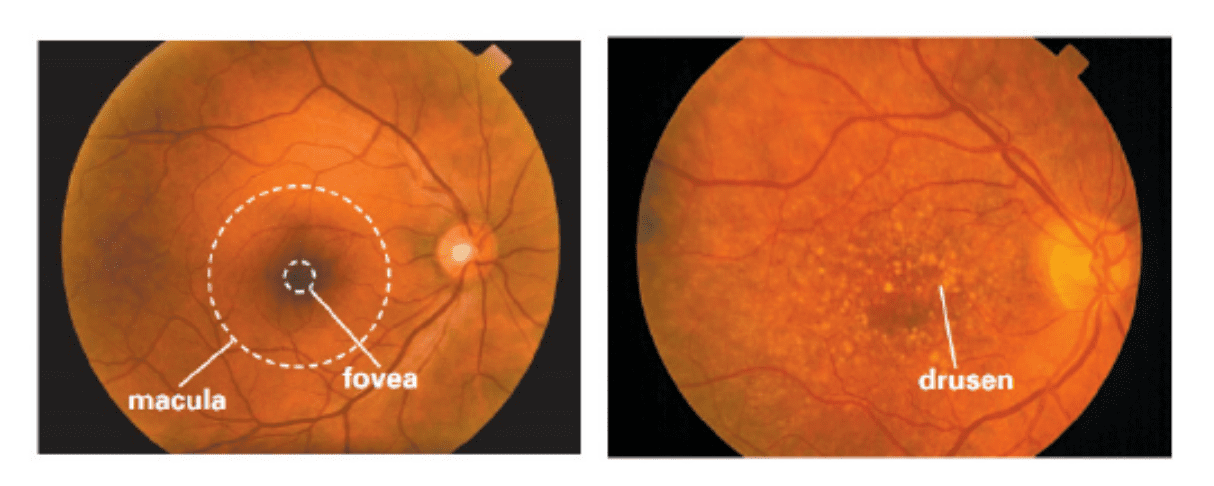
Age-related macular degeneration represents a significant and growing cause of vision loss, particularly in an ageing population, and accurate, early detection of lesions is crucial for effective treatment. Valentyna Starodub and Mantas Lukoševičius, from Kaunas University of Technology, alongside their colleagues, now demonstrate a substantial advance in automated lesion detection from standard retinal images. Building upon the widely used U-Net architecture, the team meticulously evaluated and refined both the model’s structure and training process, addressing the challenges posed by imbalanced datasets where some lesion types are far rarer than others. The resulting framework surpasses all previous results achieved in the ADAM challenge, a major research competition and dataset focused on retinal image analysis, offering a promising step towards more accessible and accurate diagnostic tools for this debilitating condition.
Automated AMD Lesion Segmentation with Deep Learning
This research details the development of a deep learning framework for automated detection and segmentation of age-related macular degeneration (AMD) lesions in fundus images, aiming to improve the accuracy of AMD area estimation and aid in diagnosis and monitoring. The team achieved state-of-the-art performance in segmenting AMD lesions, surpassing previous methods from the ADAM challenge, and highlights the crucial role of both the encoder architecture and the loss function in achieving accurate segmentation. Pre-training the encoder significantly improved performance, while comparisons revealed that Weighted Binary Cross-Entropy provided the most consistent and reliable results. The framework effectively addresses key challenges in AMD lesion segmentation, including class imbalance and the difficulty of segmenting rare lesion types. By utilizing a U-Net architecture and carefully selecting the loss function, the system overcomes limitations of previous approaches and contributes to the field of medical image analysis by providing a robust and accurate framework for AMD lesion segmentation, potentially aiding in early diagnosis and improved patient care. The source code is publicly available on GitHub, promoting reproducibility and further research.
EfficientNet U-Net for AMD Lesion Segmentation
This research pioneers a deep learning framework for the automated detection of age-related macular degeneration (AMD) from standard color fundus images, addressing a critical need for accessible and cost-effective diagnostic tools. Recognizing the limitations of invasive techniques, the study focuses on improving semantic segmentation of lesions directly from standard images, and engineered a system based on the U-Net architecture. The researchers systematically evaluated multiple approaches to optimize its performance, selecting and adapting efficient deep network backbones, specifically variants of EfficientNet, initialized with weights pre-trained on the ImageNet dataset. This transfer learning strategy accelerates training and enhances generalization, particularly important when working with limited medical image data.
The researchers harnessed the power of compound scaling within EfficientNet, leveraging depthwise separable convolutions to reduce computational complexity while maintaining accuracy. Experiments employed rigorous evaluation on the ADAM challenge dataset, providing a robust benchmark for comparison, and demonstrably outperforms all prior submissions, achieving state-of-the-art multi-class segmentation of different AMD lesion types. The source code for this innovative system is freely available, facilitating further research and clinical translation.
AMD Lesion Detection Surpasses Benchmark Performance
Scientists achieved a significant breakthrough in the automatic detection of age-related macular degeneration (AMD), a leading cause of irreversible vision impairment. This work focuses on semantic segmentation of AMD lesions in non-invasive RGB fundus images, offering a cost-effective and accessible alternative to more complex imaging techniques, and established a new benchmark by surpassing all prior submissions in the ADAM challenge, the most comprehensive AMD detection competition and dataset available. The core of this achievement lies in a refined deep learning framework built upon the U-Net architecture, leveraging the power of EfficientNet as a backbone encoder. Initializing EfficientNet with weights pre-trained on the ImageNet dataset allowed the model to benefit from transfer learning, improving both generalization and convergence speed.
Experiments involved evaluating different EfficientNet variants to optimize the balance between accuracy and computational efficiency, and demonstrate a substantial improvement in multi-class segmentation of various AMD lesion types. This advancement promises to facilitate earlier and more accurate diagnoses of AMD, potentially guiding effective treatment strategies and reducing the risk of vision loss. The source code developed during this research is freely available, enabling further innovation and collaboration within the field of biomedical image analysis.
Automated AMD Lesion Segmentation with High Accuracy
This research successfully developed a new framework for automated detection of age-related macular degeneration lesions in fundus images, a leading cause of vision impairment. By building upon a U-Net architecture and incorporating an ImageNet-pretrained EfficientNet encoder alongside a weighted binary cross-entropy loss function, the team achieved state-of-the-art performance in multi-class segmentation of various AMD lesion types, surpassing previous methods demonstrated in the ADAM challenge, and represents a significant advance in automated AMD diagnosis. The improvements in segmentation accuracy demonstrate the potential for this framework to assist in the non-invasive diagnosis of AMD, offering a valuable tool for medical professionals. The team has made the source code publicly available, facilitating further research and development in this important area of medical image analysis.
👉 More information
🗞 Surpassing state of the art on AMD area estimation from RGB fundus images through careful selection of U-Net architectures and loss functions for class imbalance
🧠 ArXiv: https://arxiv.org/abs/2510.26778

