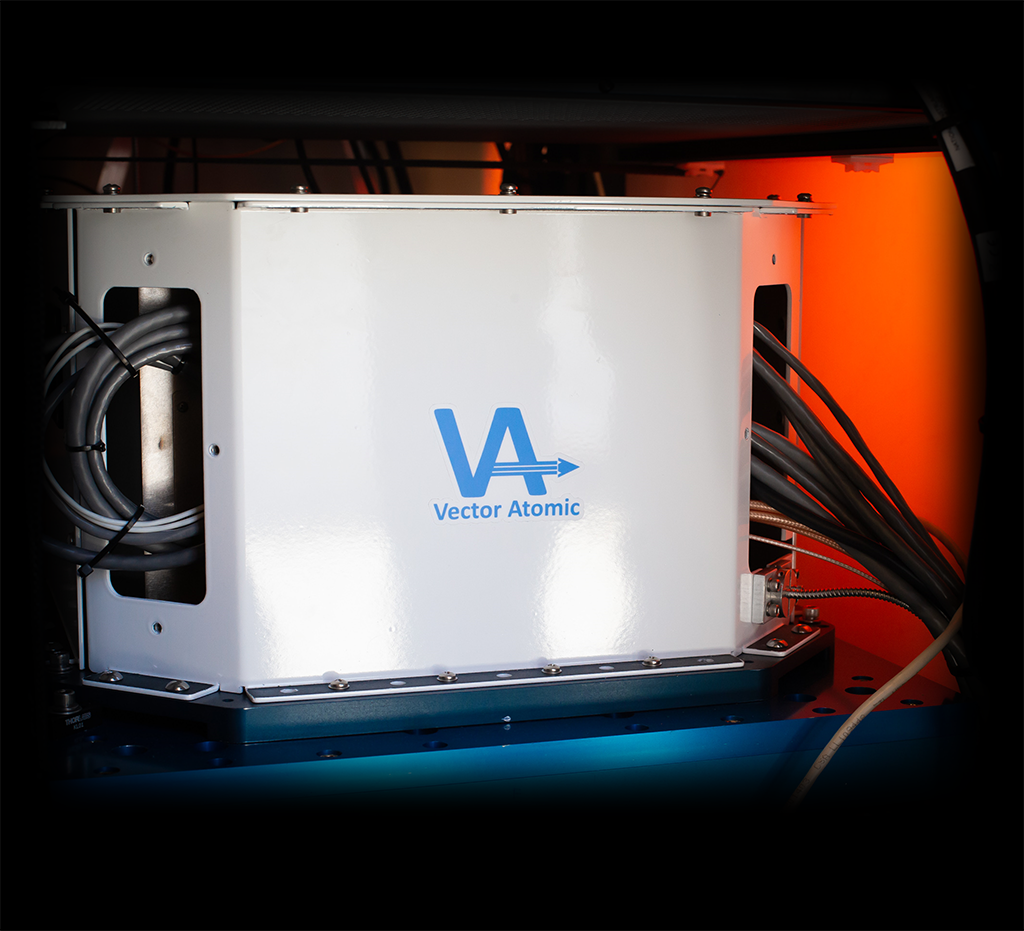
IonQ, the company that has positioned itself at the front of the quantum‑computing race, announced on October 7 that it had closed an all‑stock deal with Vector Atomic, a California‑based quantum‑sensing firm. The purchase brings over 75 employees, including a roster of scientists and engineers who have spent years delivering picosecond‑level timing, ultra‑precise inertial sensors and field‑ready quantum clocks to submarines, aircraft and space vehicles. With the transaction, IonQ now owns the world’s most advanced precision atomic‑clock technology, a 1,000‑fold improvement in GPS accuracy, and a suite of hardware that can be integrated into its existing quantum‑computing and networking stack.
From Quantum Circuits to Quantum Clocks
Vector Atomic’s core strength lies in its ability to generate timing signals with picosecond precision. Such resolution is a thousand times finer than the best conventional GPS receivers, which typically deliver timing accuracy in the nanosecond range. The company’s clocks and gyroscopes have already been tested in demanding environments: from sea‑proven gravimetry that can map subtle variations in the Earth’s gravitational field to airborne clocks that maintain synchronisation while a jet cruises at Mach 2, and space‑ready gyroscopes that have flown on the U.S. Department of Defense’s X‑37B orbital test vehicle. These field‑validated systems demonstrate that quantum sensing can survive the rigours of real‑world deployment, a key hurdle that has kept many quantum‑based technologies in the laboratory.
The acquisition gives IonQ the ability to embed this timing precision directly into its quantum processors. By synchronising qubits with picosecond accuracy, error rates can be reduced and gate operations can be performed more reliably. In quantum computing, timing jitter is a significant source of decoherence; the integration of Vector Atomic’s hardware could therefore bring IonQ’s existing 127‑qubit machines closer to the fault‑tolerant regime that is required for large‑scale, practical applications.
“At Vector Atomic, we’ve focused on developing quantum sensors and clocks that perform in the most demanding environments, from undersea to space,” said Dr. Jamil Abo‑Shaeer, CEO and co‑founder of Vector Atomic. , Dr. Jamil Abo‑Shaeer, CEO and Co‑founder of Vector Atomic
A Full‑Stack Quantum Playbook
IonQ’s strategy has been to build a comprehensive portfolio that spans the entire quantum stack, from hardware to software to networking. The Vector Atomic acquisition is the latest in a string of moves that began last year with the purchase of Oxford Ionics, Capella Space, Lightsynq Technologies and Qubitekk, and the acquisition of a majority stake in ID Quantique. Together, these companies bring expertise in ion‑trap qubits, satellite imaging, photonic interconnects and quantum key distribution.
The company’s flagship quantum computers, IonQ Forte and IonQ Forte Enterprise, have already delivered 20‑fold performance gains for partners such as Amazon Web Services, AstraZeneca and NVIDIA. These results underscore the practical value that IonQ’s systems can bring to drug discovery, materials science and high‑performance computing. Looking ahead, IonQ has set an ambitious target of delivering 2 million qubits by 2030,a milestone that would place it among the most powerful quantum processors in the world.
The new sensing capabilities also dovetail with IonQ’s quantum‑internet ambitions. Precise timing and synchronization are essential for entanglement distribution over long distances, and Vector Atomic’s hardware could accelerate the deployment of a global quantum network that offers unbreakable encryption and new distributed computing paradigms.
Defense, Space, and the Bottom Line
The acquisition is poised to strengthen IonQ’s position in government markets that demand reliability, resilience and security. With over $200 million in U.S. government contracts, IonQ already serves defense and aerospace customers. Vector Atomic’s sensors have a proven track record in military applications: submarine navigation systems that can detect the slightest change in the Earth’s magnetic field, airborne clocks that maintain synchronisation with satellite constellations, and inertial sensors that can locate resources such as oil, gas and rare earth elements beneath the ocean floor.
“The acquisition of Vector Atomic marks an exciting expansion for IonQ as we advance toward fully integrated quantum systems that deliver real‑world impact across multiple industries,” said Niccolo de Masi, Chairman and CEO of IonQ. , Niccolo de Masi, Chairman and CEO of IonQ
The intellectual‑property portfolio that IonQ now controls adds more than 1,000 patents, with 29 pending or issued from Vector Atomic alone. These patents cover a range of technologies, from quantum‑based positioning and navigation to high‑precision timing and inertial measurement, that could become critical assets as quantum systems move from the laboratory to the battlefield and the satellite arena.
The Road Ahead: Scaling and Integration
Bringing together quantum computing, networking and sensing is a formidable engineering challenge. IonQ will need to integrate Vector Atomic’s hardware into its existing cloud‑based offering, ensuring that the new timing and inertial modules can be accessed by customers through familiar APIs. Moreover, the company must manage the logistical complexities of scaling up production of quantum‑sensitive components while maintaining the ultra‑low‑temperature environments required for ion‑trap qubits.
IonQ’s roadmap already includes a planned partnership with major cloud providers, which could provide the necessary infrastructure to host hybrid quantum‑classical workloads that combine high‑precision timing with quantum computation. The company’s leadership believes that the integration will accelerate the delivery of quantum advantage in sectors such as logistics, finance and cybersecurity, where the ability to synchronise operations across distributed systems can unlock new efficiencies.
Looking Forward
By marrying the precision of quantum sensing with the computational power of its ion‑trap processors, IonQ is charting a path toward a fully integrated quantum ecosystem. The acquisition of Vector Atomic not only expands the company’s technical capabilities but also signals a broader industry trend: quantum firms are increasingly looking beyond the laboratory to build products that can operate reliably in the field. If IonQ succeeds in delivering a seamless blend of computing, networking and sensing, it could set a new standard for what quantum technology can achieve in the real world, from securing national defence to enabling next‑generation navigation and beyond.
Frequently Asked Questions
What is Vector Atomic known for?
Vector Atomic is a leading quantum sensing company specializing in advanced precision atomic clocks, inertial sensors, and synchronization hardware. Their technology delivers ultra-precise picosecond timing and is used in space, submarine, and airborne applications.
How does IonQ benefit from acquiring Vector Atomic?
IonQ gains access to Vector Atomic’s advanced quantum sensing technology, which includes precision atomic clocks and inertial sensors. This acquisition expands IonQ’s quantum technology platform, enhancing its capabilities in positioning, navigation, and timing systems.
Why is Vector Atomic’s technology significant?
Vector Atomic’s technology offers a 1,000x improvement in GPS accuracy and is deployable in various environments, including sea, air, and space. It also includes inertial sensors capable of detecting resources like oil, gas, and rare earth elements.
When did IonQ complete the acquisition of Vector Atomic?
IonQ completed the acquisition of Vector Atomic on October 7, 2025.
Source: https://ionq.com/news/ionq-completes-acquisition-of-vector-atomic-the-global-leader-in-advanced