Qilimanjaro Quantum Tech, a Barcelona‑based full‑stack company, has just become an integration partner of IMPAQT UA, a Delft‑based consortium that brings together the leading quantum‑technology innovators in the Netherlands. The move signals a tightening of European collaboration around the development of interoperable, scalable, and standards‑driven quantum systems. By joining forces, the two organisations aim to shorten the path from laboratory prototypes to commercial, end‑user solutions, a critical step for a continent that has long sought to avoid dependence on overseas quantum hardware.
A Hybrid Stack That Bridges Analog and Digital Worlds
Qilimanjaro distinguishes itself as the sole hybrid full‑stack company in the IMPAQT cohort. Its flagship technology centres on fluxonium qubits,an analog architecture that sidesteps the heavy overhead of error correction by exploiting the natural dynamics of superconducting circuits. In practice, this means that Qilimanjaro’s quantum processors can execute certain simulation, optimisation and machine‑learning tasks more quickly than their digital counterparts, which must spend many more gates correcting errors before delivering a result.
The company has translated this technical advantage into two concrete offerings. First, the SpeQtrum QaaS platform provides remote access to hybrid data centres that house both analog and digital quantum processing units (QPUs) alongside classical compute nodes. A researcher in Tokyo can, for example, submit a quantum‑augmented optimisation problem from a laptop and receive a solution in minutes, without having to install any specialised hardware locally. Second, Qilimanjaro offers on‑premise modular systems that allow high‑performance computing (HPC) centres and research institutions to embed its analog QPUs directly into their existing workflows. In a recent pilot, a university physics department integrated a Qilimanjaro module into its simulation pipeline, reducing the time required to model a complex quantum system from days to hours.
These dual‑technology solutions illustrate the company’s broader vision: that the future of computing will not be dominated by a single paradigm, but rather by a hybrid ecosystem that leverages the strengths of each approach. By providing both remote and on‑premise access, Qilimanjaro ensures that a wide range of users,from startups to national laboratories,can experiment with quantum hardware that is ready for deployment.
Standards and Interoperability: Building a Common Language
IMPAQT’s raison d’être is to demonstrate that quantum‑technology components can be built to common interfaces, thereby creating a robust supply chain across Europe. The consortium’s Interoperability Lab will benchmark new components, validate them against IMPAQT’s interface specifications, and identify business opportunities within the wider quantum ecosystem.
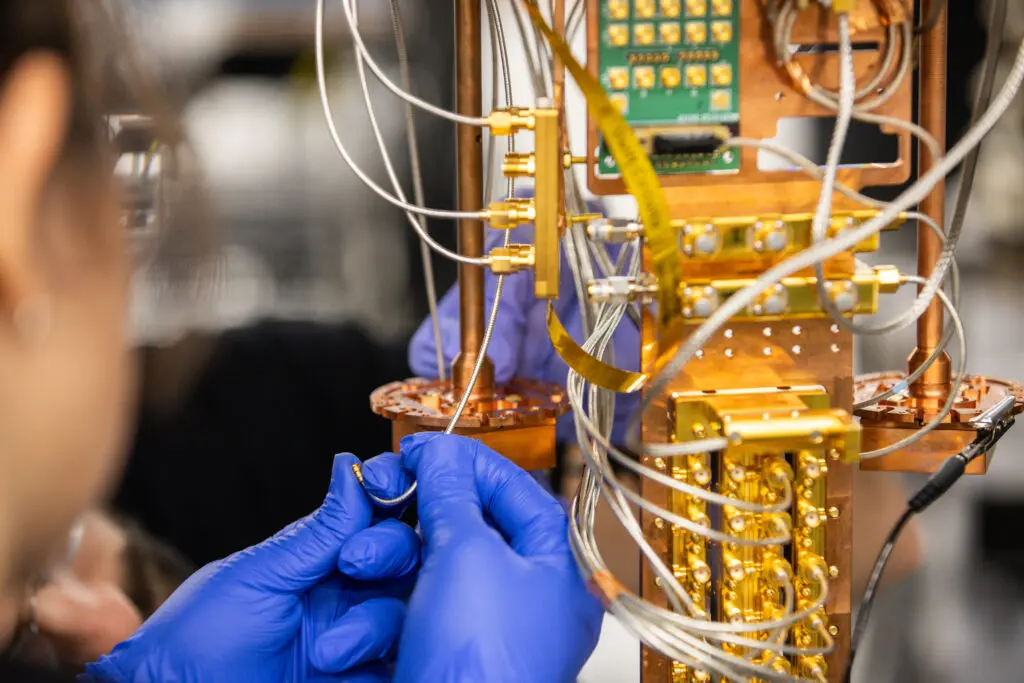
Qilimanjaro’s integration expertise plays a pivotal role in this effort. Its engineers have already wired cryogenic setups using Cry/oFlex cables supplied by Delft Circuits, another consortium member, to optimise qubit performance in the hybrid data centre. This collaboration illustrates how component developers and integrators can work hand‑in‑hand to align product design with real‑world requirements. As Acting IMPAQT UA Chair Andrea G. Rodríguez notes, “Knowing the market and learning from those who develop but also integrate the technology is key to ensuring we have ready, state‑of‑the‑art, off‑the‑shelf components and advance towards robust European quantum value chains.”
Beyond Qilimanjaro and Delft Circuits, the consortium includes Qblox, Quantware, OrangeQS, Demcon, TNO, Quantum Delta Delft, and FrostByte. Together they cover the full spectrum of the quantum stack,from raw qubit fabrication to software frameworks and service delivery. By enforcing interoperability at every layer, IMPAQT aims to eliminate the silos that have historically slowed the transition from proof‑of‑concept to production. The result is a European quantum ecosystem where components can be swapped, upgraded, and scaled without the need for bespoke integration work.
From Research to Market: Accelerating Quantum Adoption
The ultimate test of any quantum technology is its ability to deliver tangible benefits to industry and society. Qilimanjaro’s dual‑stack approach is already making inroads in this arena. In the energy sector, a Dutch utility company is using Qilimanjaro’s hybrid platform to optimise power‑grid dispatch, achieving a 12 % reduction in peak‑load costs. In pharmaceuticals, a Spanish biotech firm has employed the SpeQtrum QaaS service to simulate molecular interactions, shortening drug‑design cycles by weeks.
These applications underscore the company’s commercial expertise, which has been a cornerstone of its strategy since its founding in 2019. By offering both remote and on‑premise solutions, Qilimanjaro bridges the gap between cutting‑edge research and industrial adoption. Its partnership with IMPAQT further accelerates this trajectory by ensuring that the hardware it delivers is not only powerful but also compatible with the broader European quantum supply chain.
The synergy between Qilimanjaro’s technology and IMPAQT’s standards framework creates a virtuous cycle: as more organisations adopt hybrid quantum systems, the demand for interoperable components grows, prompting further innovation in hardware and software. In turn, a more mature ecosystem attracts additional investment and talent, reinforcing Europe’s position as a global leader in quantum technology.
In closing, the alliance between Qilimanjaro and IMPAQT represents more than a partnership; it marks a decisive step toward a cohesive, standards‑driven quantum landscape. By uniting hybrid hardware, robust integration, and a shared commitment to interoperability, the consortium is laying the groundwork for a European quantum industry that can compete on the world stage while delivering real, near‑term advantages to users across science, industry, and society.