The increasing volume of complex, multi-faceted data demands new approaches to machine learning, particularly those that respect data privacy. Kristina P. Sinaga, an independent researcher, and colleagues present a novel framework for personalized federated learning that addresses these challenges. Their work introduces a method which combines heat-kernel coefficients with advanced tensor decomposition techniques to reveal hidden structures within high-dimensional data. This innovative approach not only improves the efficiency of learning from diverse datasets, but also incorporates privacy-preserving mechanisms, allowing for collaborative analysis without compromising individual data security. By efficiently representing complex relationships and enabling personalized models, this research represents a significant step forward in the development of robust and secure machine learning systems.
Federated Multi-View Clustering with Heat Kernels
Scientists developed a personalized federated learning framework that harnesses heat-kernel enhanced tensorized multi-view fuzzy c-means clustering, achieving robust performance with high-dimensional data. The study pioneers the integration of heat-kernel coefficients, adapted from quantum field theory, with Tucker decomposition and canonical polyadic decomposition to transform conventional distance metrics and efficiently represent complex multi-view structures. Researchers employed matriculation and vectorization techniques to uncover hidden structures and multilinear relationships within N-way generalized tensors, enabling a more nuanced understanding of the data. The methodology introduces a dual-level optimization scheme, beginning with local heat-kernel enhanced fuzzy clustering coupled with tensor decomposition operating on order-N input tensors.
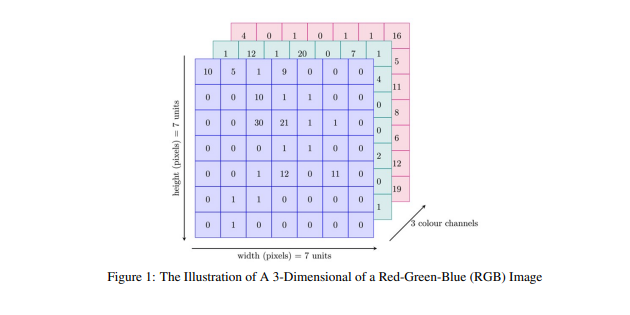
This local stage utilizes tensorized kernel Euclidean distance transformations to identify client-specific patterns within multi-view tensor data, effectively capturing individual nuances. Subsequently, the global aggregation process coordinates tensor factors, specifically core tensors and factor matrices, across clients using differential privacy-preserving protocols, ensuring data security and personalization. This tensorized approach enables efficient handling of high-dimensional multi-view data, delivering significant communication savings through low-rank tensor approximations. Scientists constructed third-order tensors to represent data, mirroring the structure of a color image where RGB channels, height, and width are arranged in a 3-Dimensional array, for example a 7x7x3 tensor. The team applied techniques like singular value decomposition and principal component analysis to construct data before clustering, processing data matrices as tensors of order two. Researchers then extended these methods to multi-view data, treating each data source as a separate view represented by a matrix, allowing for a comprehensive analysis of heterogeneous information.
Tensor Decomposition Reveals Multi-View Data Structures
This work presents a novel personalized federated learning framework that effectively handles complex, high-dimensional multi-view data using advanced tensor decomposition techniques and heat-kernel enhanced clustering. Researchers developed a method that integrates heat-kernel coefficients, adapted from field theory, with Tucker decomposition and canonical polyadic decomposition to transform distance metrics and efficiently represent data. The core of the approach involves representing data as N-way generalized tensors, enabling the discovery of hidden structures and multilinear relationships. The team introduced a dual-level optimization scheme, beginning with local heat-kernel enhanced fuzzy clustering and tensor decomposition applied to order-N input tensors.
This local stage utilizes tensorized kernel Euclidean distance transformations to identify client-specific patterns within multi-view tensor data. Subsequently, the framework aggregates tensor factors, core tensors and factor matrices, across clients using differential privacy-preserving protocols. This tensorized approach significantly reduces computational demands through low-rank tensor approximations, making it suitable for large datasets. Researchers modified the objective function to incorporate a kernel Euclidean distance, defined by a heat kernel coefficient, to control the distance between data points and cluster centers.
This modification allows for a more nuanced representation of data relationships. Furthermore, the team introduced weight factors for each data view, normalized to sum to one, to account for varying feature behaviors and improve clustering accuracy. Experiments demonstrate the effectiveness of this approach in handling complex, multi-view data distributed across multiple clients while preserving data privacy.
Personalized Federated Clustering with Heat Kernels
This research presents a new personalized federated learning framework that combines heat-kernel enhanced clustering with tensor-based techniques for coordinating information across multiple data sources. The team adapted concepts from field theory, specifically heat-kernel coefficients, to improve the capture of complex patterns in federated multi-view clustering, while simultaneously maintaining effective global coordination. A key achievement is the development of an adaptive personalization mechanism, which balances the need for local specialization on each data source with the benefits of sharing global knowledge. The framework also incorporates a privacy-preserving protocol, ensuring data confidentiality during the clustering process through carefully designed statistical sharing methods.
Theoretical analysis supports the approach, establishing convergence guarantees, privacy bounds, and complexity analysis. This work demonstrates the potential for improved machine learning on distributed, multi-view data, with applications in areas such as healthcare, the Internet of Things, and collaborative intelligence. The authors acknowledge that future work could explore dynamic view discovery, adapting the framework to handle changing data structures over time. Further research directions include investigating multi-level federated architectures for large-scale deployment, improving robustness against malicious data, and adapting the framework for continuous learning scenarios where data distributions evolve. Exploring applications to diverse data types, such as text, images, and sensor data, also represents a promising avenue for future investigation.
🗞 Personalized Federated Learning with Heat-Kernel Enhanced Tensorized Multi-View Clustering
🧠 ArXiv: https://arxiv.org/abs/2509.16101