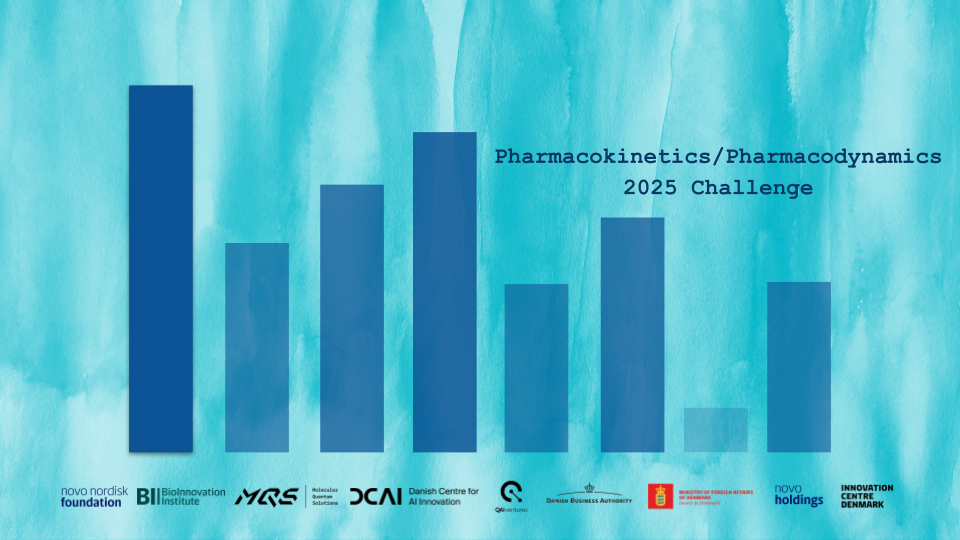
The Quantum Innovation Challenge 2025, an international competition, invites researchers, start-ups, and students to apply quantum computing and quantum-inspired algorithms to pharmaceutical innovation, structured across three phases commencing with team formation and project proposal submission by September 30th, followed by project evaluation and the selection of five teams gaining access to the Gefion AI Supercomputer for refinement until Q1 2026. Selected finalists will present their work at the European Quantum Technologies Conference 2025 (EQTC) in Copenhagen, with the ultimate winning solution revealed at a prominent European quantum event in Spring 2026; the winning team will receive extended access to the Gefion supercomputer, sponsored by DCAI, alongside year-long exclusive mentoring from QAI Ventures’ technology and investment specialists, and potential participation in venture building or accelerator programmes. All project outcomes will be documented and made freely available under open-source (Apache/MIT) licensing within the LSQI-Challenge-2025 repository, fostering collaborative innovation and leveraging a global network of experts from academia and the life sciences industry, including potential connections to Novo Holdings and QAI Ventures’ investor networks, while adhering to documented academic contribution requirements and utilising version control systems (git and GitHub).
Quantum Innovation Challenge Structure
The Quantum Innovation Challenge 2025 is meticulously structured to accelerate the translation of quantum computing and quantum-inspired algorithms into tangible advancements in pharmaceutical innovation. The competition, open to researchers, start-ups, and students, operates across three distinct phases, each designed to rigorously evaluate and refine proposed solutions. Phase I, concluding September 30th, prioritises team formation and the submission of detailed project proposals. A key component of this initial stage is the proactive compilation of a Frequently Asked Questions (FAQ) resource, intended to address potential obstacles and ensure clarity for all participants. This FAQ will be a dynamic document, evolving based on queries received, and will serve as a central point of reference throughout the challenge.
Phase II, running from October 15th to November 12th, focuses on a comprehensive evaluation of submitted proposals. This evaluation will not merely assess technical feasibility but also the potential for practical impact within the drug discovery pipeline. Feedback will be provided to all participating teams, irrespective of their progression to the final stages, fostering a collaborative learning environment. The culmination of Phase II is the selection of five teams who will gain exclusive access to the Gefion AI Supercomputer, a high-performance computing resource crucial for the intensive calculations inherent in quantum simulations. This supercomputer, hosted by DCAI, provides the necessary computational power to explore complex molecular interactions and optimise drug candidates.
Phase III, spanning the fourth quarter of 2025 through January 2026, constitutes the final development and submission phase. Teams will refine their models using the Gefion supercomputer, culminating in the submission of fully documented code repositories and comprehensive reports detailing their methodologies and findings. The final deliverables will be subject to rigorous review, assessing not only performance metrics but also the clarity and reproducibility of the research. Selected finalists will present their work at the European Quantum Technologies Conference 2025 (EQTC) in Copenhagen, gaining valuable exposure and networking opportunities within the quantum computing community. The ultimate winning solution will be unveiled at a prominent European quantum event in Spring 2026, with the winning team receiving extended, complimentary access to the Gefion supercomputer. Beyond computational resources, participants benefit from a network of experts, including mentorship from QAI Ventures’ technology and investment specialists, and potential connections to Novo Holdings’ investor networks. The challenge explicitly encourages cross-disciplinary collaboration and welcomes international participation, fostering a diverse environment for innovation. The LSQI-Challenge-2025 repository, housing all project outcomes, will remain a publicly accessible resource for both academic and industrial researchers, promoting open-source collaboration and accelerating the development of quantum solutions for pharmaceutical challenges, potentially impacting the field of quantum drug discovery.
Eligibility and Resources
Eligibility for participation in the Quantum Innovation Challenge 2025 necessitates the inclusion of at least one documented academic contributor in a principal role within each team, ensuring a foundation of rigorous scientific methodology. This requirement acknowledges the complex theoretical and computational demands of the challenge, particularly in areas such as quantum algorithm design and molecular modelling. Demonstrated proficiency in programming, alongside familiarity with version control systems – specifically git and GitHub – is also mandatory, facilitating collaborative development and transparent code management. The challenge actively promotes cross-disciplinary collaboration, welcoming teams comprising individuals with expertise in quantum computing, chemistry, biology, pharmacology, and computer science. International participation is explicitly encouraged, fostering a diverse and globally representative research environment.
Participants will benefit from a comprehensive suite of resources designed to support their endeavours. A dedicated Element Space serves as a central communication hub, enabling real-time interaction between teams, mentors, and challenge organisers. Comprehensive orientation materials, detailing the challenge objectives, evaluation criteria, and available tools, are provided to all registered participants. A frequently asked questions (FAQ) page, continuously updated based on participant inquiries, addresses potential obstacles and clarifies ambiguities. Beyond these communication and informational resources, the challenge provides access to substantial computational infrastructure. The Gefion AI Supercomputer, hosted by the Danish Centre for Applied Innovation (DCAI), offers the necessary processing power for computationally intensive tasks, such as simulating molecular dynamics, performing quantum chemical calculations, and optimising drug candidates. Access to Gefion is reserved for the five teams selected following Phase II evaluation.
Furthermore, the challenge facilitates access to a global network of experts from both academia and the life sciences industry. Mentorship and feedback will be provided by leading industry partners and investors, including specialists from QAI Ventures and Novo Holdings, offering valuable insights into translational research and commercialisation pathways. The top three teams will receive a year of exclusive mentoring from QAI Ventures’ technology and investment specialists, alongside opportunities to participate in venture building or accelerator programmes. All project outcomes will be documented and made freely available under open-source licensing (Apache/MIT) within the LSQI-Challenge-2025 repository, ensuring broad accessibility and promoting collaborative innovation in the field of quantum drug discovery. This commitment to open science will facilitate knowledge dissemination and accelerate the development of novel therapeutic solutions.
Outcomes and Future Impact
The Quantum Innovation Challenge 2025 anticipates a multifaceted impact extending beyond the immediate competition results. A primary outcome will be the establishment of the LSQI-Challenge-2025 repository, a publicly accessible archive documenting all submitted project methodologies, code, and findings. This resource, licensed under Apache/MIT, is intended to serve as a foundational dataset and benchmark for future research in quantum drug discovery, fostering reproducibility and accelerating innovation within both academic and industrial settings. The repository’s value lies not only in the specific algorithms and techniques developed but also in the negative results and documented challenges encountered by participants, providing valuable learning opportunities for the wider community.
Beyond the repository, the challenge is designed to cultivate a network of skilled researchers proficient in the application of quantum computing to pharmaceutical problems. The mentorship provided by experts from QAI Ventures and Novo Holdings, coupled with potential venture building opportunities, aims to translate theoretical advancements into tangible therapeutic solutions. The extended access to the Gefion AI Supercomputer, sponsored by the Danish Centre for Applied Innovation (DCAI), for the winning team and the temporary access for the five finalists, provides critical computational resources for further model refinement and validation. The Gefion supercomputer’s architecture, optimised for artificial intelligence and machine learning workloads, is particularly well-suited for tasks such as molecular docking, protein folding simulations, and the optimisation of quantum chemical calculations – all essential components of modern drug discovery pipelines.
The challenge’s emphasis on cross-disciplinary collaboration and international participation is expected to foster a more diverse and robust research ecosystem.
By bringing together experts in quantum computing, chemistry, biology, and pharmaceutical sciences, the initiative aims to overcome the traditional silos that often hinder innovation. The presentations at the European Quantum Technologies Conference 2025 (EQTC) in Copenhagen will provide a platform for disseminating research findings and establishing collaborations within the quantum computing community. Furthermore, the anticipated venture building and accelerator programme participation for the top three teams could lead to the formation of new companies focused on developing and commercialising quantum-enhanced drug discovery technologies. The long-term impact of the challenge is therefore envisioned as a significant contribution to the advancement of quantum drug discovery, fostering a sustainable ecosystem of innovation and accelerating the development of novel therapeutics.
More information
External Link: Click Here For More

See today’s quantum computing news on Quantum Zeitgeist for the latest breakthroughs in qubits, hardware, algorithms, and industry deals.