The National Academy of Sciences (NAS) has elected 120 new members, including five faculty members and thirteen alumni from the Massachusetts Institute of Technology, bringing the total number of active NAS members to 2,662, with an additional 556 international members. Among those elected was robotics expert Rodney Brooks, currently chief technical officer at Robust AI and formerly of iRobot Corp, recognised for distinguished research encompassing intelligent robotics and the investigation of human intelligence. The NAS, established in 1863, acknowledges achievement in science through membership and advises the US federal government on scientific and health policy.
Distinguished Scientists Elected to National Academy
The National Academy of Sciences (NAS) has elected 120 new members and 30 international members, bringing the total number of active NAS members to 2,662, alongside 556 international members. This election recognises individuals for their distinguished and continuing achievements in original research, with membership representing a high honour within the scientific community. The NAS, established in 1863 under a congressional charter signed by President Abraham Lincoln, operates as a private, non-profit institution dedicated to acknowledging scientific achievement.
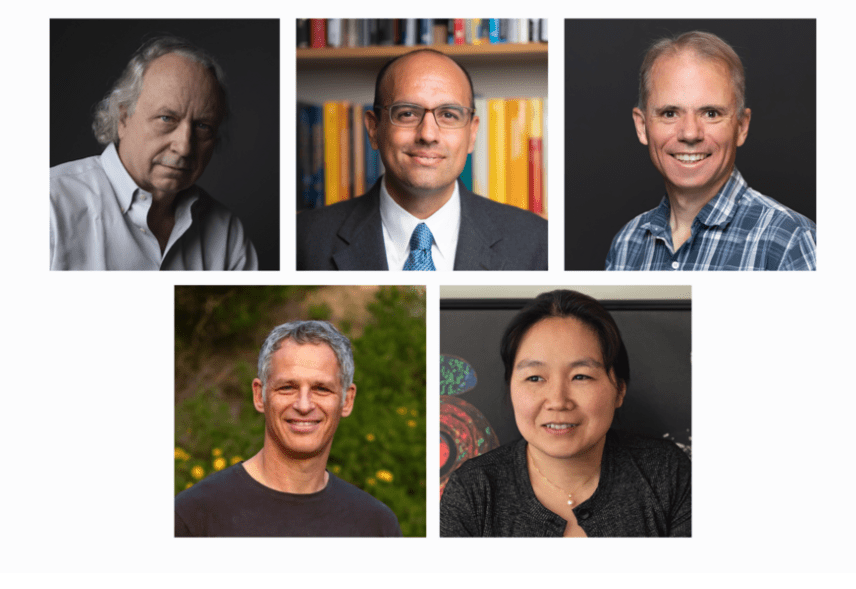
Among those elected are five faculty members and thirteen alumni from the Massachusetts Institute of Technology, signifying a substantial representation from the institution within this year’s cohort. Professor Rodney Brooks, currently chief technical officer and co-founder of Robust AI, is among the newly elected members, alongside Professors Parag Pathak, Scott Sheffield, Benjamin Weiss, and Yukiko Yamashita. Brooks previously held leadership positions at Rethink Robotics and iRobot Corp, and also directed the MIT Artificial Intelligence Laboratory and the MIT Computer Science and Artificial Intelligence Laboratory, demonstrating a sustained commitment to the field.
Brooks’ research encompasses both the engineering of intelligent robots designed for unstructured environments and the investigation of human intelligence through the development of humanoid robotics. His published work extends across a diverse range of areas, including model-based computer vision, path planning, and uncertainty analysis, highlighting the breadth of his contributions to scientific research investment. Prior to his 1984 appointment at MIT, Brooks held research positions at Carnegie Mellon University and MIT, and a faculty position at Stanford, following the completion of his PhD in computer science from Stanford University in 1981.
Recognition of MIT Affiliates
The thirteen MIT alumni elected to the NAS this year include David Altshuler (86), Rafael Camerini-Otero (66), Kathleen Collins (PhD 92), George Daley (PhD 89), Scott Doney (PhD 91), John Doyle (PhD 91), Jonathan Ellman (84), Shanhui Fan (PhD 97), Julia Greer (97), Greg Lemke (78), Stanley Perlman (PhD 72), David Reichman (PhD 97), and Risa Wechsler (96). This election acknowledges their distinguished achievements in original research and contributions to the scientific community.
Professor Rodney A. Brooks holds degrees in pure mathematics from Flinders University of South Australia and a PhD in computer science from Stanford University (1981). Prior to joining MIT in 1984, he held research positions at Carnegie Mellon University and MIT, alongside a faculty position at Stanford, establishing a foundation for his subsequent research endeavours.
His extensive research portfolio includes publications in model-based computer vision, path planning, uncertainty analysis, robot assembly, active vision, autonomous robots, micro-robotics, planetary exploration, and compiler design. This breadth of work demonstrates a sustained and multifaceted contribution to scientific research investment and the advancement of robotics and artificial intelligence.
Rodney Brooks’ Research and Career
Rodney A. Brooks is currently the Panasonic Professor of Robotics Emeritus at MIT and also serves as chief technical officer and co-founder of Robust AI. He previously founded, chaired, and served as CTO of Rethink Robotics, and also founded and served as CTO of iRobot Corp. His leadership roles also included directing both the MIT Artificial Intelligence Laboratory and the MIT Computer Science and Artificial Intelligence Laboratory.
Brooks’ research encompasses the engineering of intelligent robots for unstructured environments alongside the investigation of human intelligence through humanoid robotics. He has published extensively in areas including model-based computer vision, path planning, uncertainty analysis, robot assembly, active vision, autonomous robots, micro-robotics, planetary exploration, and compiler design, demonstrating a diverse range of research interests. He obtained degrees in pure mathematics from Flinders University of South Australia and a PhD in computer science from Stanford University in 1981.
More information
External Link: Click Here For More
See today’s quantum computing news on Quantum Zeitgeist for the latest breakthroughs in qubits, hardware, algorithms, and industry deals.