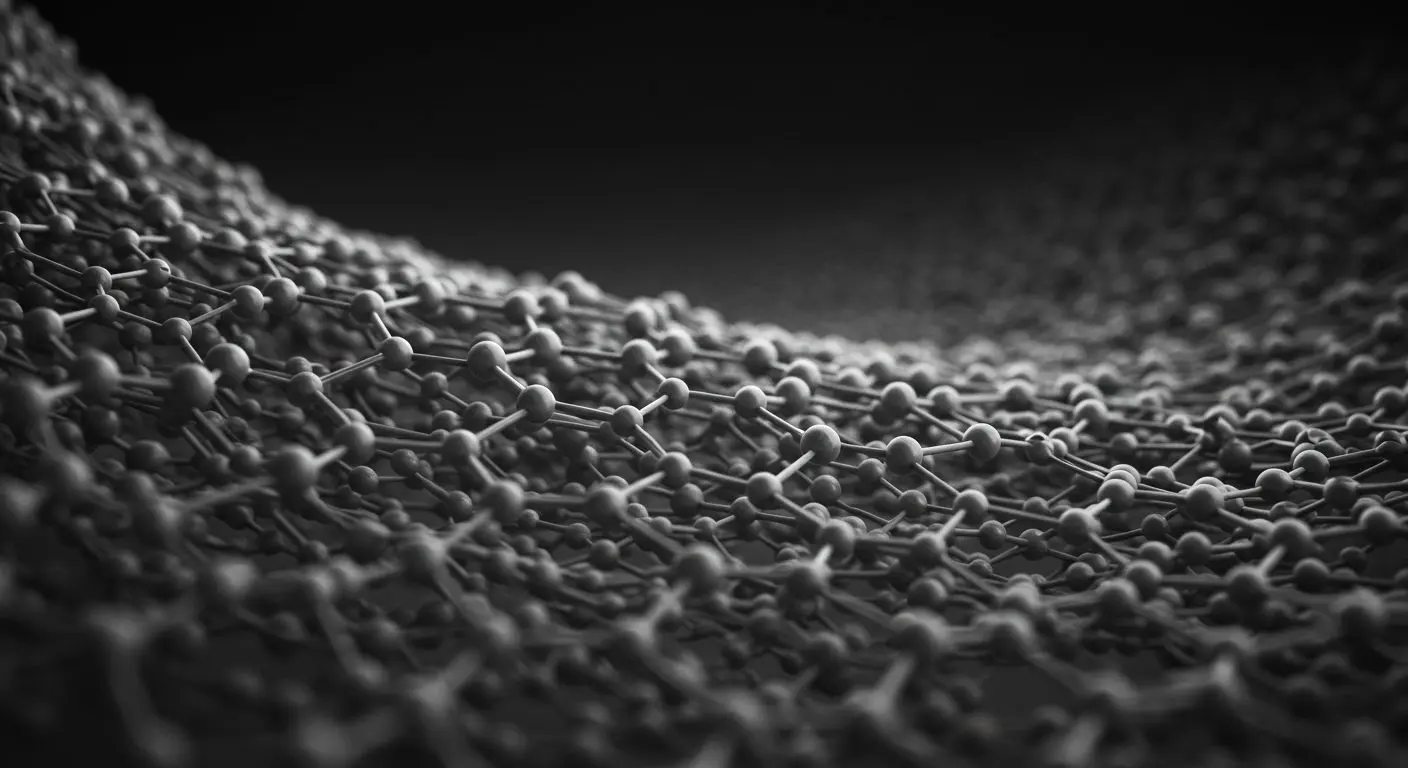
Density functional theory calculations reveal that incorporating coal-derived material into copper composites introduces localised electronic states, impacting conductivity. Functional groups contribute states below the Fermi level, while ring disorder creates states above it, disrupting electron flow. Both crystal orientation and material purity significantly influence electronic transport anisotropy and magnitude.
The pursuit of enhanced electrical conductivity in composite materials receives considerable attention, particularly when leveraging the unique properties of carbon allotropes like graphene. Recent research focuses on optimising these materials through the incorporation of coal-derived carbon structures into copper matrices, a process complicated by inherent structural defects and the presence of functional impurities. K. Nepal, R. Hussein, Y. Al-Majali, and D.A. Drabold, all from Ohio University, investigate these complexities in their work, titled ‘Electronic conduction in copper-graphene composites with functional impurities’. Their study, utilising ab initio plane wave density functional theory (DFT) – a computational method employing quantum mechanical principles to investigate the electronic structure of materials – reveals how ring disorder within the sp2 carbon network, alongside the presence of functional groups such as oxides and hydroxides, significantly alters electronic behaviour. The research demonstrates that both the arrangement of atoms and the level of purity within these composites critically influence the direction and extent of electrical current flow, implicitly suggesting pathways to improve conductivity through careful control of material structure and composition.
The development of enhanced materials consistently fuels innovation across diverse technological sectors, and composite materials offer a promising route to superior performance characteristics. Current research investigates copper composites incorporating carbon materials derived from coal, aiming to unlock improved electrical conductivity and tailor material properties for a range of applications. This work employs ab initio calculations, methods utilising fundamental physical constants and principles, to explore the complex relationship between structural disorder, functional impurities, and the resulting electronic behaviour within these composites, providing fundamental insights into optimising material design and fabrication processes.
Computational modelling forms the cornerstone of this investigation, allowing scientists to dissect the impact of specific structural features and chemical compositions on the electronic density of states – a measure of the number of states available for electrons at each energy level – and overall conductivity. Density functional theory calculations simulate the electronic structure of copper composites containing sp2 carbon networks, meticulously examining the influence of ring disorder and the presence of functional groups such as oxides and hydroxides. By analysing the resulting electronic properties, researchers reveal how these factors redistribute electronic states and govern the material’s ability to conduct electricity, establishing a clear link between microstructure and macroscopic performance.
Calculations demonstrate that functional groups primarily contribute to
Calculations demonstrate that functional groups primarily contribute to electronic states below the Fermi level, the highest energy level occupied by electrons at absolute zero temperature, effectively trapping electrons and hindering their movement. Conversely, carbon atoms within non-hexagonal rings contribute to states above the Fermi level. This redistribution of electronic states signifies a fundamental alteration of the material’s electronic structure, impacting its ability to facilitate electron transport and conduct electricity efficiently.
Researchers further investigate the impact of ring disorder within the sp2 carbon network, recognising that deviations from perfect hexagonal structures disrupt the continuity of electron transport pathways. Ring disorder introduces localised states and scattering centres, impeding the free flow of electrons and reducing the overall conductivity of the composite material. By quantifying this disruption, valuable insights into the importance of maintaining structural integrity within the carbon network are gained, guiding the development of strategies to minimise defects and enhance electron mobility.
To visualise and quantify the directional dependence of conductivity, space-projected conductivity (SPC), a powerful computational technique, maps electronic conductivity along specific spatial directions. SPC calculations reveal that both the crystallographic orientation of the copper matrix and the level of structural defects significantly influence the magnitude and anisotropy – the property of being directionally dependent – of electronic transport. This directional dependence underscores the importance of controlling the arrangement of the carbon-copper interface and minimising defects to achieve optimal conductivity in specific directions.
Analysis of the electronic density of states confirms the presence of localised states near the Fermi level, which play a critical role in determining the material’s electrical behaviour. These localised states arise from the interplay between the carbon network, functional impurities, and structural defects.
Researchers demonstrate that functional groups induce charge localisation, hindering electron flow, while ring disorder disrupts the continuity of electron transport pathways, creating a complex interplay of factors governing the material’s conductivity. By carefully analysing the electronic structure and transport properties, researchers reveal how these factors interact to influence the overall performance of the composite material. This knowledge guides the development of strategies to mitigate their negative effects and enhance conductivity.
The findings underscore the need for careful consideration
The findings underscore the need for careful consideration of both the carbon network’s arrangement and the presence of functional groups when designing and fabricating these composites, emphasising that a holistic approach is essential for achieving optimal performance. Researchers demonstrate that controlling the crystallographic orientation of the copper matrix and maximising material purity are crucial for achieving high conductivity and minimising anisotropy. This knowledge guides the development of advanced fabrication techniques that prioritise structural integrity and compositional control.
This study provides fundamental insights into the relationship between microstructure and electronic properties, paving the way for the design of advanced composite materials with tailored conductivity and enhanced performance. By carefully controlling the structural characteristics and chemical composition of these materials, scientists can unlock new possibilities for a wide range of applications, from energy storage and conversion to advanced electronics and sensors. The findings underscore the importance of interdisciplinary research and computational modelling in driving materials innovation and addressing critical technological challenges.
🗞 Electronic conduction in copper-graphene composites with functional impurities
🧠 DOI: https://doi.org/10.48550/arXiv.2506.20912

See today’s quantum computing news on Quantum Zeitgeist for the latest breakthroughs in qubits, hardware, algorithms, and industry deals.