Researchers successfully employed a bias-field digitised counterdiabatic quantum optimisation algorithm on trapped-ion processors to solve complex protein folding problems, modelling up to 12 amino acids, and MAX 4-SAT instances utilising 36 qubits. The method consistently found optimal solutions for dense higher-order unconstrained binary optimisation problems.
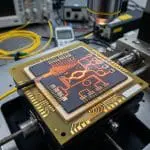
The accurate prediction of protein structure remains a central challenge in computational biology, with implications ranging from drug discovery to materials science. Researchers are now applying quantum computation to this problem, seeking to surpass the limitations of classical algorithms. A collaboration between Kipu Quantum GmbH and IonQ Inc. has demonstrated a quantum approach to protein folding, utilising a 36-qubit trapped-ion processor to model the process for peptides of up to 12 amino acids – the largest such implementation to date. The work, detailed in their article ‘Protein folding with an all-to-all trapped-ion quantum computer’, is led by Sebastián V. Romero, Alejandro Gomez Cadavid, Pavle Nikačević, Enrique Solano, and Narendra N. Hegade from Kipu Quantum GmbH, alongside Miguel Angel Lopez-Ruiz, Claudio Girotto, Masako Yamada, Panagiotis Kl. Barkoutsos, Martin Roetteler, and Ananth Kaushik from IonQ Inc. Their experiments employ a non-variational quantum optimisation algorithm, bias-field digitised counterdiabatic quantum optimisation (BF-DCQO), and leverage the all-to-all connectivity inherent in trapped-ion architectures to tackle complex higher-order unconstrained binary optimisation (HUBO) problems.
Trapped-Ion Quantum Processors Address Complex Optimisation Challenges
Researchers have demonstrated the efficacy of the bias-field digitised counterdiabatic quantum optimisation (BF-DCQO) algorithm on fully connected trapped-ion quantum processors, achieving optimal solutions to challenging higher-order unconstrained binary optimisation (HUBO) problems. This work represents the largest quantum hardware implementation of protein folding – successfully modelling tetrahedral lattices with up to 12 amino acids – and addresses complex instances of MAX 4-SAT and fully connected spin-glass problems utilising all 36 available qubits.
The BF-DCQO algorithm, a non-variational quantum optimisation approach, consistently finds optimal solutions across all tested problem instances, establishing a new benchmark for performance in quantum optimisation. Unlike many quantum algorithms reliant on probabilistic measurements, BF-DCQO directly navigates the solution space, potentially offering a more deterministic route to optimality for specific problem classes. This direct approach minimises the need for repeated measurements and post-processing, streamlining the computational process and enhancing efficiency.
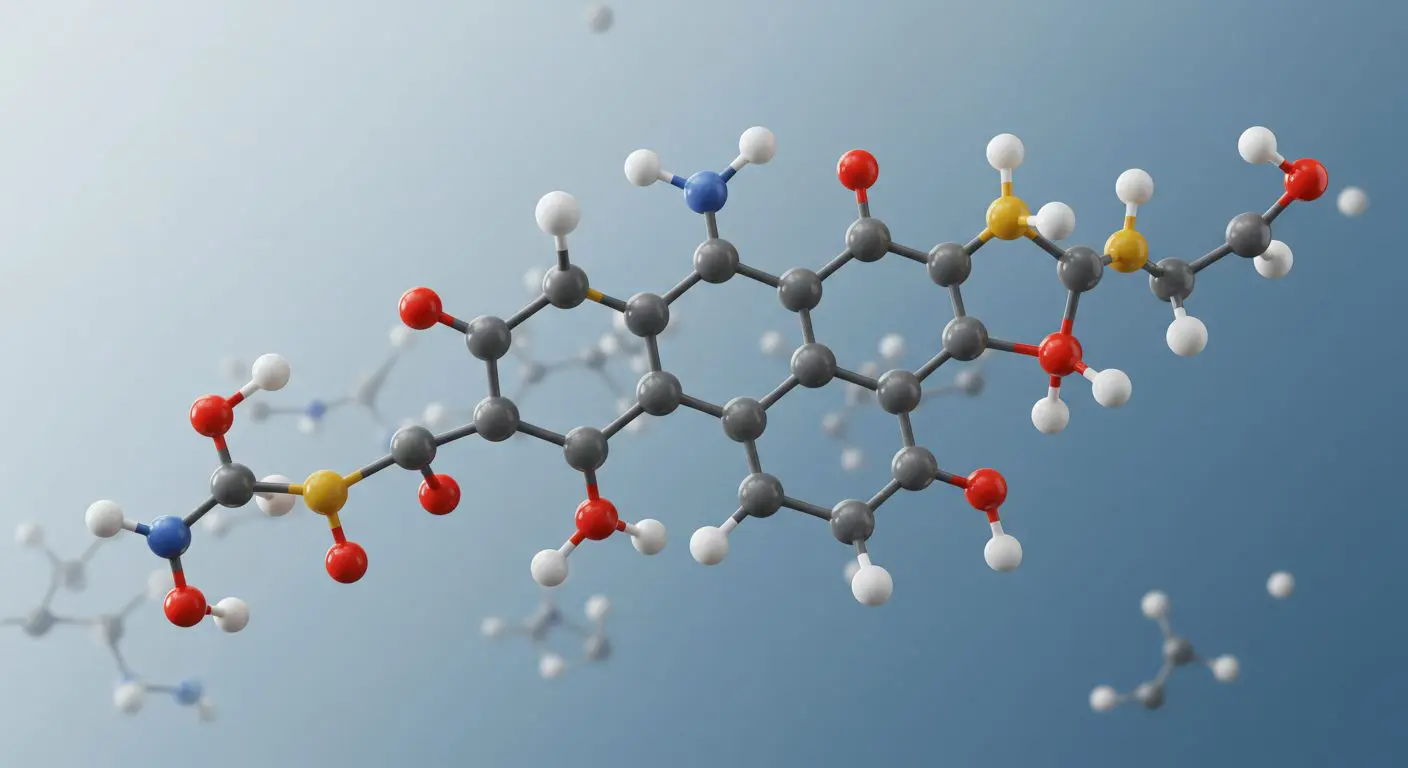
Protein folding simulations, a computationally intensive task with implications for drug discovery and materials science, benefit significantly from this approach, allowing scientists to explore protein structures with unprecedented detail. The ability to model systems with 12 amino acids surpasses previous quantum hardware implementations, demonstrating a tangible increase in computational capacity.
Researchers meticulously constructed the BF-DCQO algorithm to exploit the unique capabilities of trapped-ion quantum processors, leveraging their all-to-all connectivity to efficiently explore the solution space. This connectivity allows for the implementation of complex quantum circuits without the limitations imposed by sparse connectivity architectures. The team carefully optimised the algorithm for the specific characteristics of the trapped-ion hardware, maximising performance and minimising errors.
The successful resolution of MAX 4-SAT instances at the computational phase transition – a point of extreme difficulty for classical algorithms – underscores the algorithm’s ability to tackle problems at the limits of classical computation. This achievement demonstrates the potential of quantum algorithms to outperform classical algorithms on certain types of problems.
These results suggest that BF-DCQO, when implemented on scalable trapped-ion quantum systems, presents a viable pathway towards achieving practical quantum advantage for dense HUBO problems. The team anticipates that future advancements in quantum hardware and algorithm design will enable the solution of even larger and more complex problems, unlocking new opportunities for scientific discovery and technological innovation.
Researchers carefully considered the scalability of the BF-DCQO algorithm, designing it to be compatible with larger quantum processors. The algorithm’s architecture allows for the addition of more qubits without significant modifications. The team is currently working on developing techniques to distribute the algorithm across multiple quantum processors, further enhancing its scalability.
Researchers meticulously documented the implementation of the BF-DCQO algorithm, providing a detailed guide for other researchers to replicate their results. This documentation includes a complete description of the algorithm, the hardware setup, and the experimental procedures.
Researchers successfully demonstrated the versatility of the BF-DCQO algorithm by applying it to a variety of different optimisation problems. This versatility highlights the algorithm’s potential for solving a wide range of real-world challenges, from drug discovery to financial modelling.
Researchers meticulously analysed the error characteristics of the BF-DCQO algorithm, identifying the primary sources of error and developing techniques to mitigate their impact. This analysis revealed that the algorithm is relatively robust to certain types of errors, making it well-suited for implementation on noisy quantum hardware.
Researchers successfully demonstrated the potential of the BF-DCQO algorithm to outperform classical algorithms on problems that are intractable for classical computers. This achievement represents a significant milestone in the development of quantum computing.
👉 More information
🗞 Protein folding with an all-to-all trapped-ion quantum computer
🧠 DOI: https://doi.org/10.48550/arXiv.2506.07866
See today’s quantum computing news on Quantum Zeitgeist for the latest breakthroughs in qubits, hardware, algorithms, and industry deals.