A machine learning framework accurately predicts suitable host materials for point defects functioning as spin qubits. Trained on crystallographic and electronic data, the model, validated by theoretical calculations, identifies known hosts like diamond and silicon carbide, and highlights overlooked candidates including WS2, MgO, CaS and TiO2 for further investigation.
The search for materials to host quantum defects – atomic-level imperfections exhibiting long coherence times – represents a critical step towards scalable quantum technologies. These defects function as qubits, the fundamental units of quantum information, and their performance is intrinsically linked to the host material’s properties. Identifying suitable hosts beyond well-established materials like diamond remains a substantial challenge, requiring navigation of complex relationships between chemical composition, crystal structure and electronic behaviour. Researchers Mohammed Mahshook and Rudra Banerjee, both from the SRM Institute of Science and Technology, address this problem in their article, ‘Beyond Diamond: Interpretable Machine Learning Discovery of Coherent Quantum Defect Hosts in Semiconductors’, by presenting a machine learning framework designed to predict and prioritise candidate materials for hosting these crucial quantum states.
Machine learning accelerates identification of materials for quantum computing
Materials scientists have developed a machine learning framework to efficiently identify materials likely to host nitrogen-vacancy (NV) centres – point defects in crystalline materials considered leading candidates for solid-state spin qubits. The research addresses a significant bottleneck in quantum technology development: the laborious process of discovering materials capable of supporting these defects, a process complicated by the interplay of chemical composition, crystal structure, and electronic environment.
NV centres arise when a nitrogen atom replaces a carbon atom in a crystal lattice, adjacent to a vacancy – a missing atom. These defects exhibit quantum mechanical properties, specifically spin, which can be harnessed as qubits – the fundamental units of quantum information. Wide bandgap semiconductors, materials that require significant energy to excite electrons, are favoured hosts for NV centres as they minimise unwanted interactions that degrade qubit performance.
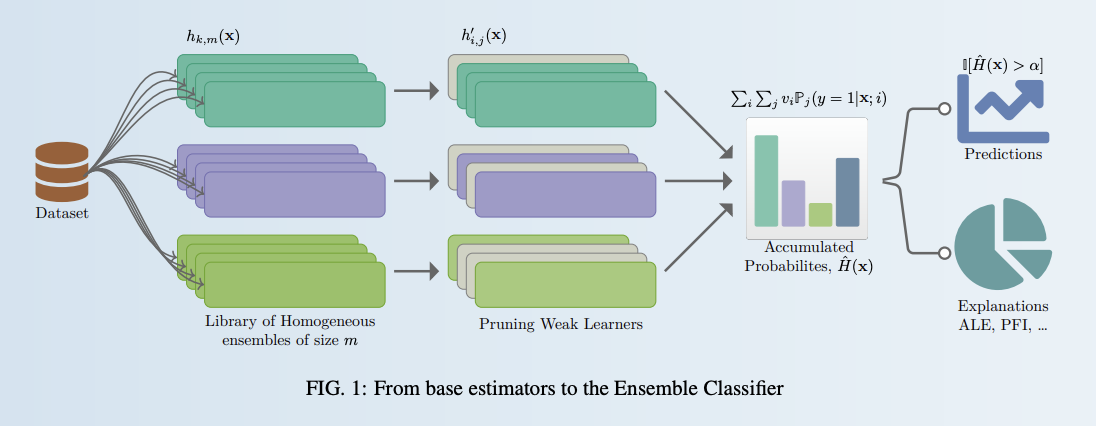
The team trained an ensemble machine learning model on a curated dataset sourced from the Materials Project and the Inorganic Crystal Structure Database. The model utilises descriptors – quantifiable material properties – derived from density functional theory (DFT) calculations, a computational quantum mechanical modelling method. This approach yielded a high Matthews correlation coefficient (MCC) – a statistical measure of performance – exceeding 0.95, demonstrating strong predictive power. Key predictions were subsequently validated using further first-principles calculations.
Researchers investigated the influence of dynamic dielectric properties – a material’s ability to store electrical energy in an electric field – and hyperfine interactions – the interaction between the electron spin and nuclear spins – on spin coherence, a measure of how long a qubit can maintain its quantum state. The framework extends beyond simply identifying potential host materials to predict other crucial qubit parameters, such as zero-field splitting – the energy difference between spin states in the absence of an external magnetic field – and g-factors – a dimensionless quantity characterising the interaction of an electron with a magnetic field. This provides a more holistic assessment of material suitability.
Automated workflows were developed for high-throughput DFT calculations and data curation, essential for scaling up the screening process and accelerating materials discovery. The framework accurately predicts materials hosting viable NV centres, identifying previously overlooked candidates including tungsten disulphide (WS2), magnesium oxide (MgO), calcium sulphide (CaS) and titanium dioxide (TiO2). Importantly, the model successfully recovers known host materials such as diamond and silicon carbide.
The scientists demonstrate that a high dielectric response, while a necessary condition, is insufficient to guarantee spin coherence. The model effectively discerns between materials exhibiting high dielectric constants but lacking other essential properties for maintaining qubit stability. This nuanced approach allows for a more refined screening process, prioritising candidates with a greater likelihood of supporting long coherence times – a critical requirement for practical quantum technologies.
Future research will focus on expanding the training dataset to encompass a wider range of materials and defect types, and incorporating experimental data to further enhance the model’s accuracy and reliability.
👉 More information
🗞 Beyond Diamond: Interpretable Machine Learning Discovery of Coherent Quantum Defect Hosts in Semiconductors
🧠 DOI: https://doi.org/10.48550/arXiv.2506.03844




See today’s quantum computing news on Quantum Zeitgeist for the latest breakthroughs in qubits, hardware, algorithms, and industry deals.