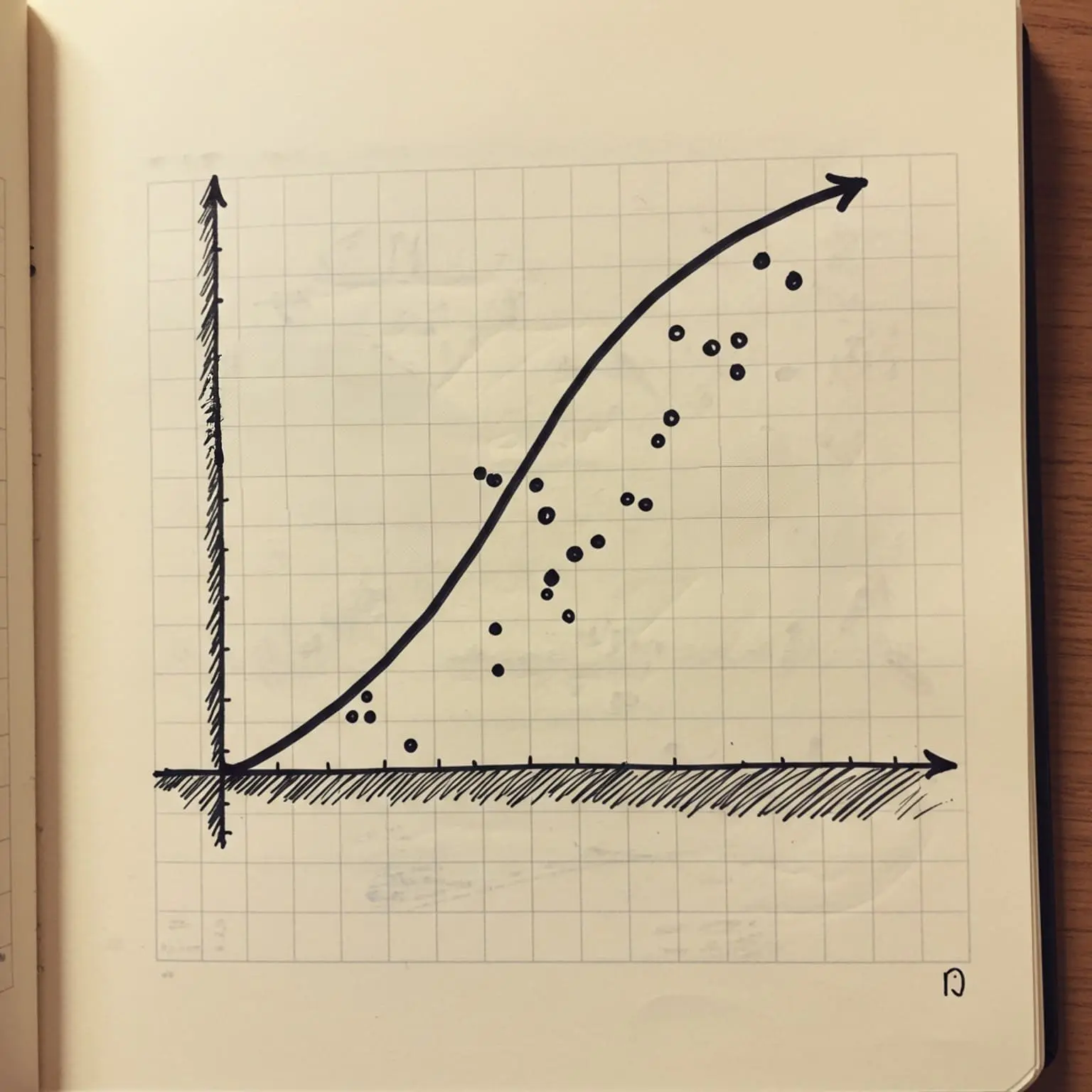
Recent advancements in quantum computing have sparked interest in quantum-assisted optimization for machine learning. A team from the University of Kaiserslautern-Landau (RPTU) and the German Research Center for Artificial Intelligence (DFKI), including Supreeth Mysore Venkatesh, Antonio Macaluso, Diego Arenas, Matthias Klusch, and Andreas Dengel, has developed a novel approach. Their work, titled i-QLS: Quantum-supported Algorithm for Least Squares Optimization in Non-Linear Regression, introduces an iterative quantum-assisted least squares (i-QLS) method using quantum annealing to address traditional limitations. The i-QLS algorithm enhances scalability and precision by iteratively refining the solution space, reducing qubit overhead. Demonstrated through spline-based modeling, it adapts to non-linear tasks, with validation on quantum hardware showing competitive accuracy against classical methods.
Quantum machine learning leverages quantum computing to address complex computational challenges.
The study delves into quantum machine learning (QML), a field that leverages quantum computing’s unique capabilities to address complex computational challenges. QML is particularly promising for optimization, pattern recognition, and data analysis, where classical methods often fall short due to computational limitations. The research highlights the potential of QML to revolutionize these areas. However, it also acknowledges significant hurdles, including hardware constraints, the need for advanced algorithm development, and the integration of quantum systems with classical infrastructure.
The paper focuses on two specific applications: coalition structure generation (CSG) and image segmentation. These computationally intensive tasks benefit from quantum algorithms’ ability to process information differently than classical computers. By applying QML techniques, the study demonstrates how these problems can be approached more efficiently, with potential implications for fields ranging from artificial intelligence to operations research.
Methodologically, the research employs variational quantum splines for non-linear approximations and quantum graph-based methods for CSG in induced subgraph games. These approaches are complemented by quantum annealing and variational quantum algorithms (VQAs), which are designed to tackle optimization problems that are otherwise intractable using classical computing alone. The integration of these techniques underscores the interdisciplinary nature of QML research, combining insights from quantum physics, computer science, and applied mathematics.
The results of the study demonstrate the practical potential of QML, with successful implementations in image segmentation showing improved performance over classical methods. Variational quantum algorithms also exhibit promise in solving complex optimization problems, while quantum graph-based approaches effectively address challenges in coalition structure generation. Despite these advancements, the discussion emphasizes the importance of continued research into hybrid quantum-classical systems and the need for overcoming current limitations such as error correction and hardware scalability. The conclusion underscores the transformative potential of QML across various domains, contingent on further advancements in both quantum hardware and algorithm design.
QEM iteratively enhances parameter estimation using quantum operations.
The Iterative Quantum Expectation-Maximization (QEM) Algorithm represents a significant advancement in machine learning by integrating quantum computing into the traditional EM framework. This integration aims to enhance performance in parameter estimation for Gaussian Mixture Models, leveraging quantum operations to accelerate both the E-step and M-step processes potentially.
In the E-step, QEM utilizes quantum parallelism to efficiently compute summations over latent variables, thereby reducing computational complexity. The M-step employs quantum techniques such as annealing or variational algorithms to optimize parameter estimation more rapidly. This hybrid approach combines classical and quantum methods, addressing current limitations of quantum computing like noise and qubit count.
The algorithm capitalizes on Gaussian properties, using Fourier transforms to design efficient quantum circuits. While targeting near-term quantum devices, it acknowledges the potential for greater efficiency with fault-tolerant systems in the future. Applications include processing large datasets where classical EM may be inefficient, benefiting from quantum parallelism’s ability to handle multiple data points simultaneously.
Implementation involves representing Gaussian distributions through quantum states, possibly using amplitude encoding, and employing quantum measurements for expectation calculations. Performance analysis compares QEM against classical EM under specific conditions, highlighting scenarios where it offers significant advantages. This structured approach ensures a balance between theoretical potential and practical applicability, offering a promising direction in quantum-enhanced machine learning.
Quantum splines show promise for efficient non-linear approximations.
The article presents quantum splines as a novel method for non-linear approximations within variational quantum algorithms. These splines utilize parameterized quantum circuits to mimic classical spline behavior, offering qubit efficiency that addresses current quantum computing limitations.
Performance evaluations against classical methods using metrics like mean squared error highlight potential advantages in regression tasks, time series forecasting, and image processing, where smooth transitions are crucial. However, the method’s resilience to quantum noise remains a critical consideration.
Future work should focus on enhancing robustness against noise and exploring practical implementations across diverse applications. The scalability of quantum splines without proportional qubit growth suggests promising avenues for further development in machine learning tasks requiring smooth models.
The article presents a concise formula for determining the slope ( m ) in a simple linear regression model of y=mx+c. This formula calculates the covariance between variables x and y relative to the variance of x, effectively quantifying the change in y per unit change in x.
Extending this method to handle multiple predictors or nonlinear relationships for future research could enhance its applicability. Additionally, investigating the robustness of this slope calculation against outliers would be valuable, as real-world datasets often contain anomalies that can influence regression outcomes.
This approach offers a straightforward yet powerful tool for understanding linear associations, with potential enhancements in complexity and resilience to data irregularities.
🗞 i-QLS: Quantum-supported Algorithm for Least Squares Optimization in Non-Linear Regression
🧠 DOI: https://doi.org/10.48550/arXiv.2505.02788
See today’s quantum computing news on Quantum Zeitgeist for the latest breakthroughs in qubits, hardware, algorithms, and industry deals.