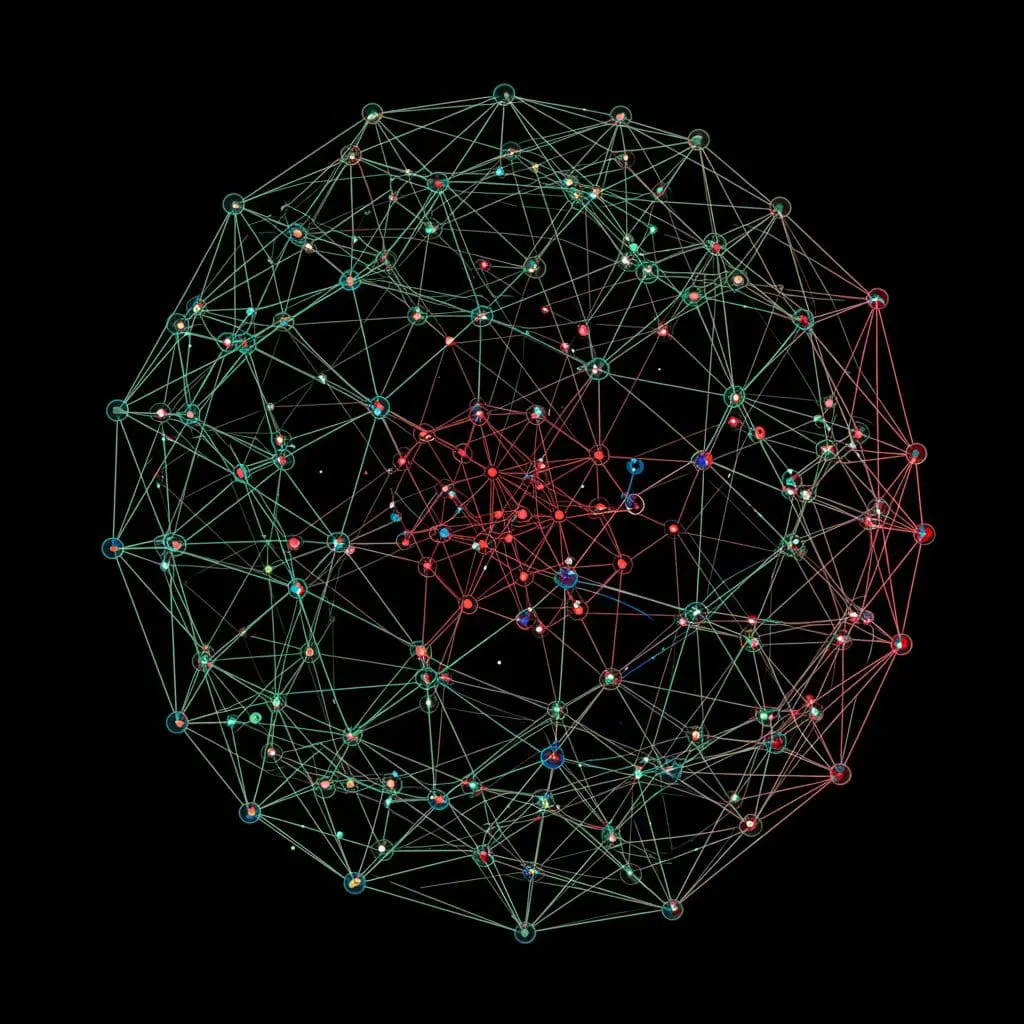
On April 16, 2025, an article titled Geometric Analysis of the Stabilizer Polytope for Few-Qubit Systems was published, exploring how ‘magic’ in quantum states contributes to computational advantage by analyzing the geometry of stabilizer polytopes and its implications for small-scale quantum systems.
The research investigates the geometry of the stabilizer polytope in few-qubit systems, using trace distance to quantify magic. By sampling states, it analyzes magic distribution for pure and mixed states, comparing trace distance with other measures and entanglement. The study classifies Bell-like inequalities corresponding to polytope facets and establishes a concentration result linking magic and entanglement via Fannes’ inequality. These findings offer insights into the geometric structure of magic and its role in small-scale quantum systems.
Recent research has illuminated new aspects of quantum entanglement by adopting a geometric perspective. Traditionally, understanding quantum states relied on algebraic methods, but this innovative approach examines the structure of polytopes—geometric shapes in higher dimensions—to classify multipartite entangled states.
By mapping stabilizer states onto these polytopes, researchers can identify distinct regions corresponding to various entangled states. This geometric analysis allows for a more effective visualization and classification of different types of entanglement, including significant states like the Greenberger-Horne-Zeilinger (GHZ) states.
The study reveals that multipartite entanglement extends beyond simple Bell pairs to encompass complex states such as GHZ states. These involve multiple qubits being entangled together, offering potential for advanced quantum protocols. The research demonstrates how these states can be extracted from stabilizer states, which are fundamental in quantum error correction and teleportation.
This geometric approach significantly advances our understanding of entanglement, providing a clearer framework for identifying and utilizing different types of entangled states. It supports advancements in quantum technologies, offering a foundation for future innovations in secure communication and computational power. By integrating geometric methods into quantum computing, researchers open new avenues for both theoretical exploration and technological development.
👉 More information
🗞 Geometric Analysis of the Stabilizer Polytope for Few-Qubit Systems
🧠 DOI: https://doi.org/10.48550/arXiv.2504.12518