On April 16, 2025, researchers Gustavo Alves Bezerra, Andris Ambainis, and Renato Portugal published Quantum Search on Bipartite Multigraphs, detailing a novel quantum algorithm achieving quadratic speedup over classical methods for searching on generalized bipartite graphs.
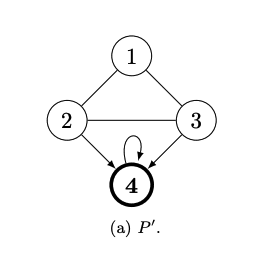
The paper introduces a quantum search algorithm for 2-tessellable graphs, achieving quadratic speedup over classical Markov chain methods. It employs adapted Szegedy and Staggered Walks (SzQW and StQW) to find marked vertices via oracle queries efficiently. The AGJK algorithm is used as a subroutine, demonstrating the utility of these walk models in broader graph classes. This approach generalizes existing techniques, showcasing significant query reduction through quantum methods.
Quantum computing has emerged as a transformative force across various fields, offering solutions to complex problems that classical computers struggle with. Among its innovations, quantum walks have proven particularly effective in enhancing spatial search algorithms, providing faster and more efficient solutions compared to traditional methods. This article delves into recent advancements in quantum walk models and their implications for spatial search, highlighting the potential of these developments in reshaping computational approaches.
Quantum walks are quantum mechanical analogues of classical random walks, where particles move through space based on probabilistic rules. Unlike their classical counterparts, quantum walks leverage principles such as superposition and interference, enabling particles to explore multiple paths simultaneously. This unique capability allows quantum walks to solve certain problems significantly faster than classical algorithms.
Recent research has focused on refining quantum walk models to improve efficiency and scalability. The staggered model combined with Hamiltonians represents a notable advancement, offering a structured framework for implementing quantum walks. This approach not only enhances algorithmic efficiency but also ensures scalability, making it applicable to a wide range of real-world problems.
Spatial search algorithms are designed to locate specific targets within large datasets or complex structures. Classical algorithms often face challenges due to the inherent complexity of these tasks. Quantum walks, however, provide a promising solution by drastically reducing the time required to find target elements. By utilizing continuous-time quantum walks on t-designs, researchers have developed algorithms that achieve near-optimal performance in spatial search tasks.
The integration of quantum walks with advanced models like the staggered model has yielded several significant findings. These include improved efficiency in solving spatial search problems, enhanced scalability for larger datasets, and the potential for applying these techniques to real-world challenges such as optimization and artificial intelligence. The ability to perform faster searches not only accelerates computational tasks but also opens new avenues for innovation across various industries.
The advancements in quantum walk models represent a significant step forward in harnessing the power of quantum computing for practical applications. By enhancing spatial search algorithms, these innovations pave the way for more efficient solutions to complex problems, ultimately contributing to the broader potential of quantum technologies. As research continues, we can anticipate further breakthroughs that will solidify the role of quantum walks in the future of computing.
👉 More information
🗞 Quantum Search on Bipartite Multigraphs
🧠 DOI: https://doi.org/10.48550/arXiv.2504.12586
See today’s quantum computing news on Quantum Zeitgeist for the latest breakthroughs in qubits, hardware, algorithms, and industry deals.