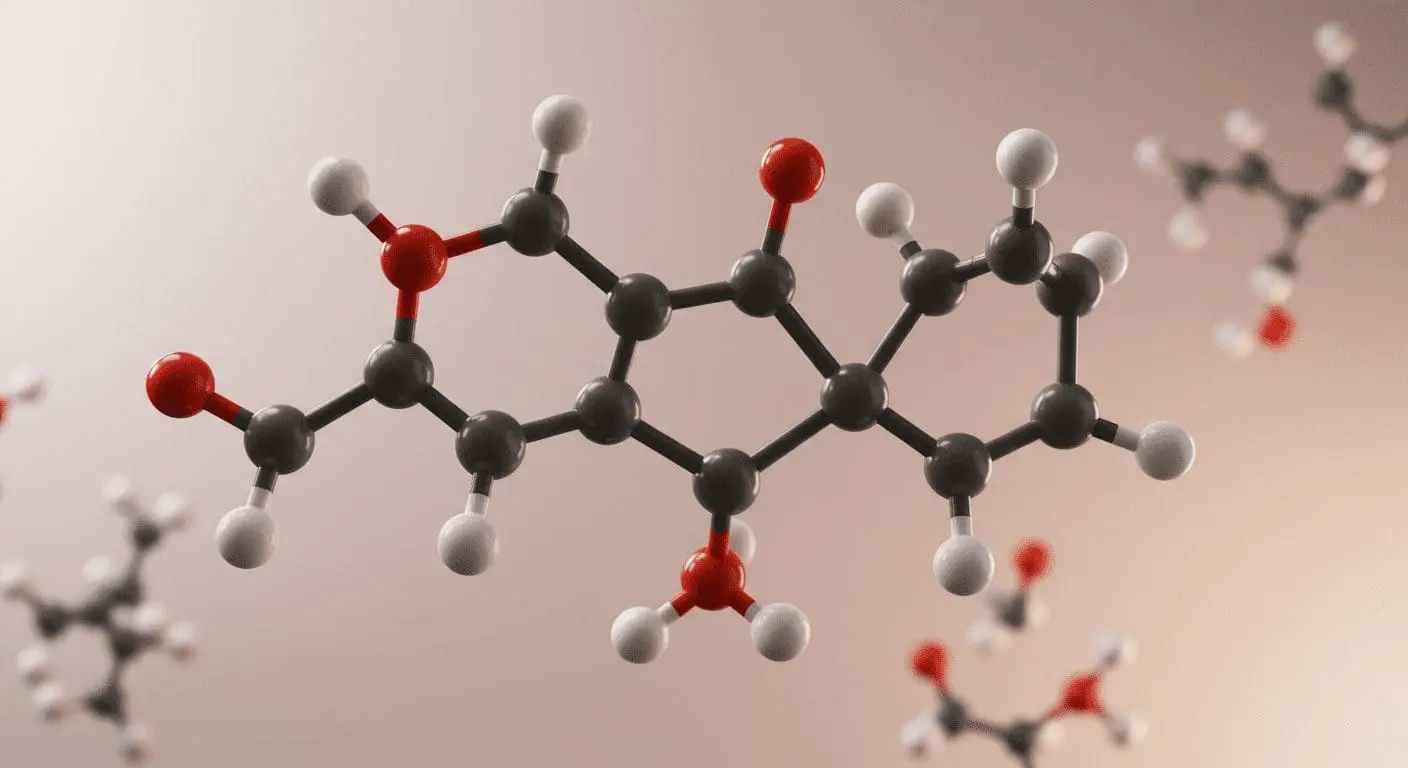
Researchers from the National Quantum Computing Centre, including Kieran McDowall and colleagues, published a recent study. The research explores applying quantum optimization techniques, specifically Variational Eigensolver (VQE) and Annealing (QA), on commercially available quantum devices to analyze defective graphene structures. By comparing these quantum methods with classical algorithms, the study identifies performance limitations due to device connectivity, noise, and computational overheads, providing insights into the practical implementation of quantum optimization for materials science applications.
The research demonstrates quantum computational advantage for solving Quadratic Unconstrained Binary Optimization (QUBO) problems in defective graphene analysis. Using Variational Eigensolver (VQE) and Quantum Annealing (QA), the study compares performance on commercial gate-based and annealing devices via cloud access against classical algorithms. While fully connected QUBOs of up to variables were solved, device connectivity, noise, and classical overheads limited scalability beyond this threshold. The findings highlight practical limitations in current quantum optimization approaches while showcasing potential for broader applications in optimization tasks.
Quantum materials are at the forefront of modern physics research, where quantum effects significantly influence their properties. These materials include superconductors, topological insulators, and quantum magnets. Superconductors allow electricity to flow without resistance, while topological insulators have unique electronic properties that could revolutionize quantum computing. Quantum magnets exhibit distinct magnetic behaviours due to their spin states, offering the potential for advanced data storage solutions.
Quantum annealing is a computational method designed to solve complex optimization problems more efficiently than classical computers. By leveraging principles like superposition and tunneling, it aims to accelerate problem-solving in logistics and finance. Superposition allows qubits to exist in multiple states simultaneously, enhancing computational speed, while tunneling helps escape local minima in optimization tasks.
Recent experiments compared quantum annealing with classical methods using a D-Wave 2000Q system. Problems tested included Max-Cut and Quadratic Unconstrained Binary Optimization (QUBO). Results indicated that quantum annealing outperformed classical approaches for certain problem sizes but not universally. Factors like qubit connectivity, chain strength, and annealing time significantly influenced performance.
👉 More information
🗞 A Practical Cross-Platform, Multi-Algorithm Study of Quantum Optimisation for Configurational Analysis of Materials
🧠 DOI: https://doi.org/10.48550/arXiv.2504.06885