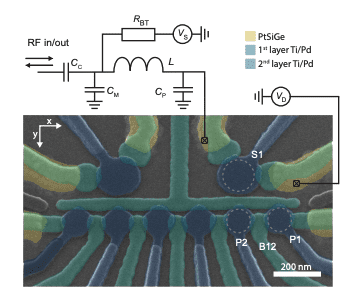
On April 9, 2025, researchers published Identifying and Mitigating Errors in Hole Spin qubit readout, detailing advancements in achieving high-fidelity single-shot readout of 97.0% for hole spin qubits while maintaining universal spin control, a critical step toward practical quantum computing applications.
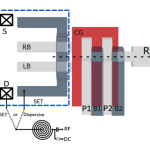
The research uses RF charge detection and a double-latching scheme to achieve a single-shot state-preparation-and-measurement fidelity of 97% for hole spin qubits in germanium double dots. The study demonstrates high-fidelity readout while addressing challenges like site-dependent anisotropies and short relaxation times by analyzing error processes during readout, optimizing magnetic fields to minimize spin relaxation, and maintaining universal spin control. This advancement lays the groundwork for reproducible high-fidelity operations in hole-based spin processors.
Quantum sensors represent a transformative leap in technology, leveraging the principles of quantum mechanics to achieve unparalleled precision in measurements. These devices are pivotal in various fields, from medical diagnostics to environmental monitoring, offering sensitivity beyond classical limits. Their ability to detect minute changes with extraordinary accuracy makes them indispensable for modern scientific and technological advancements.
Despite their potential, quantum sensors face significant challenges, particularly in spin-based systems. Key issues include spin relaxation and decoherence, which occur due to interactions between the sensor’s qubits and their environment. These phenomena lead to loss of quantum state information, thereby reducing measurement accuracy and reliability. Understanding and mitigating these effects is crucial for enhancing sensor performance.
Recent research has focused on spin-orbit control to
Recent research has focused on spin-orbit control to manipulate qubits more effectively. Studies by Seedhouse et al. (2021) demonstrate how spin-orbit coupling can be utilized in silicon quantum dots, enabling precise control over spin states and reducing errors. This technique improves sensor sensitivity and enhances quantum state stability, addressing some of the challenges posed by decoherence.
Advancements in readout techniques have significantly improved the accuracy of quantum sensors. Nurizzo et al. (2023) achieved a breakthrough with the complete readout of two-electron spin states in double quantum dots. This development allows for more reliable measurements, as it minimizes errors during state detection, thereby increasing the sensor’s operational efficiency and precision.
Research into exchange anisotropies has provided new insights into optimizing qubit interactions. Saez-Mollejo et al. (2024) explored how these anisotropies affect microwave-driven qubits, revealing methods to enhance sensor performance by tuning spin interactions. This understanding is crucial for designing sensors that operate effectively under various conditions, ensuring robust and accurate measurements.
The innovations in quantum sensing have far-reaching implications for the broader field of quantum technologies. Enhanced control over qubit states and improved measurement techniques pave the way for more reliable quantum computing systems. Additionally, these advancements contribute to the development of quantum communication networks, where precise state detection is essential for secure data transmission.
In summary, recent advancements in spin-based quantum sensors
In summary, recent advancements in spin-based quantum sensors have addressed critical challenges through innovative techniques such as spin-orbit control, enhanced readout methods, and understanding exchange anisotropies. These developments not only improve sensor performance but also contribute to the progression of quantum technologies. As research continues, we can anticipate further breakthroughs that will expand the capabilities of quantum sensing, driving innovation across multiple disciplines.
🗞 Identifying and mitigating errors in hole spin qubit readout
🧠 DOI: https://doi.org/10.48550/arXiv.2504.06898
See today’s quantum computing news on Quantum Zeitgeist for the latest breakthroughs in qubits, hardware, algorithms, and industry deals.