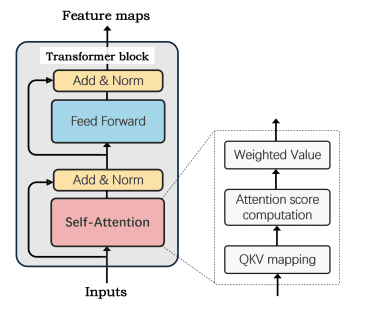
Hui Zhang and Qinglin Zhao published a comprehensive survey on April 4, 2025, examining quantum transformers’ approaches, advantages, challenges, and future directions. The survey focused on parameterized circuit strategies for NISQ devices and addressed issues like scalability and training plateaus.
Transformer models in quantum machine learning employ parameterized quantum circuits (PQC) and quantum linear algebra (QLA). PQC-based methods use strategies like QKV-only mapping and Pairwise Attention for small-scale tasks on NISQ devices but face scalability issues. QLA approaches, relying on future fault-tolerant quantum computers, offer theoretical efficiency through block-encoding and Singular Value Transformation. Future research should optimize hybrid architectures, establish evaluation frameworks, address training challenges, and explore PQC-QLA combinations.
One of the most exciting applications of quantum computing lies in machine learning. Quantum machine learning (QML) introduces novel algorithms that can process information more efficiently than classical methods. For instance, studies have shown that quantum computers can classify data with higher accuracy by exploiting quantum entanglement and superposition. This paradigm shift could lead to advancements in areas like medical diagnostics, where complex datasets require sophisticated analysis.
Despite its potential, quantum computing faces significant challenges. Hardware limitations, such as the need for ultra-cold temperatures and error-prone qubits, hinder large-scale implementation. Additionally, the issue of barren plateaus in training quantum neural networks poses a challenge, where optimization becomes increasingly difficult as the network size grows. These obstacles require innovative solutions to unlock the full potential of quantum technologies.
Researchers are actively exploring techniques to overcome these challenges. For example, Fourier-based token mixers have emerged as efficient methods for processing data in transformers, inspired by adaptive approaches used in weather forecasting models. These innovations not only enhance computational efficiency but also pave the way for more robust quantum algorithms. Such advancements demonstrate the dynamic and evolving nature of the field.
👉 More information
🗞 A Survey of Quantum Transformers: Approaches, Advantages, Challenges, and Future Directions
🧠 DOI: https://doi.org/10.48550/arXiv.2504.03192
See today’s quantum computing news on Quantum Zeitgeist for the latest breakthroughs in qubits, hardware, algorithms, and industry deals.