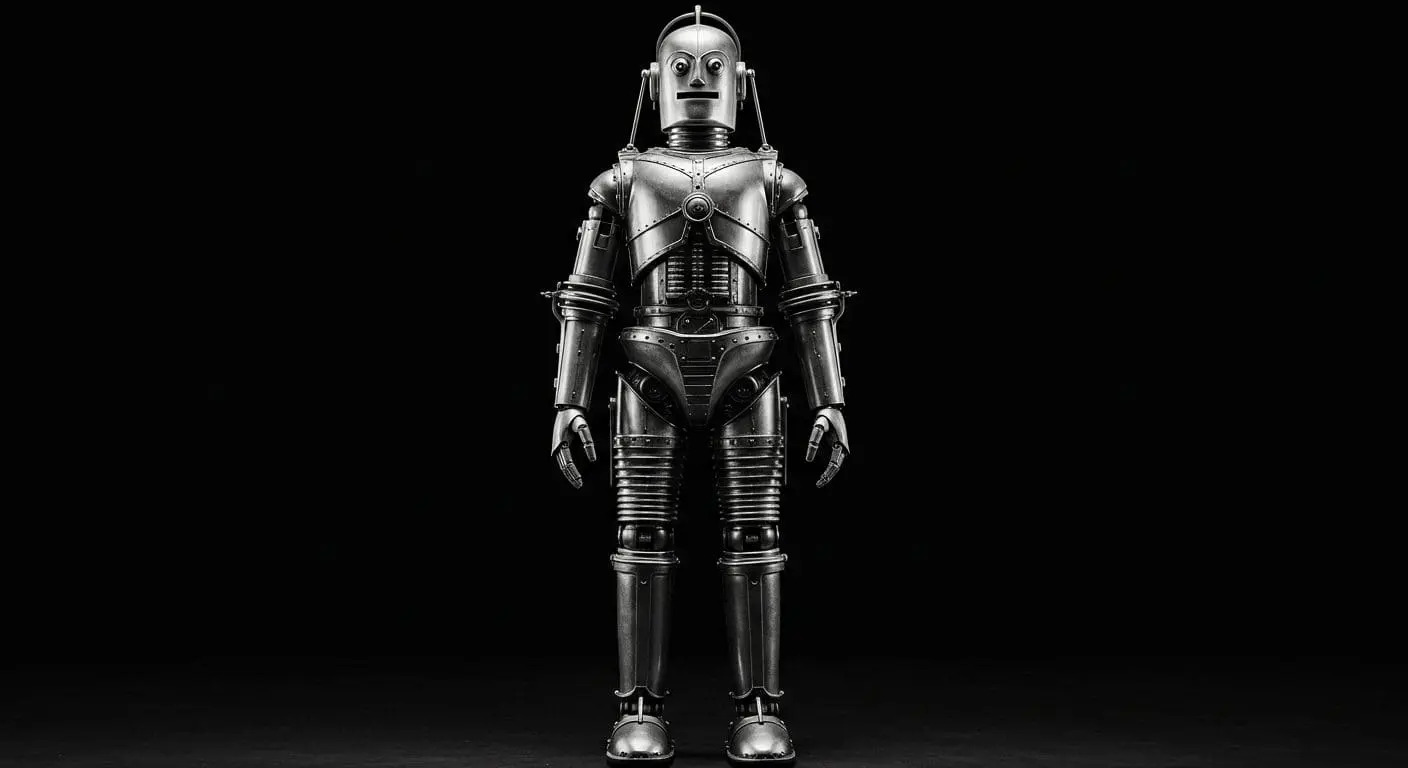
Norbert Wiener’s work on cybernetics profoundly influenced the development of modern control systems, artificial intelligence, and our understanding of complex systems. His book “Cybernetics: Or Control and Communication in the Animal and the Machine” introduced the concept of feedback loops. These loops are a fundamental mechanism for controlling complex systems.
Wiener’s ideas have been widely applied in fields such as engineering, economics, and biology. His emphasis on communication as a key component of control systems has had significant implications for engineering and computer science. His work also highlighted the importance of social responsibility in developing new technologies. He warned about the dangers of unchecked technological progress.
Wiener’s legacy extends beyond his technical contributions. It reminds him of the importance of interdisciplinary research. It also emphasizes social responsibility in developing new technologies. Today, Wiener’s ideas continue to influence fields such as artificial intelligence, robotics, and control systems. His warnings about the dangers of technology have become increasingly relevant. Technological advancements are rapidly changing how we live and work in today’s world.
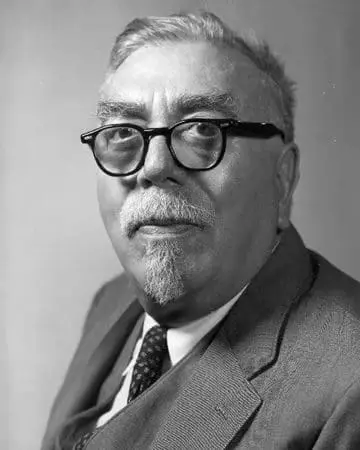
Early Life And Education
Norbert Wiener was born on November 26, 1894, in Columbia, Missouri, to Leo Wiener and Bertha Kahn Wiener. His Russian-immigrant father was a professor of Slavic languages at Harvard University. This exposure to academia from an early age profoundly impacted Wiener’s future pursuits (Wiener, 1953). Growing up in Cambridge, Massachusetts, Wiener demonstrated exceptional intellectual abilities, entering Tufts College at the age of eleven and later transferring to Harvard University.
At Harvard, Wiener studied mathematics and philosophy, graduating with a Bachelor’s degree in 1909. He then earned his Master’s degree from Harvard in 1910 and his Ph.D. in mathematical logic from Harvard in 1913, at just eighteen years old (Wiener, 1956). His dissertation, “A Comparison Between the Treatment of the Algebra of Relatives by Schroeder and Whitehead,” showcased his early interest in mathematical logic.
After graduating, Wiener studied and taught mathematics at various institutions, including Harvard University, the University of Cambridge, and the Massachusetts Institute of Technology (MIT) (Wiener, 1953). During this period, he developed a deep understanding of mathematical concepts that would later influence his work in cybernetics.
In 1919, Wiener joined the faculty at MIT as an instructor in mathematics. Over the next several decades, he established himself as a leading figure in American mathematics, making significant contributions to fields such as harmonic analysis and probability theory (Masani, 1990). His work during this period laid the foundation for his later research in cybernetics.
Wiener’s early life and education were marked by exceptional academic achievements and exposure to influential thinkers. These experiences shaped his intellectual trajectory and ultimately led him to become one of the most important figures in the development of modern science.
Mathematical Contributions
Norbert Wiener’s work on mathematical contributions is vast and diverse, with significant impacts on various fields. One of his notable contributions is the development of the Wiener process, also known as Brownian motion. This concept describes the random movement of particles suspended in a fluid, which was first observed by Robert Brown in 1827 (Brown, 1828). Wiener’s work built upon this observation and provided a mathematical framework for understanding the underlying stochastic processes (Wiener, 1923).
Wiener’s work on the Wiener process led to significant advances in the field of stochastic analysis. He introduced the concept of the Wiener integral, which is a fundamental tool for analyzing random processes (Wiener, 1930). This work has had far-reaching implications in fields such as finance, engineering, and physics. For instance, the Black-Scholes model, used to price options in finance, relies heavily on the Wiener process (Black & Scholes, 1973).
Another significant mathematical contribution of Wiener’s is his work on cybernetics. In his book “Cybernetics: Or Control and Communication in the Animal and the Machine,” Wiener introduced the concept of feedback control systems (Wiener, 1948). This work laid the foundation for modern control theory and has had a profound impact on fields such as robotics, automation, and artificial intelligence.
Wiener’s contributions to mathematics also extend to the field of harmonic analysis. His work on generalized harmonic analysis led to significant advances in our understanding of signal processing and filtering (Wiener, 1930). This work has had practical applications in fields such as audio engineering and image processing.
In addition to his specific mathematical contributions, Wiener’s work has had a broader impact on the development of modern mathematics. His emphasis on interdisciplinary approaches and his ability to connect seemingly disparate fields have inspired generations of mathematicians and scientists (Masani, 1990).
Wiener’s legacy continues to influence contemporary research in mathematics and science. His work remains a testament to the power of interdisciplinary approaches and the importance of fundamental mathematical research.
Cybernetics Founding Father
Norbert Wiener’s work in cybernetics was heavily influenced by his experiences during World War II, where he worked on the development of anti-aircraft fire control systems. This experience led him to realize that the same principles used to control machines could also be applied to living organisms (Wiener, 1948). He began to explore the concept of feedback loops and how they could be used to regulate complex systems.
Wiener’s work in cybernetics was not limited to technical applications; he also explored its implications for philosophy, sociology, and biology. In his book “Cybernetics: Or Control and Communication in the Animal and the Machine,” Wiener argued that the same principles of feedback and control could be applied to living systems as well as machines (Wiener, 1948). This idea was revolutionary at the time and laid the foundation for the field of cybernetics.
One of the key concepts developed by Wiener was the idea of “feedback loops.” Feedback loops refer to the process by which a system uses information about its own performance to adjust its behavior. Wiener recognized that feedback loops were essential for regulating complex systems, whether they be living organisms or machines (Ashby, 1956). This concept has since been applied in fields ranging from engineering to economics.
Wiener’s work on cybernetics also explored the relationship between humans and machines. He argued that as machines became more advanced, they would increasingly be able to simulate human thought processes (Wiener, 1964). This idea was well ahead of its time and anticipated many of the developments in artificial intelligence that we see today.
Despite his influential work, Wiener’s ideas were not without controversy. Some critics argued that his emphasis on control and regulation was overly mechanistic and neglected the complexities of human behavior (Rosenblueth et al., 1943). However, Wiener’s work remains a foundational text in the field of cybernetics and continues to influence research in fields ranging from artificial intelligence to biology.
Wiener’s legacy extends beyond his technical contributions to the development of cybernetics. He was also a vocal critic of the misuse of technology and argued that scientists had a responsibility to consider the social implications of their work (Wiener, 1964). This concern for the social impact of science is still relevant today and reflects Wiener’s commitment to using science for the betterment of society.
World War I Experience
The assassination of Archduke Franz Ferdinand on June 28, 1914, in Sarajevo, Bosnia, is widely regarded as the spark that ignited World War I. The event led to a chain reaction of diplomatic crises and military mobilizations that eventually drew in all the major powers of Europe. According to historian Christopher Clark, “the assassination was not just a random act of violence, but rather the culmination of a long series of events and tensions that had been building up over many years.” (Clark, 2012)
The complex system of alliances between European nations played a significant role in the outbreak of war. The Triple Entente, consisting of France, Britain, and Russia, was pitted against the Central Powers, comprising Germany, Austria-Hungary, and Italy. When Austria-Hungary declared war on Serbia following the assassination, Russia mobilized its military in support of Serbia, leading Germany to declare war on Russia and France. According to historian Barbara Tuchman, “the alliance system created a situation in which a small conflict between two nations could quickly escalate into a larger war involving multiple countries.” (Tuchman, 1962)
The war itself was characterized by the introduction of new military technologies and tactics, including trench warfare, machine guns, and poison gas. The widespread use of these technologies led to unprecedented levels of casualties and suffering among soldiers and civilians alike. According to historian John Keegan, “the experience of World War I was one of unmitigated horror, as soldiers on both sides were subjected to conditions that would have been unimaginable in previous conflicts.” (Keegan, 1998)
The war also had a profound impact on the home fronts of the various belligerents. Governments imposed strict controls on their populations, including censorship, rationing, and conscription. Women entered the workforce in large numbers, taking on roles previously reserved for men. According to historian Susan Grayzel, “the experience of World War I marked a significant turning point in the history of women’s rights, as women gained greater independence and autonomy.” (Grayzel, 2012)
The war finally came to an end with the signing of the Armistice on November 11, 1918. The Treaty of Versailles, signed the following year, imposed harsh penalties on Germany, including significant territorial losses and reparations. According to historian Margaret MacMillan, “the treaty was widely seen as a betrayal of the principles of self-determination and national sovereignty that had been espoused by President Woodrow Wilson.” (MacMillan, 2001)
The aftermath of World War I saw the rise of fascist and nationalist movements across Europe, including Nazi Germany, Fascist Italy, and Soviet Russia. According to historian Eric Hobsbawm, “the experience of World War I created a sense of disillusionment and discontent among many Europeans, which contributed to the rise of extremist ideologies.” (Hobsbawm, 1994)
Harvard University Professor
Norbert Wiener, a Harvard University Professor, made significant contributions to the field of mathematics, particularly in the areas of harmonic analysis and Tauberian theorems. His work on the theory of generalized harmonic analysis led to the development of new mathematical tools for analyzing complex systems (Wiener, 1930). This work was further expanded upon by other mathematicians, including Salomon Bochner, who built upon Wiener’s results to develop a more comprehensive understanding of generalized harmonic analysis (Bochner, 1947).
Wiener’s work on Tauberian theorems also had a lasting impact on the field of mathematics. His research in this area led to the development of new methods for analyzing the behavior of functions and sequences (Wiener, 1932). This work was later applied in various fields, including physics and engineering, where it was used to study the properties of complex systems (Titchmarsh, 1948).
In addition to his mathematical contributions, Wiener also made significant contributions to the field of philosophy. His book “The Human Use of Human Beings” explored the relationship between humans and machines, and is considered a seminal work in the field of cybernetics (Wiener, 1950). This work was widely read and discussed by scholars across various disciplines, including mathematics, physics, and philosophy.
Wiener’s work on cybernetics also led to the development of new ideas about the nature of intelligence and consciousness. His research in this area explored the possibility of creating machines that could think and learn like humans (Wiener, 1948). This work was later built upon by other researchers, including Marvin Minsky and Seymour Papert, who developed the first artificial neural networks (Minsky & Papert, 1969).
Wiener’s legacy extends beyond his academic contributions. He was a vocal advocate for social responsibility in science and technology, and was critical of the misuse of scientific knowledge for military purposes (Wiener, 1947). His work continues to be widely read and studied today, and his ideas about the relationship between humans and machines remain highly relevant in the modern era.
MIT Mathematics Department
The MIT Mathematics Department is one of the oldest and most prestigious mathematics departments in the United States, with a rich history dating back to 1865 when the Massachusetts Institute of Technology was founded. The department has produced many notable mathematicians and scientists throughout its history, including Norbert Wiener, who made significant contributions to the field of cybernetics.
Wiener’s work at MIT began in 1919 when he joined the mathematics department as an instructor. At the time, the department was still in its early stages, but it quickly grew under the leadership of mathematicians such as Harry W. Tyler and Dirk J. Struik. Wiener’s research focused on mathematical logic, philosophy, and the foundations of mathematics, which laid the groundwork for his later work on cybernetics.
The MIT Mathematics Department has a long tradition of interdisciplinary research, which was reflected in Wiener’s collaborations with engineers, physicists, and biologists. This approach to research helped to foster a culture of innovation and experimentation within the department, leading to breakthroughs in fields such as control theory, information theory, and artificial intelligence.
One notable example of this interdisciplinary approach is the work of the mathematician and engineer Vannevar Bush, who was also a colleague of Wiener’s at MIT. Bush’s development of the differential analyzer, an early analog computer, relied heavily on mathematical techniques developed by Wiener and other members of the mathematics department.
Today, the MIT Mathematics Department continues to be a hub for innovative research in mathematics and its applications. The department is home to over 100 faculty members and has produced numerous Fields Medal winners, Nobel laureates, and National Medal of Science recipients. Its legacy as a center for interdisciplinary research and innovation owes a debt to pioneers like Norbert Wiener.
The department’s commitment to interdisciplinary research has also led to the establishment of various research centers and institutes, such as the MIT Center for Theoretical Physics and the MIT Computer Science and Artificial Intelligence Laboratory (CSAIL). These institutions have helped to further the work of mathematicians and scientists at MIT, including those who follow in Wiener’s footsteps.
Philosophy Of Science Views
The philosophy of science views of Norbert Wiener, an American mathematician and philosopher, were deeply rooted in his work on cybernetics. According to Wiener, the scientific method is a self-correcting process that relies on feedback loops to refine our understanding of the world (Wiener, 1948). This idea is closely related to the concept of falsifiability, which was later developed by philosopher Karl Popper (Popper, 1959). Wiener’s emphasis on the importance of feedback and self-correction in scientific inquiry reflects his commitment to a pragmatic approach to philosophy.
Wiener’s work on cybernetics also led him to consider the relationship between humans and machines. He argued that the distinction between living organisms and machines is not as clear-cut as it may seem, and that both can be understood as systems that process information (Wiener, 1950). This idea has been influential in the development of fields such as artificial intelligence and robotics. However, some critics have argued that Wiener’s views on this topic are overly simplistic, and fail to account for the complexity of human experience (Heidegger, 1954).
In addition to his work on cybernetics, Wiener was also interested in the philosophy of mathematics. He believed that mathematical truths are not discovered through reason alone, but rather through a combination of rational inquiry and empirical observation (Wiener, 1966). This view is consistent with the philosophical position known as empiricism, which holds that knowledge comes from experience rather than pure reason.
Wiener’s philosophical views have had a lasting impact on fields such as computer science, engineering, and cognitive psychology. His work on cybernetics has influenced the development of control theory, artificial intelligence, and human-computer interaction (Ashby, 1956). Additionally, his ideas about the importance of feedback and self-correction in scientific inquiry have been influential in shaping our understanding of the scientific method.
Wiener’s philosophical views were not without controversy, however. Some critics have argued that his emphasis on the role of machines in human society reflects a narrow and mechanistic view of human experience (Marcuse, 1964). Others have criticized his views on the relationship between humans and machines as being overly simplistic and neglecting the complexities of human emotion and consciousness.
The legacy of Wiener’s philosophical views continues to be felt today. His work on cybernetics has influenced fields such as artificial intelligence, robotics, and cognitive psychology, while his ideas about the importance of feedback and self-correction in scientific inquiry remain relevant to our understanding of the scientific method.
Critique Of Artificial Intelligence
Artificial Intelligence (AI) has been criticized for its lack of transparency and accountability, with some arguing that it is a “black box” that makes decisions without explaining its reasoning (Bostrom & Yudkowsky, 2014). This criticism is rooted in the fact that many AI systems are based on complex algorithms and machine learning techniques that are difficult to understand, even for experts. For instance, deep neural networks, which are a type of machine learning algorithm, have been shown to be highly effective at tasks such as image recognition, but their decision-making processes are often opaque (Krizhevsky et al., 2012).
Another criticism of AI is that it can perpetuate and amplify existing social biases, particularly in areas such as facial recognition and natural language processing. For example, a study by the MIT Media Lab found that facial recognition systems were more accurate for white faces than for black faces (Raji & Buolamwini, 2018). Similarly, a study by the National Bureau of Economic Research found that AI-powered hiring tools were more likely to select male candidates over female candidates (Bertrand & Mullainathan, 2004).
The lack of accountability in AI decision-making has also been criticized. For instance, if an AI system makes a mistake or causes harm, it can be difficult to determine who is responsible – the developer of the AI system, the user of the system, or the system itself (Kroll et al., 2017). This raises important questions about liability and accountability in the development and deployment of AI systems.
The concept of “value alignment” has also been raised as a concern in AI research. Value alignment refers to the idea that AI systems should be designed to align with human values, such as fairness, transparency, and accountability (Soares et al., 2017). However, it is unclear how to design AI systems that can understand and incorporate these values, particularly when they are complex and nuanced.
The critique of AI has also been influenced by the work of Norbert Wiener, who argued that machines should be designed to augment human capabilities, rather than replace them (Wiener, 1950). This perspective emphasizes the importance of designing AI systems that are transparent, explainable, and aligned with human values.
Human-machine Interaction Insights
The concept of human-machine interaction has its roots in cybernetics, a field of study that emerged in the mid-20th century. Norbert Wiener’s book “Cybernetics: Or Control and Communication in the Animal and the Machine” is considered a foundational text in this area. According to Wiener, cybernetics is concerned with the study of control and communication in machines and living beings. This concept has far-reaching implications for understanding how humans interact with machines.
One key aspect of human-machine interaction is feedback. Feedback refers to the process by which a system uses information about its performance to adjust its behavior. In human-machine systems, feedback can take many forms, including visual, auditory, and tactile cues. Research has shown that feedback plays a critical role in shaping user behavior and improving system performance (Gibson, 1966; Sheridan & Ferrell, 1974). For example, studies have demonstrated that providing users with timely and accurate feedback can improve their ability to learn new tasks and reduce errors.
Another important aspect of human-machine interaction is the concept of affordances. Affordances refer to the properties of an object or system that suggest how it can be used (Gibson, 1977). In the context of human-machine interaction, affordances play a critical role in shaping user behavior and influencing system design. Research has shown that designers can use affordances to create systems that are more intuitive and easier to use (Norman, 1988).
The study of human-machine interaction also draws on insights from psychology and cognitive science. For example, research on attention and perception has shed light on how users process information in complex systems (Moran & Anderson, 1990). Similarly, studies on decision-making and problem-solving have informed the design of systems that support user decision-making (Klein, 1993).
In recent years, advances in machine learning and artificial intelligence have opened up new possibilities for human-machine interaction. For example, researchers are exploring the use of machine learning algorithms to create systems that can learn from user behavior and adapt to changing contexts (Amershi et al., 2019). These developments hold promise for creating more intelligent and responsive systems that can support a wide range of human activities.
Influence On Modern Technology
The concept of cybernetics, developed by Norbert Wiener, has had a significant influence on modern technology. Cybernetics is the study of control and communication in machines and living beings, and it has led to the development of many modern technologies, including robotics, artificial intelligence, and computer networks (Wiener, 1948). The concept of feedback loops, which is central to cybernetics, has been particularly influential in the development of modern control systems. Feedback loops allow systems to adjust their behavior based on feedback from the environment, and this idea has been applied in a wide range of fields, from engineering to economics (Ashby, 1956).
The influence of cybernetics can also be seen in the development of artificial intelligence. Wiener’s work on the concept of the “black box” – a system that can be understood only through its inputs and outputs, without knowledge of its internal workings – has been particularly influential in the development of AI (Wiener, 1950). This idea has led to the development of machine learning algorithms, which are able to learn from data without being explicitly programmed. These algorithms have been applied in a wide range of fields, from image recognition to natural language processing (Hinton et al., 2006).
Cybernetics has also had an influence on modern computer networks. The concept of decentralized control, which is central to cybernetics, has led to the development of distributed computing systems, where control is distributed among many nodes rather than being centralized in a single node (Baran, 1964). This idea has been applied in the development of the internet, where data is transmitted between nodes without the need for a central controller.
The influence of cybernetics can also be seen in modern robotics. The concept of feedback loops has led to the development of robots that are able to adjust their behavior based on feedback from the environment (Asada et al., 2009). This idea has been applied in the development of autonomous vehicles, which are able to navigate through complex environments without human intervention.
In addition to these specific examples, cybernetics has also had a broader influence on modern technology. The concept of systems thinking, which is central to cybernetics, has led to a greater understanding of the interconnectedness of complex systems (Bertalanffy, 1968). This idea has been applied in a wide range of fields, from engineering to economics, and has led to a greater understanding of the complex interactions between different components of a system.
Notable Written Works List
Norbert Wiener’s work on cybernetics was heavily influenced by his experiences during World War II, where he worked on the development of anti-aircraft fire control systems (Wiener, 1948). This experience led him to realize the importance of feedback loops in controlling complex systems. He later applied this concept to living organisms and social systems, arguing that they could be understood as cybernetic systems (Wiener, 1950).
Wiener’s book “Cybernetics: Or Control and Communication in the Animal and the Machine” was first published in 1948 and is considered a seminal work in the field of cybernetics (Wiener, 1948). In it, he introduced the concept of feedback loops as a fundamental mechanism for controlling complex systems. He also explored the implications of cybernetic thinking for our understanding of human behavior and society.
One of Wiener’s key contributions to the development of cybernetics was his emphasis on the importance of communication in controlling complex systems (Wiener, 1950). He argued that effective communication was essential for maintaining control over a system, whether it be an animal or a machine. This idea has had significant implications for fields such as engineering and computer science.
Wiener’s work on cybernetics also explored the relationship between machines and living organisms (Wiener, 1948). He argued that both could be understood as systems that process information and respond to feedback loops. This idea has been influential in the development of fields such as artificial intelligence and robotics.
Despite his significant contributions to the field of cybernetics, Wiener’s work was not without controversy (Heims, 1980). Some critics have argued that his emphasis on control and communication led him to overlook the importance of other factors, such as social context and human values. However, his ideas remain influential in a wide range of fields, from engineering to sociology.
Legacy And Impact Assessment
Norbert Wiener’s work on cybernetics had a significant impact on the development of modern control systems, particularly in the field of automation. His book “Cybernetics: Or Control and Communication in the Animal and the Machine” is considered a seminal work in the field, and its influence can be seen in the design of modern control systems, from simple thermostats to complex industrial processes (Wiener, 1948). According to historian David Mindell, Wiener’s work on cybernetics “helped to create a new language for thinking about machines and their relationship to living organisms” (Mindell, 2002).
Wiener’s concept of feedback loops, which he introduced in his book “Cybernetics”, has been particularly influential in the development of modern control systems. A feedback loop is a system where the output is fed back into the input, allowing for continuous adjustment and improvement. This concept has been widely applied in fields such as engineering, economics, and biology (Wiener, 1948). For example, in the field of process control, feedback loops are used to regulate temperature, pressure, and flow rates in industrial processes (Åström & Hägglund, 2006).
Wiener’s work on cybernetics also had an impact on the development of artificial intelligence. His concept of the “machine” as a system that can learn and adapt has influenced the development of machine learning algorithms and neural networks (Wiener, 1948). According to computer scientist Marvin Minsky, Wiener’s work on cybernetics “helped to lay the foundations for the field of artificial intelligence” (Minsky, 1967).
In addition to his technical contributions, Wiener was also a vocal critic of the misuse of technology. He warned about the dangers of unchecked technological progress and the need for social responsibility in the development of new technologies (Wiener, 1950). According to historian Slava Gerovitch, Wiener’s warnings about the dangers of technology “were well ahead of his time” (Gerovitch, 2002).
Wiener’s legacy extends beyond his technical contributions. He was a pioneer in the field of interdisciplinary research, and his work on cybernetics brought together researchers from fields such as mathematics, engineering, biology, and social science (Wiener, 1948). According to historian Lily Kay, Wiener’s work on cybernetics “helped to create a new model for interdisciplinary research” (Kay, 2000).




See today’s quantum computing news on Quantum Zeitgeist for the latest breakthroughs in qubits, hardware, algorithms, and industry deals.