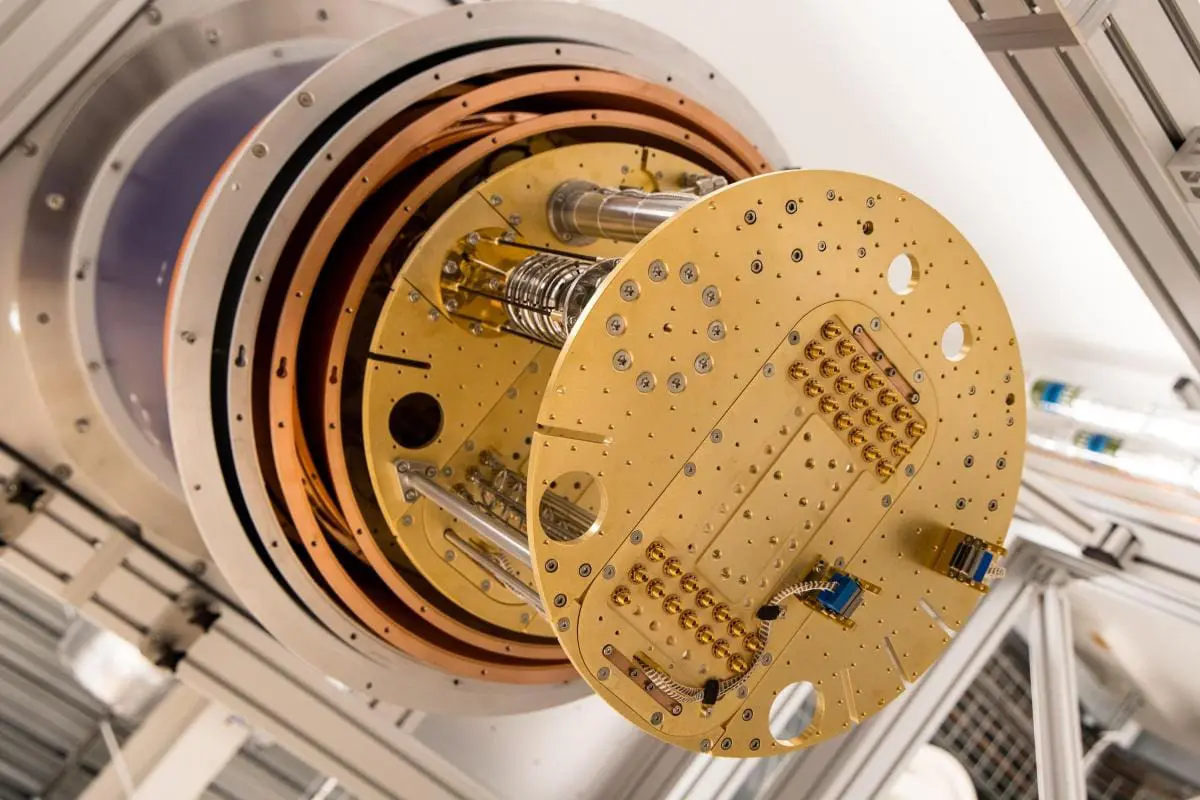
Oxford Instruments NanoScience has installed three ProteoxMX dilution refrigerators at the National Quantum Computing Centre in the UK. The systems will be used by the centre’s research team to develop hardware architectures based on superconducting circuits for quantum computing. The National Quantum Computing Centre is working towards demonstrating full-stack quantum computer prototypes with scalability, reliability, and practical applicability.
Introduction to Quantum Computing and the National Quantum Computing Centre
The field of quantum computing has been gaining significant attention in recent years due to its potential to revolutionize various aspects of technology and science. The National Quantum Computing Centre (NQCC), located at the Harwell Campus in the UK, is a national lab dedicated to accelerating the development of quantum computing by addressing the challenges of scaling up this technology. The NQCC’s primary goal is to demonstrate full-stack quantum computer prototypes towards scalability, reliability, and practical applicability. To achieve this objective, the centre has been developing hardware architectures based on superconducting circuits.
The NQCC’s facilities provide state-of-the-art laboratories for designing, building, and testing quantum computers through its own R&D and the Quantum Computing Testbed Initiative. The work of its technical teams spans the full quantum-computing stack – from the native quantum hardware to classical control systems and software, through to applications development. This comprehensive approach enables the NQCC to tackle the complex challenges associated with developing scalable and reliable quantum computing platforms. By collaborating with businesses, government, and the research community, the NQCC aims to deliver quantum computing capabilities for the UK and support the growth of the emerging industry.
One of the key components required for the development of quantum computing platforms is dilution refrigerators, which are used to cool superconducting circuits to extremely low temperatures. Recently, Oxford Instruments NanoScience installed three ProteoxMX dilution refrigerators at the NQCC’s purpose-built research labs. These systems will be used by the NQCC’s research team to develop hardware architectures based on superconducting circuits. The installation of these dilution refrigerators is an important milestone for the NQCC Superconducting Circuits team, as they can now be built out into multiple superconducting qubit systems, enabling researchers to perform experiments and accelerate the development of superconducting quantum computing.
The collaboration between Oxford Instruments NanoScience and the NQCC has been instrumental in delivering this project. Ahead of installation, Oxford Instruments worked with the NQCC to advise on lab layout and equipment optimisation, ensuring that the unique needs of the project were met. The flexibility and adaptability demonstrated by both parties enabled the smooth and successful delivery of the project, despite the challenges posed by the construction of the new facility.
Dilution Refrigerators and Their Role in Quantum Computing
Dilution refrigerators are a crucial component in the development of quantum computing platforms, as they enable the cooling of superconducting circuits to extremely low temperatures. The ProteoxMX dilution refrigerators installed at the NQCC’s research labs are designed to provide a high level of experimental and measurement readiness, allowing researchers to perform complex experiments and gather precise data. These systems feature a modular Secondary Insert design, which enables an entire experimental set-up – including samples, wiring, and components – to be configured outside of the dilution refrigerator and exchanged when needed.
The use of multiple Secondary Inserts allows the NQCC’s research team to work on new experimental setups while current experiments continue in the fridges, maximising the uptime of the dilution refrigerator and providing adaptability for future experimental setups. This flexibility is essential in a research environment, where the ability to quickly reconfigure experimental setups can significantly accelerate the pace of discovery. By providing a reliable and efficient means of cooling superconducting circuits, the ProteoxMX dilution refrigerators will play a critical role in the NQCC’s efforts to develop scalable and reliable quantum computing platforms.
The development of dilution refrigerators is a complex task that requires significant expertise in cryogenics and low-temperature physics. Oxford Instruments NanoScience has extensive experience in designing and manufacturing these systems, with a focus on creating high-performance, cryogen-free low-temperature environments. The company’s core technologies in low and ultra-low temperatures, high magnetic fields, and system integration enable the creation of advanced research tools that support experimentation down to the atomic scale.
The installation of the ProteoxMX dilution refrigerators at the NQCC’s research labs is a significant milestone for both parties involved. For Oxford Instruments NanoScience, it demonstrates the company’s ability to deliver complex systems that meet the unique needs of researchers in the field of quantum computing. For the NQCC, it marks an important step towards achieving its goal of developing scalable and reliable quantum computing platforms.
The National Quantum Computing Centre’s Mission and Objectives
The NQCC is dedicated to accelerating the development of quantum computing by addressing the challenges of scaling up this technology. To achieve this objective, the centre has established a comprehensive research programme that spans the full quantum-computing stack – from native quantum hardware to classical control systems and software, through to applications development. By working with businesses, government, and the research community, the NQCC aims to deliver quantum computing capabilities for the UK and support the growth of the emerging industry.
One of the key challenges associated with developing scalable and reliable quantum computing platforms is the need for significant advances in materials science and device development. The NQCC’s research programme includes a focus on the development of new materials and devices that can be used to build quantum computing systems. This work involves collaboration with researchers from academia and industry, as well as the use of advanced research tools such as dilution refrigerators.
The NQCC’s mission is not only focused on advancing the technical aspects of quantum computing but also on supporting the growth of the emerging industry. By working with businesses and government, the centre aims to identify opportunities for the application of quantum computing in various sectors, from finance and healthcare to energy and transportation. This work involves the development of new software and algorithms that can be used to solve complex problems in these areas.
The collaboration between Oxford Instruments NanoScience and the NQCC is an example of the type of partnership that is essential for advancing the field of quantum computing. By working together, researchers and industry partners can share knowledge, expertise, and resources, accelerating the pace of discovery and driving innovation.
Oxford Instruments NanoScience and Its Role in Supporting Quantum Computing Research
Oxford Instruments NanoScience is a leading provider of research tools that enable quantum technologies, new materials, and device development in the physical sciences. The company’s products and services support research down to the atomic scale, with a focus on creating high-performance, cryogen-free low-temperature environments. Oxford Instruments NanoScience has extensive experience in designing and manufacturing dilution refrigerators, which are used to cool superconducting circuits to extremely low temperatures.
The company’s core technologies in low and ultra-low temperatures, high magnetic fields, and system integration enable the creation of advanced research tools that support experimentation in a wide range of areas, from quantum computing and materials science to nanotechnology and biophysics. By providing researchers with access to these tools, Oxford Instruments NanoScience plays a critical role in supporting the advancement of knowledge in these fields.
The collaboration between Oxford Instruments NanoScience and the NQCC is an example of the company’s commitment to supporting research in the field of quantum computing. By working together, the two parties can share knowledge, expertise, and resources, accelerating the pace of discovery and driving innovation. The installation of the ProteoxMX dilution refrigerators at the NQCC’s research labs demonstrates the company’s ability to deliver complex systems that meet the unique needs of researchers in this field.
Oxford Instruments NanoScience is part of the Oxford Instruments plc group, a leading provider of high-technology products and services to the global research community. The company’s products and services are used in a wide range of applications, from materials science and nanotechnology to biophysics and quantum computing. By supporting research in these areas, Oxford Instruments NanoScience plays a critical role in advancing our understanding of the world around us and driving innovation.
External Link: Click Here For More




See today’s quantum computing news on Quantum Zeitgeist for the latest breakthroughs in qubits, hardware, algorithms, and industry deals.