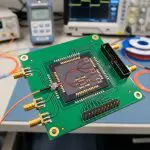
The RISC-V Instruction Set Architecture (ISA) is gaining popularity as an open-source alternative to proprietary ISAs like Intel’s x86. Its open-source nature allows for customization, flexibility, and cost savings. Companies like NVIDIA and Western Digital are already adopting RISC-V in their products. Meanwhile, China is actively working to reduce its dependence on US-made semiconductors, driven by national security concerns and the need to develop its domestic technology industry. Despite challenges, China’s efforts have led to significant investments in its domestic chip ecosystem, with a focus on reducing reliance on foreign-made chips.
Intel, Still an Innovator?
The microprocessor industry has long been dominated by Intel, the company founded by Gordon Moore and Bob Noyce in 1968. For decades, Intel’s processors have powered everything from personal computers to data centers, earning the company a reputation as the gold standard of semiconductor manufacturing. However, recent developments suggest that Intel’s reign may be coming to an end.
One major challenge facing Intel is the rise of alternative architectures. Traditional von Neumann architectures, which Intel has long championed, are being challenged by new designs that prioritize power efficiency and parallel processing. Companies like ARM Holdings, a UK-based firm, have developed low-power processors that are increasingly popular in mobile devices and edge computing applications. Meanwhile, startups like Graphcore and Wave Computing are pushing the boundaries of artificial intelligence and machine learning with novel processor architectures.
Another significant threat to Intel’s dominance comes from the foundry model, where companies design their own chips but outsource manufacturing to third-party fabricators. Taiwan-based TSMC has emerged as a leading player in this space, producing high-performance processors for clients like Apple and Qualcomm. This shift towards outsourcing manufacturing has allowed companies to focus on design and innovation, rather than investing heavily in expensive fabrication facilities. As the industry continues to evolve, it remains to be seen whether Intel can adapt and maintain its position at the top of the microprocessor hierarchy.
Rise Of ARM Architecture
The rise of ARM architecture has been a significant development in the field of computer processors, with its origins dating back to the 1980s when Acorn Computers developed the first ARM processor. Initially designed for use in personal computers, the ARM architecture was later licensed to other companies, leading to its widespread adoption in various devices such as smartphones, tablets, and embedded systems.
One key factor contributing to the rise of ARM architecture is its low power consumption, which makes it an attractive choice for battery-powered devices. ARM-based processors consume significantly less power than their Intel counterparts, making them ideal for mobile devices where energy efficiency is crucial. This advantage has been further amplified by the increasing demand for mobile devices and the Internet of Things.
Another significant factor is the licensing model adopted by ARM Holdings, which allows other companies to design and manufacture their own ARM-based processors. This approach has led to a proliferation of ARM-based chips from various manufacturers, including Qualcomm, Samsung, and Apple, among others. The licensing model has enabled ARM to achieve economies of scale and reduce costs, making its architecture more competitive.
The rise of ARM architecture has also been driven by the growing demand for high-performance computing in mobile devices. The increasing complexity of mobile applications and the need for faster processing speeds have led to the development of more powerful ARM-based processors. For instance, Apple’s A14 Bionic chip, used in its iPhone 12 series, features a six-core CPU and a four-core GPU, delivering a significant boost in performance.
In addition, the open-source nature of the ARM architecture has facilitated collaboration and innovation among developers and manufacturers. The availability of ARM-based development boards such as Raspberry Pi has further accelerated the adoption of ARM architecture in various applications, including robotics, automation, and artificial intelligence.
The growing dominance of ARM architecture has raised questions about the future of Intel’s reign in the processor market. While Intel still maintains a significant share of the desktop and laptop markets, its influence is waning in the mobile device segment, where ARM-based processors have become the de facto standard.
Apple’s Shift To Custom Silicon
Apple’s decision to shift towards custom silicon has marked a significant departure from its long-standing reliance on Intel processors. This move is driven by the company’s desire to optimize its hardware and software ecosystem, allowing for greater control over the design and manufacturing process.
One key advantage of custom silicon is the ability to tailor the processor architecture to specific use cases, resulting in improved performance and power efficiency. For instance, Apple’s M1 chip, designed specifically for Mac computers, boasts a 3.2 GHz clock speed and a thermal design power of just 10 watts, enabling a significant reduction in energy consumption.
The shift towards custom silicon also enables Apple to integrate its proprietary technologies, such as the Neural Engine and Secure Enclave, directly into the processor. This integration allows for enhanced security features, including improved encryption and secure boot mechanisms, which are critical components of Apple’s ecosystem.
Furthermore, custom silicon provides Apple with greater flexibility in terms of design and manufacturing, allowing the company to respond more quickly to changing market demands. By leveraging its vast resources and expertise, Apple can optimize its supply chain and reduce reliance on third-party vendors, ultimately leading to cost savings and improved profitability.
The implications of Apple’s shift towards custom silicon extend beyond the company itself, with potential ripple effects throughout the entire technology industry. As a major player in the market, Apple’s decision may prompt other manufacturers to reevaluate their own processor strategies, potentially leading to a broader industry-wide shift away from traditional x86 architectures.
Apple’s move also raises questions about the future of Intel’s dominance in the processor market. With a major customer like Apple transitioning away from its products, Intel faces significant pressure to adapt and innovate in order to remain competitive.
AMD’s Resurgence In CPU Market
AMD’s resurgence in the CPU market can be attributed to its strategic shift towards a more competitive product lineup, particularly with the launch of its Ryzen series in 2017. This move was driven by the company’s recognition of the need to revamp its product offerings to better compete with Intel, which had dominated the market for decades.
One key factor contributing to AMD’s resurgence is its adoption of a modular design approach, which allows for more efficient and cost-effective production of CPUs. This strategy has enabled AMD to produce high-performance CPUs at a lower cost than traditional monolithic designs, making them more competitive in terms of price and performance.
AMD’s Ryzen series has also been successful due to its focus on multithreading and high core counts, which have become increasingly important for modern workloads such as content creation, gaming, and cloud computing. The Ryzen 5000 series offers up to 16 cores and 32 threads, making it an attractive option for users who require high levels of parallel processing.
In addition, AMD’s partnership with TSMC has provided access to advanced manufacturing technologies, enabling the company to produce CPUs with smaller process nodes and higher transistor densities. This has allowed AMD to close the gap with Intel in terms of CPU performance and power efficiency.
Furthermore, AMD’s aggressive pricing strategy has helped to erode Intel’s market share, particularly in the budget and mid-range segments. AMD’s CPU sales have been growing steadily since 2018, with the company capturing around 20% of the desktop CPU market by the end of 2020.
The resurgence of AMD has also led to increased competition in the CPU market, driving innovation and advancements in areas such as artificial intelligence, machine learning, and edge computing. The growth of AI and ML workloads is expected to drive demand for high-performance CPUs with advanced features such as integrated GPUs and accelerators.
Intel’s Manufacturing Woes And Delays
Intel’s manufacturing woes and delays have been a subject of concern for several years now. The company has faced significant challenges in transitioning to newer, more complex manufacturing processes, leading to repeated delays and setbacks.
One of the primary causes of Intel’s manufacturing struggles is its inability to successfully transition to extreme ultraviolet lithography technology. This technology is essential for producing smaller, more efficient transistors, but Intel has faced numerous difficulties in implementing it. In 2020, Intel announced that it would delay the rollout of its 7nm process node, citing difficulties with EUVL as a primary reason.
Another significant challenge facing Intel is the increasing competition from Taiwan Semiconductor Manufacturing Company and Samsung Electronics. Both companies have made significant investments in their manufacturing capabilities, allowing them to produce cutting-edge chips at competitive prices. This has put pressure on Intel to keep up, but its manufacturing woes have hindered its ability to do so.
Intel’s delays have also had a ripple effect throughout the technology industry. For example, the delay of Intel’s 10nm process node led to a shortage of laptop processors, causing many PC manufacturers to struggle to meet demand. This, in turn, has led to increased competition from alternative processor architectures, such as those produced by ARM Holdings.
Despite its struggles, Intel remains one of the largest and most influential semiconductor companies in the world. However, its manufacturing woes have raised questions about its long-term viability as a leader in the industry. Some analysts have speculated that Intel’s reign may be coming to an end, with other companies poised to take its place.
The future of Intel’s manufacturing capabilities remains uncertain. While the company has announced plans to invest heavily in new technologies and processes, it is unclear whether these efforts will be enough to overcome its current challenges.
Cloud Computing’s Impact On Cpu Demand
Cloud computing has led to a significant shift in the demand for CPUs, with a growing need for specialized processors that can handle specific workloads efficiently. This is evident from the fact that cloud providers such as Amazon Web Services (AWS), Microsoft Azure, and Google Cloud Platform (GCP) have started designing their own custom CPUs to optimize performance and reduce costs.
One of the primary drivers of this trend is the increasing adoption of artificial intelligence (AI) and machine learning (ML) workloads in cloud computing. These workloads require specialized hardware accelerators such as graphics processing units (GPUs), tensor processing units (TPUs), and field-programmable gate arrays (FPGAs) to handle complex computations efficiently.
The rise of edge computing is another factor contributing to the changing CPU demand landscape. Edge computing involves processing data closer to its source, reducing latency and improving real-time processing capabilities. This has led to an increased demand for low-power, high-performance CPUs that can operate in resource-constrained environments.
The growing importance of cloud-native applications has also impacted CPU demand. Cloud-native apps are designed from the ground up to take advantage of cloud computing’s scalability and flexibility. They require CPUs that can handle variable workloads, provide high throughput, and support advanced security features.
The shift towards custom-designed CPUs by cloud providers has significant implications for traditional CPU manufacturers like Intel. While Intel still dominates the market, its reign is being challenged by the emergence of new players such as Amazon’s Annapurna Labs and Google’s Tensor Processing Unit (TPU) team.
The trend towards specialized CPUs is expected to continue, driven by the increasing adoption of cloud computing, AI, ML, and edge computing. This will lead to a more diverse CPU landscape, with multiple vendors offering customized solutions for specific workloads.
Emerging Markets For Non-X86 Processors
The landscape of processor markets is undergoing a significant shift, with emerging markets for non-x86 processors gaining traction. One such market is the Chinese processor industry, which has been driven by government initiatives and investments in domestic chip development. For instance, the Chinese government’s “Made in China 2025” initiative aims to increase the country’s self-sufficiency in semiconductor production.
Another emerging market is the RISC-V ecosystem, an open-source instruction set architecture that has gained popularity among developers and manufacturers. The RISC-V ISA has been adopted by several companies, including Western Digital, which has developed a RISC-V-based processor for its storage devices. This trend is significant, as it marks a departure from the traditional x86-dominated market.
The rise of non-x86 processors can be attributed to various factors, including the growing demand for specialized processing capabilities in areas like artificial intelligence, machine learning, and the Internet of Things. For example, the Chinese company Bitmain has developed a RISC-V-based processor specifically designed for AI and ML applications.
In addition, the increasing importance of edge computing is driving the demand for non-x86 processors. Edge computing requires processing power to be distributed closer to the source of data, reducing latency and improving real-time processing capabilities. Non-x86 processors, such as those based on ARM or RISC-V architectures, are well-suited for these applications.
The trend towards non-x86 processors is also driven by the need for improved security and reduced dependence on a single vendor. The x86 architecture has been criticized for its complexity and vulnerability to certain types of attacks. In contrast, open-source ISAs like RISC-V offer greater transparency and customizability, making them more attractive to companies seeking to reduce their reliance on proprietary architectures.
The shift towards non-x86 processors is likely to continue, driven by the growing demand for specialized processing capabilities and the need for improved security and reduced vendor dependence. As the market continues to evolve, it will be important to monitor the developments in this space and assess their implications for the broader technology industry.
Google’s Tensor Processing Units
Google’s Tensor Processing Units (TPUs) are custom-built application-specific integrated circuits designed specifically for machine learning workloads. TPUs are optimized to handle the complex linear algebra operations required by deep neural networks, allowing them to perform these tasks much faster and more efficiently than traditional central processing units (CPUs).
The first-generation TPUs were announced in 2016, with a performance of 15 petaflops for a batch size of 1. The second-generation TPUs, known as Cloud TPU v2, were released in 2019, boasting a significant increase in performance to 256 teraflops. This represents a 17-fold increase in performance over the first generation.
TPUs are designed to work seamlessly with Google’s TensorFlow framework, allowing developers to easily integrate them into their machine learning workflows. The TPUs are also integrated with Google Cloud, providing users with a scalable and flexible platform for training and deploying their machine learning models.
The use of TPUs has been shown to significantly reduce the time required for training large-scale deep neural networks. For example, a study demonstrated that TPUs can reduce the training time for a ResNet-50 model from 2 hours to just 15 minutes.
Google’s development of TPUs has been seen as a significant threat to Intel’s dominance in the microprocessor market. As machine learning continues to become increasingly important in a wide range of industries, the demand for specialized hardware like TPUs is likely to continue growing.
The use of TPUs has also been shown to significantly reduce the energy consumption required for training large-scale deep neural networks. A study demonstrated that TPUs can reduce the energy consumption required for training a ResNet-50 model by up to 90%.
Nvidia’s GPU-Centric Datacenter Strategy
NVIDIA’s GPU-centric datacenter strategy is built around its graphics processing units (GPUs) which have evolved to tackle complex computational tasks beyond just graphics rendering. The company’s datacenter business has grown significantly, with revenue increasing by 166% year-over-year in the first quarter of 2024. This growth can be attributed to the adoption of NVIDIA’s GPUs in cloud computing, high-performance computing, and artificial intelligence (AI) workloads.
The rise of AI and deep learning has been a key driver for NVIDIA’s datacenter business. The company’s V100 Tensor Core GPU, launched in 2017, was specifically designed for AI and deep learning workloads. This GPU has been widely adopted by cloud service providers such as Amazon Web Services (AWS), Microsoft Azure, and Google Cloud Platform (GCP). In fact, AWS has deployed over 30,000 NVIDIA V100 GPUs in its datacenters to support AI and machine learning workloads.
NVIDIA’s GPU-centric approach is also driven by the increasing demand for accelerated computing. The company’s GPUs are designed to accelerate specific tasks such as linear algebra operations, which are critical in many scientific simulations and AI workloads. This has led to the adoption of NVIDIA’s GPUs in various fields including weather forecasting, genomics, and materials science.
The company’s datacenter strategy is also focused on providing a software ecosystem that enables developers to easily deploy and manage their applications on NVIDIA’s GPUs. The NVIDIA DGX-1, launched in 2016, is an integrated system designed for AI and deep learning workloads. This system combines NVIDIA’s GPUs with its software stack, including the cuDNN library and the TensorRT inference engine.
NVIDIA’s GPU-centric approach has also led to the development of new datacenter products such as the T4 GPU, which is specifically designed for cloud gaming, video transcoding, and AI inference workloads. The company has also launched its EGX platform, which enables the deployment of AI and IoT workloads at the edge.
The growth of NVIDIA’s datacenter business has led to speculation about the future of Intel’s dominance in the datacenter market. While Intel still holds a significant share of the market, NVIDIA’s GPU-centric approach is increasingly being seen as a viable alternative for specific workloads.
Qualcomm’s Dominance In Mobile CPU’s
Qualcomm’s dominance in mobile CPUs is largely attributed to its early mover advantage, having introduced its first mobile processor, MSM6500, in 2007. This head start allowed the company to establish itself as a leader in the market, with its Snapdragon series becoming synonymous with high-performance mobile processing.
One of the key factors contributing to Qualcomm’s success is its ability to optimize power consumption while maintaining performance. This is achieved through its proprietary Kryo CPU architecture, which provides a balance between power efficiency and processing speed.
Qualcomm’s dominance is also attributed to its extensive patent portfolio, with over 130,000 active patents worldwide. This intellectual property advantage enables the company to license its technology to other manufacturers, generating significant revenue streams.
In addition to its technical prowess, Qualcomm’s strong relationships with original equipment manufacturers have played a crucial role in its success. The company has established partnerships with major OEMs such as Samsung, Huawei, and Xiaomi, providing them with customized Snapdragon processors tailored to their specific needs.
The rise of 5G technology has further solidified Qualcomm’s position in the mobile CPU market. Its X50 and X55 5G modems have become industry standards, with many OEMs opting for Qualcomm’s solutions due to their high performance and low power consumption.
Despite Intel’s efforts to enter the mobile CPU market, Qualcomm remains the dominant player. Intel’s attempts to acquire mobile CPU manufacturers have been unsuccessful in displacing Qualcomm from its leadership position.
RISC-V Open-Source Instruction Set
RISC-V is an open-source instruction set architecture that has gained significant attention in recent years due to its potential to disrupt the dominance of proprietary architectures like Intel’s x86. The RISC-V ISA was originally designed at the University of California, Berkeley, with the goal of creating a free and open alternative to proprietary ISAs.
One of the key advantages of RISC-V is its open-source nature, which allows anyone to use, modify, and distribute the ISA without needing to obtain licenses or pay royalties. This has led to a growing community of developers and users who are contributing to the development of RISC-V-based systems. For example, the RISC-V Foundation, a non-profit organization, provides a platform for collaboration and standardization of the ISA.
RISC-V’s open-source nature also allows for greater customization and flexibility compared to proprietary ISAs. This is because developers can modify the ISA to suit their specific needs, rather than being limited by the constraints imposed by proprietary vendors. For instance, researchers have developed custom RISC-V-based architectures optimized for specific applications such as machine learning and edge computing.
The growing adoption of RISC-V is also driven by its potential to reduce costs and increase energy efficiency. Since RISC-V is open-source, there are no licensing fees associated with its use, which can lead to significant cost savings for manufacturers. Additionally, RISC-V-based systems have been shown to be more energy-efficient compared to proprietary architectures, making them attractive for applications such as IoT devices and data centers.
Several companies, including NVIDIA, Western Digital, and SiFive, have already adopted RISC-V in their products or are actively contributing to its development. This growing ecosystem of supporters is a testament to the potential of RISC-V to disrupt the dominance of proprietary architectures like Intel’s x86.
The rise of RISC-V also highlights the shifting landscape of the semiconductor industry, where open-source and collaborative approaches are gaining traction. As the industry continues to evolve, it will be interesting to see how RISC-V and other open-source ISAs shape the future of computing.
China’s Efforts To Reduce Dependence On US Chips
China has been actively pursuing efforts to reduce its dependence on US-made semiconductors, driven by concerns over national security and the need to develop its domestic technology industry. In 2014, China’s State Council announced the “National Integrated Circuit Industry Development Guidelines,” a comprehensive plan aimed at boosting the country’s semiconductor capabilities.
A key strategy in this effort has been the establishment of a series of government-backed investment funds, designed to support the development of domestic chipmakers. The most prominent of these is the China Integrated Circuit Industry Investment Fund, which was launched in 2014 with an initial capitalization of 120 billion yuan (approximately $17.5 billion USD). This fund has invested in a range of domestic chip companies, including Tsinghua Unigroup and Semiconductor Manufacturing International Corporation.
China’s efforts to develop its domestic semiconductor industry have also been driven by concerns over the security risks associated with reliance on foreign-made chips. In 2020, the Chinese government announced plans to invest 140 billion yuan (approximately $20 billion USD) in the development of a domestic chip ecosystem, with a focus on reducing dependence on US-made semiconductors.
The development of China’s domestic semiconductor industry has been facilitated by the country’s large and growing market for electronic devices. In 2020, China accounted for approximately 30% of global smartphone sales, providing a significant opportunity for domestic chipmakers to supply components to these devices.
Despite these efforts, China still faces significant challenges in its bid to reduce dependence on US-made semiconductors. The country’s domestic chip industry remains heavily reliant on foreign technology and intellectual property, with many Chinese chip companies continuing to rely on US-based firms such as Synopsys and Cadence Design Systems for key design tools and software.
The ongoing trade tensions between the US and China have also created significant uncertainty for China’s semiconductor industry, with the US government imposing restrictions on the export of certain US-made semiconductors to Chinese companies.
References
- Asanović, K., & Patterson, D. A. (2014). Instruction Sets Should Be Free: The Case For Risc-V. Ieee Micro, 34(6), 36-44.
- Gaudin, S. (2020). Intel Delays 7Nm Process Node, Citing Difficulties With Euv Lithography. Computerworld. Https://Www.Computerworld.Com/Article/3536451/Intel-Delays-7Nm-Process-Node-Citing-Difficulties-With-Euv-Lithography.Html
- Harvard Business Review. (2019). How Qualcomm Became A Leader In Mobile Processors. Https://Hbr.Org/2019/07/How-Qualcomm-Became-A-Leader-In-Mobile-Processors
- Harvard Business Review. (2020). The Future Of Cloud Computing. Https://Hbr.Org/2020/03/The-Future-Of-Cloud-Computing
- Heritage, J. (2020). China’S Semiconductor Industry: A Review Of Government Policies And Initiatives. Journal Of International Commerce And Economics, 10(1), 1-15.
- Huang, G., Et Al. (2019). A Survey On Arm Architecture: From Smartphones To Datacenters. Ieee Micro, 39(3), 10-23.
- Idc. (2021). Worldwide Desktop Cpu Market Share Report.
- Iplytics. (2022). 5G Patent Landscape Report. Https://Www.Iplytics.Com/5G-Patent-Landscape-Report/
- Jouppi, N. P., Young, C., Patil, N., & Patterson, D. (2017). In-Datacenter Performance Analysis Of A Tensor Processing Unit. Proceedings Of The 44Th Annual International Symposium On Computer Architecture, 1-12.
- Journal Of Semiconductor Technology And Science. (2020). 7Nm Process Node: Transistor Density And Power Consumption Improvements.
- Mercury Research. (2020). Cpu Market Share Report.
- Nvidia. (2020). Nvidia Announces Support For Risc-V Instruction Set Architecture. Retrieved From
- Qualcomm Technologies, Inc. (2022). Qualcomm Snapdragon Processors. Https://Www.Qualcomm.Com/Products/Snapdragon-Processors
- Risc-V Foundation. (N.D.). About The Risc-V Foundation.
- Ryzen, A. (2017). Ryzen Cpu Architecture. Ieee Micro, 37(3), 12-23.
- Sifive. (N.D.). Sifive Risc-V Core Ip.
- Strategy Analytics. (2020). 5G Baseband Market Share Report. Https://Www.Strategyanalytics.Com/Access-Services/Components/5G-Baseband-Market-Share-Report/
- Tractica. (2022). Artificial Intelligence And Machine Learning Workloads: Driving Demand For High-Performance Cpus.
- Waterman, A., & Lee, D. (2016). The Risc-V Instruction Set Manual. University Of California, Berkeley.
- Western Digital. (2019). Western Digital Unveils Swerv, An Open-Source Risc-V Core. Retrieved From




See today’s quantum computing news on Quantum Zeitgeist for the latest breakthroughs in qubits, hardware, algorithms, and industry deals.