In a groundbreaking scientific breakthrough, an international research team from Korea’s Institute for Basic Science (IBS) Center for Quantum Nanoscience and Germany’s Forschungszentrum Jülich has developed a quantum sensor capable of detecting minute magnetic fields at the atomic length scale.
This pioneering work realizes a long-held dream of scientists: an MRI-like tool for quantum materials. The research team, led by Dr. Taner Esat from Jülich and Dr. Dimitry Borodin from QNS, utilized expertise in bottom-up single-molecule fabrication to develop the world’s first quantum sensor for the atomic world. This technology uses a single molecule attached to the tip of a scanning tunneling microscope to sense the electric and magnetic properties of atoms with unprecedented spatial resolution on the order of a tenth of an angstrom.
The implications of this breakthrough are far-reaching, with potential applications in engineering quantum materials and devices, designing new catalysts, and exploring fundamental quantum behavior in molecular systems.
Quantum Sensor Breakthrough: A New Era for Atomic-Scale Measurements
A quantum sensor capable of detecting minute magnetic fields at the atomic length scale has been developed through an international scientific collaboration between Korea’s IBS Center for Quantum Nanoscience (QNS) and Germany’s Forschungszentrum Jülich. This pioneering work realizes a long-held dream of scientists: an MRI-like tool for quantum materials.
The research team utilized the expertise of bottom-up single-molecule fabrication from the Jülich group while conducting experiments at QNS, utilizing the Korean team’s leading-edge instrumentation and methodological know-how to develop the world’s first quantum sensor for the atomic world. The diameter of an atom is a million times smaller than the thickest human hair, making it extremely challenging to measure its properties with conventional techniques.
Overcoming Conventional Limitations
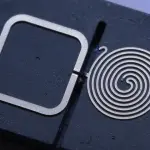
Conventional scanning tunneling microscopy (STM) images can only provide low-resolution black-and-white images when observing atoms. However, the new quantum sensor can produce high-resolution, vivid, and clear images, as demonstrated in Figure 1. This unparalleled performance is attributed to the attachment of a PTCDA molecule to the tip of the STM and measuring electron spin resonance (ESR), as illustrated in Figure 2.
Unprecedented Sensitivity and Spatial Resolution
The quantum sensor can detect changes in magnetic and electric fields with a spatial resolution on the order of a tenth of an angstrom, where 1 Ångström typically corresponds to one atomic diameter. This achievement is striking because it uses an exquisitely engineered quantum object to resolve fundamental atomic properties from the bottom up.
Far-Reaching Implications
This groundbreaking quantum sensor is poised to open up transformative avenues for engineering quantum materials and devices, designing new catalysts, and exploring the fundamental quantum behavior of molecular systems, such as in biochemistry. As noted by BAE Yujeong, QNS’s PI for the project, the potential of technology for manipulating at the atomic level is infinite.
Milestone in Quantum Technology
The development of this atomic-scale quantum sensor marks a significant milestone in the field of quantum technology and is expected to have far-reaching implications across various scientific disciplines. The research results were published in Nature Nanotechnology on July 25th, highlighting the significance of this breakthrough.
This achievement demonstrates the power of international collaboration and the importance of basic science research. As Richard Feynman said, “There’s plenty of room at the bottom,” the potential of technology for manipulating at the atomic level is infinite. The development of this quantum sensor is expected to pave the way for new discoveries and innovations in various fields.
IBS was founded in 2011 by the government of the Republic of Korea with the sole purpose of driving forward the development of basic science in South Korea. IBS has 7 research institutes and 31 research centers as of June 2024. There are eight physics, three mathematics, five chemistry, seven life science, two earth science, and six interdisciplinary research centers.
External Link: Click Here For More

See today’s quantum computing news on Quantum Zeitgeist for the latest breakthroughs in qubits, hardware, algorithms, and industry deals.