Classical physics no longer applies in quantum computing, and strange principles enable computers to solve previously intractable problems. A quantum computer harnesses subatomic particles’ peculiar properties to perform calculations at unprecedented speeds. Here Quantum Computing Explained goes through some of the main aspects of Quantum Computing.
Qubits, the quantum equivalent of classical bits, exist in multiple states simultaneously (a superposition), allowing for parallel processing of vast data amounts, making them exponentially more efficient than their classical counterparts.
Here, the strange and counterintuitive principles of quantum mechanics hold sway, enabling the creation of computers that can solve problems previously thought intractable. Welcome to the enigmatic world of quantum computing, where the boundaries between reality and science fiction blur.
At its core, a quantum computer is a device that harnesses the peculiar properties of subatomic particles to perform calculations at unprecedented speeds. These machines rely on manipulating qubits – the quantum equivalent of classical bits – which can exist in multiple states simultaneously. This property, known as superposition, allows qubits to process vast amounts of data, making them exponentially more efficient than their classical counterparts for specific applications.
But what exactly is a quantum computer? The answer lies in the rapidly advancing field of quantum computing, where researchers and engineers work tirelessly to develop functional quantum processors.
These processors, the heart of any quantum computer, execute the complex algorithms underpinning quantum computing. They come in various forms, each with its unique strengths and weaknesses. From the gate-based models inspired by classical computers to the more exotic adiabatic and topological approaches, the diversity of quantum processor designs is a testament to the innovative spirit driving this field forward.
As we delve into the mysteries of quantum computing, it becomes clear that this technology has the potential to revolutionize numerous fields, from cryptography and optimization to materials science and artificial intelligence. However, to fully appreciate the implications of this emerging technology, one must first grasp its fundamental principles – the basics of quantum computing that underlie these extraordinary machines.
Qubits, The Quantum Bit
Classical computers use bits to store and process information, but these bits can only exist in one of two states: 0 or 1. In contrast, quantum computers use quantum bits or qubits, which can exist in multiple states simultaneously, known as superposition. This property allows qubits to process a vast number of possibilities simultaneously, making them potentially much faster than classical computers for certain types of calculations.
Qubits are extremely sensitive to their environment and can quickly lose their quantum properties due to interactions with external factors such as temperature fluctuations or electromagnetic radiation. To mitigate this issue, quantum computers must be cooled to very low temperatures, typically near absolute zero, and shielded from external influences. This requires sophisticated cryogenic systems and electromagnetic shielding.
Quantum computing relies on the principles of quantum mechanics, including superposition, entanglement, and interference. Entanglement allows qubits to be connected so that the state of one qubit is dependent on the state of the other, even when separated by large distances. This property enables the creation of complex quantum states that can be manipulated to perform calculations.
One key challenge in building a practical quantum computer is controlling the errors that inevitably occur during quantum computations. Quantum error correction codes have been developed to mitigate these errors, but they require additional qubits and complex control systems. Despite these challenges, significant progress has been made in recent years, with several companies and research institutions demonstrating functional quantum computers.
Quantum computers have the potential to solve certain problems much faster than classical computers. For example, Shor’s algorithm can factor large numbers exponentially faster than any known classical algorithm. This has significant implications for cryptography, as many encryption algorithms rely on the difficulty of factoring large numbers.
The development of quantum computing is an active area of research, with ongoing efforts to improve the control and scalability of qubits. While significant technical challenges remain, the potential benefits of quantum computing make it an exciting and rapidly advancing field.
What is Quantum Computing, exactly?
Quantum computing is a type of computation that uses the principles of quantum mechanics to perform calculations and operations on data. This is in contrast to classical computing, which uses bits to store and process information, where each bit can have a value of either 0 or 1. Quantum computers, on the other hand, use quantum bits or qubits, which can exist in multiple states simultaneously, allowing for much faster processing of certain types of data.
The core concept behind quantum computing is superposition, which allows qubits to exist in multiple states simultaneously. This means that a single qubit can perform many calculations simultaneously, potentially much faster than classical computers for specific tasks. Another key principle is entanglement, where the state of one qubit is directly correlated with the state of another qubit, even if they are separated by large distances.
Quantum computing has many potential applications, including cryptography, optimization problems, and simulations of complex systems. For example, quantum computers could potentially break certain classical encryption algorithms, but they could also be used to create new, unbreakable encryption methods. Additionally, quantum computers could be used to simulate the behavior of molecules and materials at the atomic level, leading to breakthroughs in fields such as chemistry and materials science.
One of the main challenges in building a practical quantum computer is maintaining the fragile quantum states of the qubits over time. This requires extremely precise control over the environment in which the qubits are stored, including temperature, magnetic fields, and other factors. Another challenge is scaling up the number of qubits while maintaining their coherence, as current systems typically only have a few dozen qubits.
Several companies and organizations are actively working on developing practical quantum computers, including IBM, Google, and Microsoft. These efforts involve both hardware and software development, as well as research into new algorithms and applications for quantum computing.
Theoretical models of quantum computers are capable of solving certain problems much faster than classical computers. However, the actual implementation of these models is still an active area of research.
Key Terms in Quantum Computing
Quantum bits, also known as qubits, are the fundamental units of quantum information in quantum computing. Unlike classical bits, which can exist in two states, 0 or 1, qubits can exist in multiple states simultaneously, represented by a complex number called a superposition.
Superposition is a critical concept in quantum computing, allowing qubits to process multiple possibilities simultaneously, thereby increasing computational power exponentially. This property enables quantum computers to solve certain problems much faster than classical computers, as demonstrated by Shor’s algorithm for factorizing large numbers.
Entanglement is another key term in quantum computing, describing the interconnectedness of two or more qubits. When entangled, the state of one qubit is directly correlated with the state of the other, regardless of the distance between them. This phenomenon allows for the creation of a shared secret key between two parties, enabling secure communication over long distances.
Quantum gates are the quantum equivalent of logic gates in classical computing. They are the basic building blocks of quantum algorithms, performing operations on qubits such as rotation, entanglement, and measurement. Quantum gates are reversible, meaning they can be applied in reverse to restore the original state of the qubit.
Quantum error correction is a crucial aspect of quantum computing, as qubits are prone to decoherence due to interactions with their environment. Quantum error correction codes, such as the surface code or the Shor code, detect and correct errors that occur during quantum computations, ensuring the integrity of the computation.
Quantum parallelism is a concept that describes the ability of quantum computers to perform many calculations simultaneously, thanks to the principles of superposition and entanglement. This property enables quantum computers to solve certain problems much faster than classical computers, which are limited by their sequential processing nature.
Understanding Qubits, the Quantum Bit
Qubits are the fundamental units of quantum information in quantum computing, analogous to classical bits in classical computing. Unlike classical bits, which can exist in one of two states, 0 or 1, qubits can exist in multiple states simultaneously, known as a superposition.
This property allows qubits to process multiple possibilities simultaneously, making them exponentially more powerful than classical computers for certain calculations. Qubits can also become “entangled,” meaning that the state of one qubit is directly correlated with the state of another, even when separated by large distances.
Qubits are typically implemented using quantum-mechanical systems, such as superconducting circuits or ion traps, designed to maintain quantum coherence for extended periods. This requires careful control over the environment and precise manipulation of the quantum states.
The no-cloning theorem, a fundamental principle in quantum mechanics, states that creating an exact copy of an arbitrary qubit state is impossible. This has significant implications for quantum computing, as qubits cannot be copied or replicated, limiting their use in specific applications.
Qubits are also prone to decoherence, which occurs when the quantum system interacts with its environment, causing the loss of quantum coherence and the collapse of superposition states. Decoherence is a major obstacle in building reliable quantum computers, as it can quickly destroy the fragile quantum states required for computation.
Quantum error correction codes have been developed to mitigate the effects of decoherence and other errors that occur during quantum computations. These codes work by redundantly encoding qubits and actively correcting errors as they occur, allowing for more robust and reliable quantum computing.
How Quantum Computers differ from Classical ones
Quantum computers are also highly sensitive to their environment, requiring extremely low temperatures and precise control over their components to function correctly. Classical computers, on the other hand, can operate in a wide range of environments.
The principles of quantum mechanics that govern the behavior of qubits also lead to unique challenges in error correction and noise reduction, which are active areas of research in the development of practical quantum computers.
Are Quantum Computers Real, or just theory?
Quantum computers are not just theoretical constructs but rather real machines that have been built and tested in laboratories worldwide. In 2019, Google announced the development of a 53-qubit quantum computer called Bristlecone, which demonstrated low error rates for both readout and gates. This achievement was significant because it showed that quantum computers could be scaled up to larger numbers of qubits while maintaining their fragile quantum states.
The concept of quantum computing is based on the principles of quantum mechanics, which describe the behavior of matter and energy at the atomic and subatomic levels. Quantum computers use quantum bits or qubits, which can exist in multiple states simultaneously, unlike classical bits, which can only be in one of two states. This property allows quantum computers to perform certain calculations much faster than classical computers.
One key challenge in building a quantum computer is maintaining the fragile quantum states of the qubits, known as coherence. This requires careful control over the temperature and electromagnetic environment of the qubits, as well as sophisticated error correction techniques. Researchers have made significant progress in recent years in developing these technologies, including the use of superconducting materials and advanced cryogenic cooling systems.
Quantum computers have many potential applications, including simulating complex chemical reactions, optimizing complex systems, and cracking certain types of encryption codes. For example, researchers at IBM have used a quantum computer to simulate the behavior of molecules, which could lead to breakthroughs in fields such as medicine and materials science.
While significant progress has been made in building and testing quantum computers, there are still many technical challenges that must be overcome before they can be widely adopted. These include improving the coherence times of qubits, developing more robust error correction techniques, and scaling up the number of qubits to thousands or even millions.
Despite these challenges, researchers are making rapid progress in advancing the field of quantum computing, and several companies, including IBM, Google, and Rigetti Computing, are actively developing commercial quantum computers.
The Role of Quantum Processors (QPUs)
Quantum processors are the core component of a quantum computer, responsible for executing quantum algorithms and performing calculations on qubits. A qubit is the fundamental unit of quantum information, analogous to a classical bit, but with the ability to exist in multiple states simultaneously. This property, known as superposition, allows quantum processors to process vast amounts of data exponentially faster than classical computers for certain types of calculations.
Quantum processors rely on quantum gates, which are the quantum equivalent of logic gates in classical computing. Quantum gates perform operations on qubits, such as rotations, entanglement, and measurements, to manipulate the quantum state. The sequence of quantum gates applied to a set of qubits determines the overall computation performed by the processor.
The architecture of a quantum processor can be categorized into two main types: gate-based and analog. Gate-based processors use a discrete set of quantum gates to perform calculations, whereas analog processors rely on continuous-time evolution of the quantum system. The choice of architecture depends on the specific application and the trade-offs between control, scalability, and error correction.
Quantum processors are prone to errors due to the fragile nature of quantum states. Quantum error correction codes are essential for large-scale quantum computing. These codes detect and correct errors that occur during computation, ensuring the integrity of the output.
The development of practical quantum processors faces significant technical challenges, including the need for robust and scalable qubit designs, low-error-rate quantum gates, and efficient cooling mechanisms to maintain the fragile quantum states. Despite these challenges, significant progress has been made in recent years, with several companies and research institutions demonstrating functional quantum processors.
The potential applications of quantum processors are vast, ranging from simulating complex chemical reactions to optimizing complex systems and cracking certain encryption algorithms.
Types of Quantum Computers
One type is the Gate-Based Quantum Computer, which uses quantum bits or qubits to perform operations on data. This type of computer is similar to classical computers but uses quantum gates to manipulate the qubits instead of classical logic gates. The gate-based approach allows for implementing complex algorithms and has been used in various applications, such as simulating molecular interactions and optimizing complex systems.
One Exotic Quibut type is the Topological Quantum Computer pioneered by companies like Microsoft, which uses exotic particles called anyons to store and manipulate information. This type of computer is particularly robust against decoherence, a major obstacle in building reliable quantum computers. Topological quantum computers have been proposed for applications such as simulating topological phases of matter and developing new materials with unique properties.
Another is the Adiabatic Quantum Computer, which uses a gradual change in the Hamiltonian to find a system’s ground state. This type of computer has been used for solving optimization problems and has applications in fields such as logistics and finance. Adiabatic quantum computers have also been proposed for simulating complex quantum systems, allowing researchers to study phenomena that are difficult or impossible to model classically.
Quantum computers can also be classified based on their physical implementation. For example, Superconducting Quantum Computers use superconducting circuits to store and manipulate qubits. Ion Trap Quantum Computers use electromagnetic fields to trap and manipulate ions, which are used as qubits.
Error Correction in Quantum Computing, a challenge
Quantum computers are prone to errors due to the noisy nature of quantum systems, which can cause decoherence and destroy the fragile quantum states required for computation. Error correction is essential to maintain the integrity of quantum information and ensure reliable computation.
One major challenge in error correction is the need to preserve the coherence of quantum states while correcting errors. This requires the development of sophisticated encoding schemes that can detect and correct errors without destroying the quantum information. Quantum error correction codes, such as the surface code and the Shor code, have been proposed to address this challenge. These codes use redundancy to encode quantum information in multiple qubits, allowing errors to be detected and corrected.
Another significant challenge is the high resource overhead required for error correction. Quantum error correction codes typically require a large number of qubits and complex quantum gates, which can be difficult to implement with current technology. Furthermore, the error correction process itself can introduce additional errors, leading to a trade-off between error correction and computational resources.
The development of robust and efficient error correction methods is an active area of research in quantum computing. Researchers are exploring new encoding schemes, such as topological and concatenated codes, that can improve error thresholds and reduce resource overhead. Additionally, advances in quantum error correction have the potential to enable the development of large-scale, fault-tolerant quantum computers.
The importance of error correction is underscored by the fact that even small error rates can quickly accumulate and destroy the integrity of quantum computations. For example, a recent study demonstrated that an error rate of just 1% per gate operation could lead to a failure probability of over 50% for a 10-qubit quantum circuit.
The development of robust error correction methods is crucial to overcome the challenges posed by errors in quantum computing and unlock the potential of quantum computers for solving complex problems in fields such as chemistry, materials science, and cryptography.
Quantum Algorithms
Quantum algorithms are a set of instructions designed to solve specific problems on a quantum computer, leveraging the principles of quantum mechanics to perform operations exponentially faster than classical computers.
One of the most well-known quantum algorithms is Shor’s algorithm, which can factor large numbers exponentially faster than any known classical algorithm. This has significant implications for cryptography, as many encryption protocols rely on the difficulty of factoring large numbers. For instance, RSA encryption, widely used to secure online transactions, would be vulnerable to attacks by a sufficiently powerful quantum computer running Shor’s algorithm.
Another important application of quantum algorithms is in search problems. Grover’s algorithm, for example, can search an unsorted database of N entries in O(√N) time, compared to the O(N) time required by classical computers. This has potential applications in fields such as data analysis and machine learning.
Quantum algorithms also have implications for simulation and optimization problems. For instance, the Quantum Approximate Optimization Algorithm (QAOA) can solve certain optimization problems more efficiently than classical algorithms. This has potential applications in fields such as logistics, finance, and materials science.
Quantum algorithms have been developed for machine learning and artificial intelligence tasks, such as k-means clustering and support vector machines. These algorithms have the potential to significantly speed up certain machine learning tasks, enabling faster processing of large datasets.
Quantum algorithms also have applications in cryptography beyond just factoring large numbers. For example, quantum key distribution (QKD) protocols can be used to securely distribute cryptographic keys between two parties, even in the presence of an eavesdropper.
Practical Uses of Quantum Computing
Quantum computers can perform certain calculations much faster than classical computers, making them useful for tasks such as simulating complex systems and cracking complex encryption codes. For instance, quantum computers can simulate the behavior of molecules more accurately than classical computers, which could lead to breakthroughs in fields like medicine and materials science.
One practical application of quantum computing is in cryptography, where quantum computers can potentially break certain types of encryption codes much faster than classical computers. This has led to the development of new, quantum-resistant cryptographic protocols, such as lattice-based cryptography and code-based cryptography. These protocols are designed to be secure even against attacks by a large-scale quantum computer.
Another area where quantum computing is being explored is in machine learning and artificial intelligence. Quantum computers can potentially speed up certain machine learning algorithms, leading to breakthroughs in areas like image and speech recognition. For example, researchers have demonstrated the use of quantum computers to speed up the training of machine learning models for tasks like image classification.
Quantum computers are also being explored for their potential use in optimization problems, where they could be used to quickly find the optimal solution among an exponentially large number of possibilities. This has applications in fields like logistics and finance, where optimizing complex systems can lead to significant cost savings.
Some companies, such as IBM and Rigetti Computing, are already offering cloud-based quantum computing services, allowing researchers and developers to access quantum computers over the internet. These services provide a way for people to experiment with quantum computing without having to build their own quantum computer from scratch.
Researchers are also exploring the use of quantum computers in areas like chemistry and materials science, where they could simulate the behavior of complex systems at the molecular level. This has the potential to lead to breakthroughs in fields like battery technology and solar cells.
Quantum Computing in Summary
- Quantum computers use quantum bits and qubits instead of classical binary digits. Qubits exist in a superposition, allowing for simultaneous calculations on large data sets. In contrast, classical computers use binary digits in one of two states, zero or one, and perform one calculation at a time sequentially.
- Quantum computing uses the principles of quantum mechanics, specifically superposition and entanglement, to enable processing. Qubits are entangled to perform operations. Operations are performed on qubits using quantum gates, similar to logic gates in classical computers. Quantum gates manipulate qubit states with precise control.
- Specific quantum gates include the CNOT gate, which operates on two qubits together, the Hadamard gate, which creates a superposition of qubit states, and the Pauli-X gate, which flips a qubit state from zero to one.
- Quantum algorithms are designed for specific tasks only. Examples include Shor’s algorithm, which factors large numbers efficiently, Grover’s algorithm, which searches an unsorted database quickly, and Deutsch-Jozsa algorithm, which determines function properties fast.
- However, some quantum computers require extremely low temperatures to be maintained. Superconducting materials are used in quantum computing, ion traps, and optical lattices to achieve this.

References
- Nielsen, M. A., & Chuang, I. L. (2010). Quantum Computation and Quantum Information. Cambridge University Press.
- Deutsch, D. (1985). Quantum Turing machine. Proceedings of the Royal Society of London. Series A, Mathematical and Physical Sciences, 400(1818), 97-117. https://royalsocietypublishing.org/doi/abs/10.1098/rspa.1985.0070
- Barenco, A., et al. (1995). Elementary gates for quantum computation. Physical Review A 52.5, 3457-3467. https://journals.aps.org/pra/abstract/10.1103/PhysRevA.52.3457
- Harvard University (2019). Quantum Computing 101. https://cs50.harvard.edu/quantum/
- Knill, E. (2005). Quantum computing with realistically noisy devices. Nature, 434(7034), 39-44. https://www.nature.com/articles/nature02989
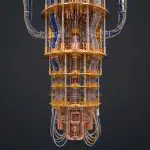



See today’s quantum computing news on Quantum Zeitgeist for the latest breakthroughs in qubits, hardware, algorithms, and industry deals.