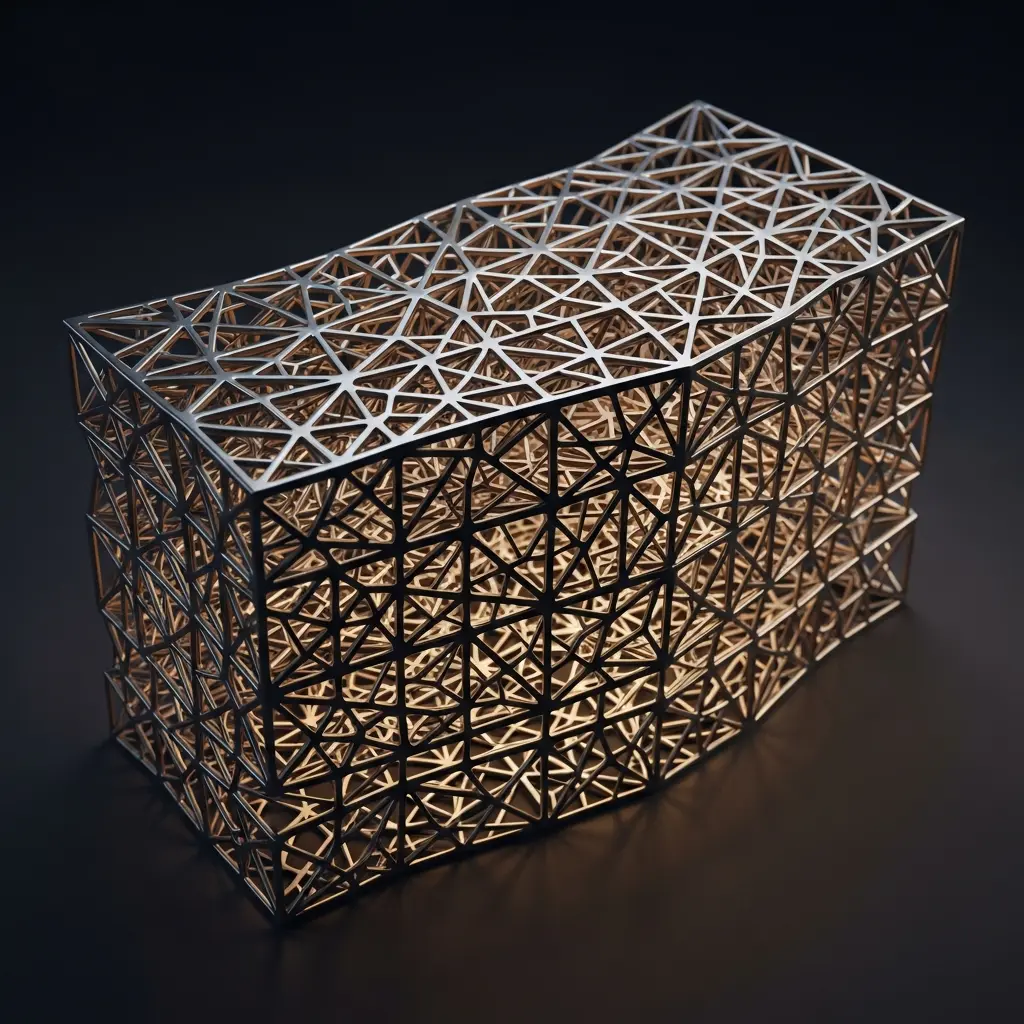
The search for stable two-dimensional metallic materials with unusual geometric arrangements continues to drive materials science, and recent advances have focused on lattices exhibiting ‘kagome’ topology, a distinctive pattern of interconnected triangles. Carlos M. O. Bastos, Emanuel J. A. dos Santos, and colleagues, including José A. dos S. Laranjeira and Kleuton A. L. Lima from various Brazilian universities, present a detailed computational investigation into the stability of free-standing monolayers of copper, silver, and gold arranged in this kagome pattern. Their work reveals that while all three materials initially exhibit structural instability, moderate strain can stabilize silver and gold, with gold demonstrating the greatest resilience. These findings establish a clear link between atomic size, strain engineering, and the potential for realising stable metallic kagome monolayers, offering valuable guidance for future experimental efforts to create and support these intriguing materials.
The study demonstrates that applying even a small amount of tensile strain, or stretching, significantly enhances the stability of these materials by counteracting a tendency to buckle. The stabilized metallenes exhibit remarkable mechanical properties, including high strength and flexibility, opening doors for applications in flexible electronics and sensors.
Kagome Monolayer Stability via Density Functional Theory
Scientists systematically investigated the structural, mechanical, and thermal stability of free-standing kagome monolayers composed of copper, silver, and gold using advanced computational techniques. They employed density functional theory to model the electronic structure and atomic interactions within these two-dimensional materials, incorporating relativistic effects to accurately capture contributions from heavy elements. To determine the equilibrium geometry of each monolayer, the team minimized the total energy with respect to atomic positions and lattice parameters.
Kagome Lattices Stabilized by Tensile Strain
Scientists investigated the structural stability of two-dimensional metallic lattices with a kagome topology, focusing on copper, silver, and gold monolayers. The work establishes that all three materials satisfy the criteria for stability, yet exhibit relatively low stiffness compared to other materials due to their porous structure and metallic bonding. Gold-based lattices possess the highest stiffness among the three systems. Phonon calculations demonstrate that unstrained kagome lattices are dynamically unstable, but moderate tensile strain stabilizes both the silver and gold monolayers. Copper, however, retains residual instabilities even under strain and rapidly reconstructs into a different lattice structure.
Kagome Lattices Exhibit Strain-Dependent Stability
This research presents a comprehensive investigation into the structural stability of free-standing, two-dimensional metallic lattices composed of copper, silver, and gold, arranged in a kagome topology. The team demonstrates that all three materials initially adopt a hexagonal kagome lattice, exhibiting reduced coordination and lower stiffness compared to denser materials like graphene. Importantly, meeting the criteria for mechanical stability is not enough to guarantee dynamical and thermal stability in these lattices. The researchers found that unstrained kagome monolayers display unstable vibrational modes, which can be suppressed in silver and gold through the application of moderate tensile strain. Simulations further clarified the behavior of each material, showing that the kagome structure of copper is unstable even at low temperatures, while silver and gold exhibit configurations sensitive to temperature changes, with gold uniquely exhibiting coexisting lattice structures at higher temperatures.
🗞 Kagome Topology in Two-Dimensional Noble-Metal Monolayers
🧠 ArXiv: https://arxiv.org/abs/2512.14850