

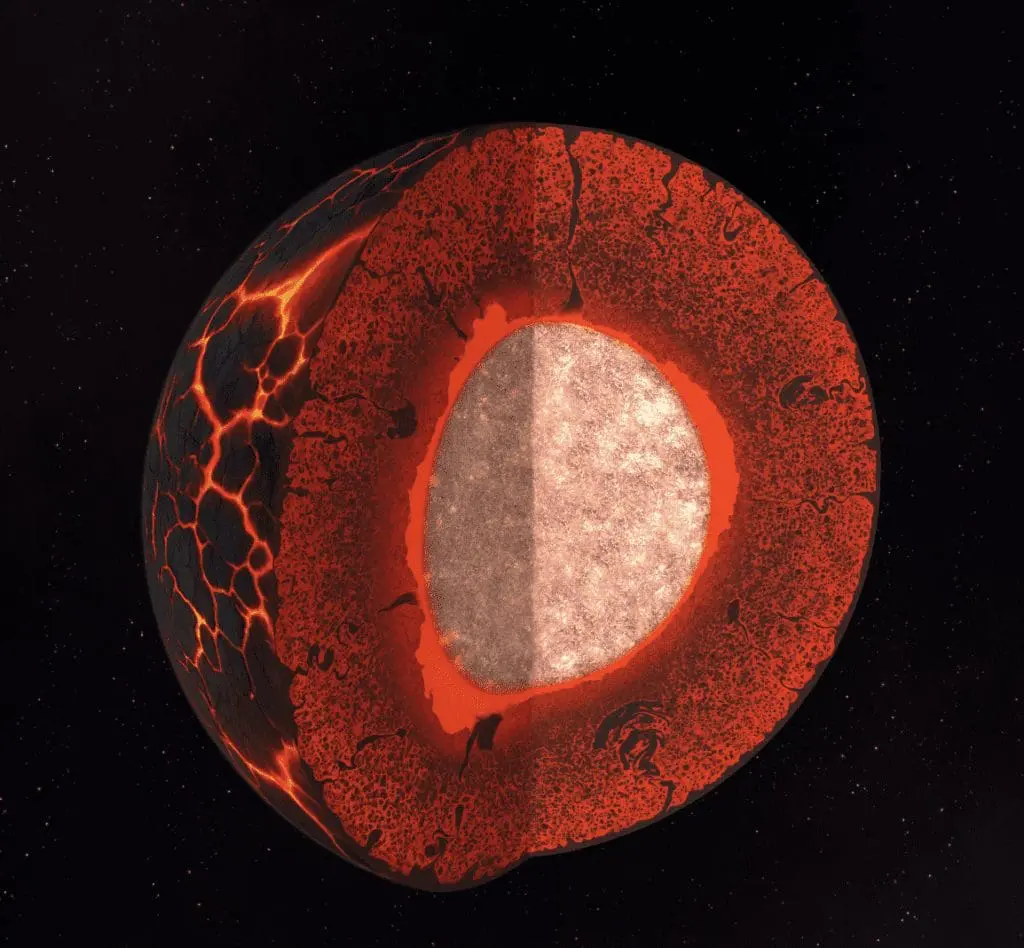
Charles-douard Boukar of York University led research published in Nature on March 26, exploring Earth’s early formation using a novel approach combining fluid dynamics, chemistry, and planetary sciences. The study focuses on the planet’s first 100 million years, challenging previous assumptions about rocky planet solidification. Boukar’s findings reveal that Earth’s lower mantle structure was established four billion years ago, with crystals forming at low pressure rather than high pressure, as previously thought. This discovery, derived from a multiphase flow model studying magma dynamics, significantly impacts our understanding of planetary evolution and the processes shaping Earth’s interior.
York University Research Examines Earths Early Formation
York University researchers have made a significant contribution to our understanding of Earth’s early evolution through a study published in Nature. Led by Assistant Professor Charles-Douard Boukar, the research employs a novel approach that integrates fluid dynamics and chemistry with planetary sciences to model the planet’s formative stages.
Boukar’s methodology involves a multiphase flow model designed to simulate the transition from molten to solid states within Earth’s mantle during its early history. This innovative approach has revealed that the structure of Earth’s lower mantle, which plays a critical role in core cooling and magnetic field generation, was established within the first 100 million years of the planet’s existence.
The findings challenge previous assumptions by demonstrating that most crystals formed at low pressure rather than high pressure. This discovery provides new insights into the processes that shaped Earth’s early evolution and has implications for understanding planetary formation more broadly. The research underscores the importance of considering diverse physical conditions in modeling planetary development, offering a fresh perspective on how planets evolve over time.
Charles-Douard Boukars Novel Approach to Planetary Sciences
Charles-Douard Boukar’s research introduces a groundbreaking methodology that merges fluid dynamics and chemistry with planetary sciences. By developing a multiphase flow model, he successfully simulated the transition from molten to solid states within Earth’s mantle during its early history. This approach has revealed critical insights into the formation of Earth’s lower mantle structure, which is essential for processes such as core cooling and magnetic field generation.
The findings challenge conventional assumptions by showing that most crystals formed under low-pressure conditions rather than high-pressure environments. This discovery not only reshapes our understanding of Earth’s early evolution but also provides a new framework for studying planetary formation. Boukar’s work emphasizes the importance of considering diverse physical conditions when modeling planetary development, offering valuable insights into how planets evolve.
The Role of Mantle Solidification in Earths Evolution
The research highlights the critical role of mantle solidification in shaping Earth’s early history. By simulating the transition from molten to solid states within the mantle, Boukar’s model provides a detailed understanding of how Earth’s internal structure developed over time. This process was essential for establishing conditions necessary for core cooling and magnetic field generation, which are fundamental to Earth’s habitability.
The discovery that most crystals formed under low-pressure conditions challenges previous assumptions about the early Earth. This finding has significant implications for our understanding of planetary formation and evolution, offering new insights into how other rocky planets may have developed.
Implications for Understanding Rocky Planet Dynamics
Boukar’s research not only advances our knowledge of Earth’s history but also provides a framework for studying the internal dynamics of other rocky planets. By emphasizing the role of low-pressure crystal formation during early evolution, the study offers valuable tools for understanding the thermal histories and structural development of exoplanets.
The findings underscore the importance of considering diverse physical conditions when modeling planetary processes. This approach opens new avenues for research into the origins and evolution of terrestrial planets, contributing to our broader understanding of planetary science.
Conclusion
York University researchers have significantly advanced our understanding of Earth’s early evolution through innovative modeling of mantle solidification processes. By integrating fluid dynamics, chemistry, and planetary sciences, Assistant Professor Charles-Douard Boukar has provided critical insights into the formation of Earth’s lower mantle and its implications for core cooling and magnetic field generation.
The discovery that most crystals formed under low-pressure conditions challenges previous assumptions and offers new perspectives on planetary evolution. This research not only enhances our understanding of Earth’s history but also provides valuable tools for studying the internal dynamics of other rocky planets, contributing to the broader field of planetary science.
More information
External Link: Click Here For More


