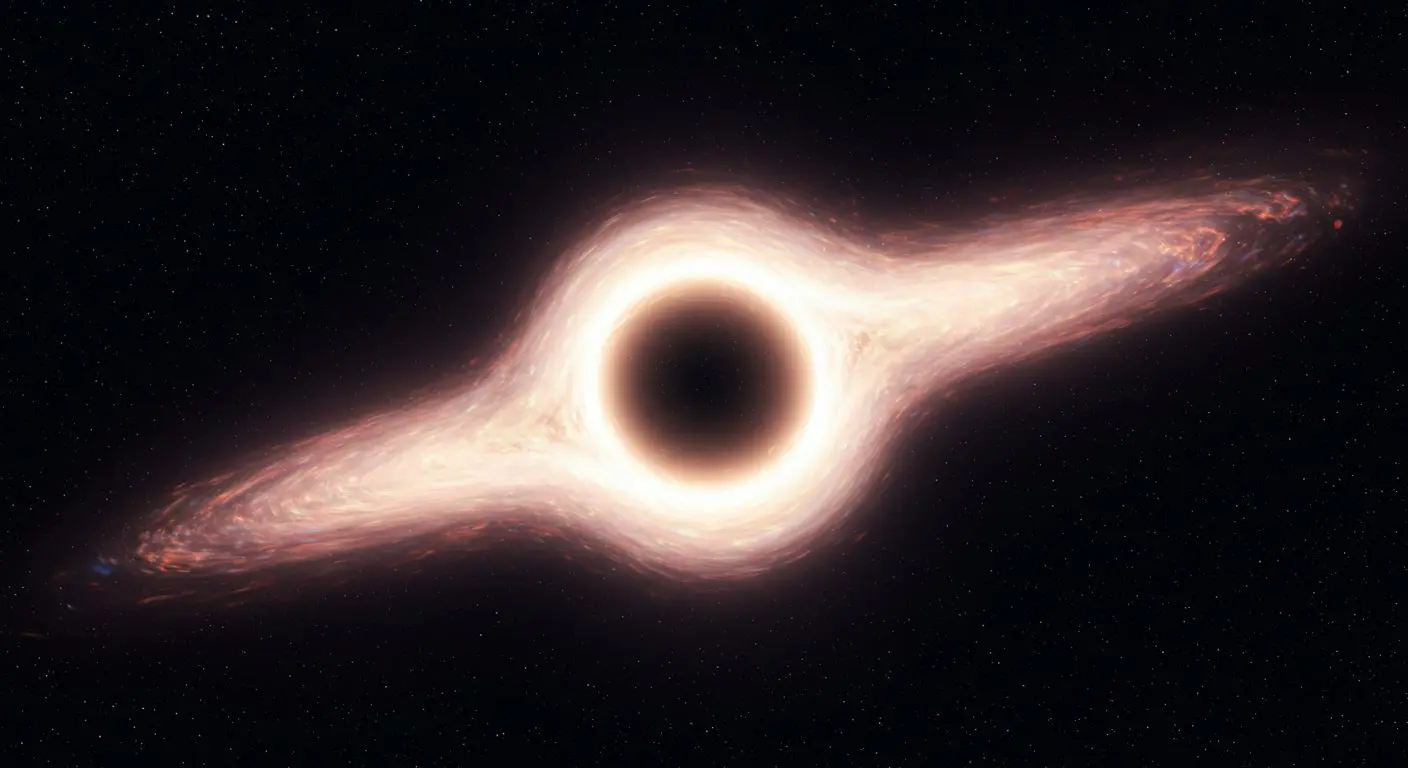
Research constructs a reconstruction map within the AdS/CFT correspondence, utilising canonical quantisation of action-angle variables in Jackiw-Teitelboim gravity. This yields analytical predictions for wormhole dynamics, revealing non-monotonic length behaviour and suppressed fluctuations, with implications for the complexity equals volume conjecture.
The enduring challenge of reconciling gravity with quantum mechanics continues to drive theoretical physics, with a central question concerning how information about the geometry of spacetime emerges from the underlying quantum theory. Researchers are actively investigating the precise mapping between gravitational descriptions and their quantum counterparts, a process known as reconstruction, crucial for calculating effects beyond standard approximations. A new study by Akers, Lucas, and Vikram, all from the Department of Physics and Center for Theory of Quantum Matter at the University of Colorado, Boulder, details a reconstruction map within the simplified framework of Jackiw-Teitelboim (JT) gravity, a two-dimensional model often used as a testing ground for more complex theories. Their work, entitled “On the reconstruction map in JT gravity”, proposes physically motivated requirements for this map and constructs one utilising canonical quantisation of specific variables, yielding analytical predictions for wormhole dynamics and offering insights into the relationship between quantum complexity and spacetime geometry.
Recent advances in quantum gravity research offer novel insights into the holographic duality and wormhole dynamics, revealing connections between gravity, quantum information, and the fundamental nature of spacetime. Researchers actively investigate the reconstruction of ‘bulk operators’ within the Anti-de Sitter/Conformal Field Theory (AdS/CFT) correspondence, a theoretical framework linking gravity in a higher-dimensional ‘bulk’ spacetime to a quantum field theory residing on its lower-dimensional ‘boundary’. This reconstruction process, crucial for translating gravitational calculations into quantum mechanical ones, currently focuses on establishing specific criteria for a ‘reconstruction map’ enabling the computation of ‘non-perturbative effects’, those beyond the reach of standard approximation techniques. Work demonstrates a pathway to achieve sufficient precision for these calculations within the simplified context of Jackiw-Teitelboim (JT) gravity, a two-dimensional model serving as a tractable arena for exploring quantum gravity phenomena.
The study employs canonical quantization of ‘action-angle variables’
The study employs canonical quantization of ‘action-angle variables’ within JT gravity, a mathematical technique that identifies specific coordinates to simplify the analysis of a system’s dynamics. Careful selection of these variables aligns with established results derived from the ‘gravitational path integral’, a method for calculating probabilities in quantum gravity. This approach facilitates the analysis of ‘unitary dynamics’, ensuring that the evolution of the system preserves probability, and reveals analytical predictions for wormhole length evolution. Results demonstrate that the average wormhole length exhibits non-monotonic behaviour over time, meaning it doesn’t simply increase or decrease, and provides a quantitative understanding of the system’s behaviour, moving beyond purely qualitative descriptions.
‘Ergodicity’, in this context, describes the system’s tendency to explore all accessible states over time, offering insights into the long-term evolution of wormhole length and its fluctuations. Researchers utilise techniques from ergodicity theory to characterise the system’s behaviour, revealing that the late-time evolution of the ‘Hartle-Hawking state’, the quantum state of the universe at the beginning of time, exhibits a ‘heavy-tailed distribution’ of lengths. This suggests a departure from standard perturbative predictions and highlights the importance of non-perturbative effects.
Observed ‘level repulsion’ within the non-perturbative JT spectrum indicates a complex relationship between quantum states and gravitational structures. Level repulsion, a phenomenon observed in the energy spectra of quantum systems, arises from interactions between quantum states, preventing them from clustering together. In this context, it suggests that gravitational structures influence the distribution of quantum states. Fluctuations remain non-perturbatively suppressed until approaching the ‘Heisenberg time’, a characteristic timescale beyond which quantum uncertainty dominates.
The findings have implications for the ‘complexity equals volume’ conjecture, a proposal linking the computational complexity of a quantum state to the volume of its corresponding gravitational dual. Detailed understanding of wormhole dynamics and fluctuations offers a framework for testing and refining this conjecture.
Researchers investigate the role of entanglement in the
Researchers investigate the role of entanglement in the emergence of spacetime, exploring how entanglement between degrees of freedom in the boundary theory gives rise to the geometric structure of the bulk spacetime. The proposition is that spacetime itself is an emergent phenomenon arising from the underlying quantum entanglement. Furthermore, researchers study the ‘information paradox’, investigating how information is preserved in the process of black hole evaporation, and propose that information is not lost but rather encoded in the ‘Hawking radiation’ in a subtle and complex way. They also explore the possibility of using quantum information theory to develop new tools for understanding the nature of spacetime and gravity, and investigate how quantum entanglement can be used to create wormholes and other exotic spacetime structures.
The study of quantum gravity continues to push the boundaries of our understanding of the universe, revealing deep connections between seemingly disparate areas of physics, and offers the potential to revolutionize our understanding of space, time, and the fundamental laws of nature. Future research will focus on developing more realistic models of quantum gravity, exploring the implications of these models for cosmology and astrophysics, and searching for experimental evidence of quantum gravity effects. The ongoing quest to understand quantum gravity promises to be one of the most exciting and challenging scientific endeavors of the 21st century.
🗞 On the reconstruction map in JT gravity
🧠 DOI: https://doi.org/10.48550/arXiv.2506.18975