

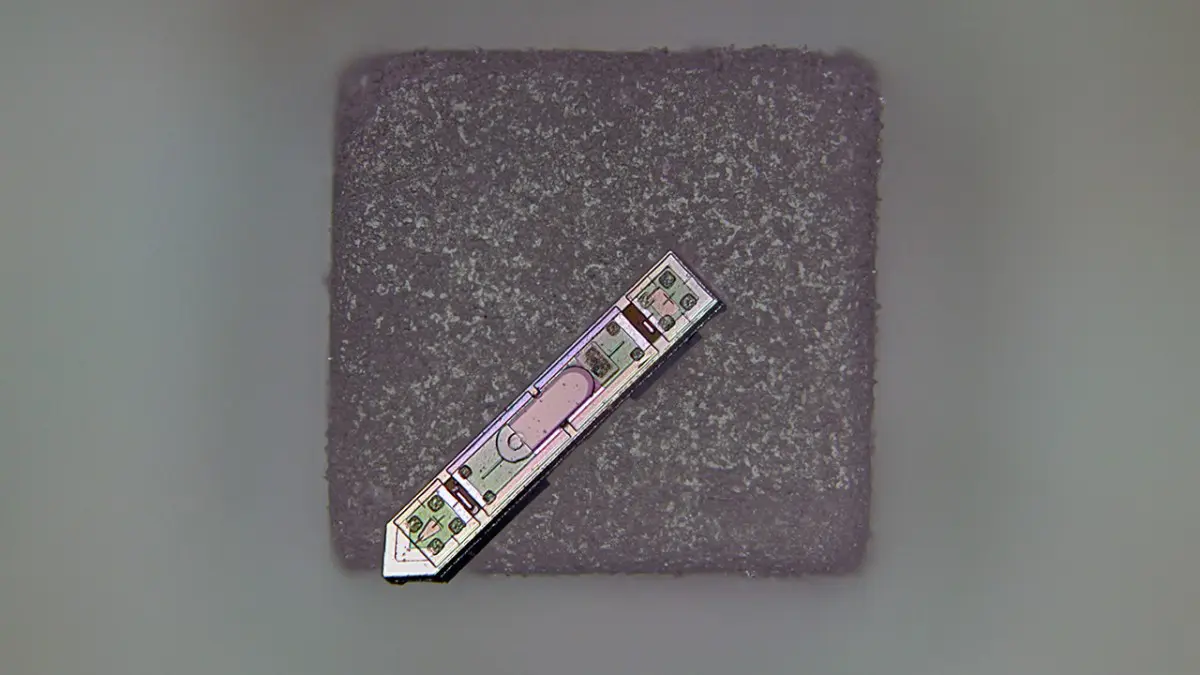
Imagine a device smaller than a grain of salt, capable of monitoring brain activity wirelessly for over a year – a new breakthrough from Cornell University is making that reality possible. Researchers have developed a micro-sized neural implant, dubbed a “MOTE,” that pushes the boundaries of bioelectronics, offering an unprecedentedly small and long-lasting solution for tracking the brain’s complex signals. This innovation, detailed in Nature Electronics, promises to revolutionize our understanding of neurological processes, paving the way for advanced therapies and more effective treatments for brain disorders – all while minimizing invasiveness for patients.
Miniature Implant Wirelessly Transmits Brain Data
A groundbreaking neural implant, smaller than a grain of salt, is now capable of wirelessly transmitting brain activity data for over a year, according to research published in Nature Electronics. Developed by a team at Cornell University, the device, dubbed a microscale optoelectronic tetherless electrode (MOTE), measures just 300 microns long and 70 microns wide – significantly minimizing potential brain tissue irritation compared to traditional implants. Unlike conventional methods, the MOTE is powered by red and infrared laser beams that safely penetrate brain tissue, and transmits data via pulses of infrared light.
This innovative approach utilizes pulse position modulation – a coding technique also employed in satellite communications – to conserve power while reliably relaying information. Researchers successfully tested the MOTE in both cell cultures and live mice, recording neuronal spikes and synaptic activity within the barrel cortex – the region processing whisker sensory input – without adverse effects. Lead researcher Alyosha Molnar envisions the MOTE’s unique material composition could even allow for brain activity monitoring during MRI scans, a feat currently challenging with existing implant technology, and suggests potential applications beyond the brain, including the spinal cord and integration with future technologies like embedded skull plates.
Device Design and Power Capabilities
Cornell University researchers have achieved a significant breakthrough in neural implant technology with the development of the MOTE – a microscale optoelectronic tetherless electrode smaller than a grain of salt. Measuring just 300 microns long and 70 microns wide, this remarkably small device wirelessly transmits brain activity data for extended periods, demonstrated by over a year of successful recordings in living mice. Unlike traditional implants that rely on physical wires, the MOTE is powered by red and infrared laser beams, harmlessly penetrating brain tissue to energize a circuit built from readily available semiconductor technology.
Data transmission occurs via minuscule pulses of infrared light, utilizing a power-efficient pulse position modulation technique—similar to that used in satellite communications—to minimize energy consumption. This innovative design not only reduces the potential for tissue irritation and immune responses, a common issue with larger implants, but also opens possibilities for recording brain activity during MRI scans—a feat largely impossible with current technologies. Researchers envision adapting the MOTE for use in other tissues like the spinal cord and even integrating it with future technologies such as opto-electronics within artificial skull plates.
Long-Term Testing and Biological Impact
A significant achievement of the newly developed microscale optoelectronic tetherless electrode (MOTE) lies in its demonstrated long-term biological compatibility and functionality. Researchers successfully recorded neural activity in mice for over a year following implantation in the barrel cortex—the region responsible for processing whisker sensory information—with no apparent harm to the animals. This extended testing period confirms the MOTE’s ability to reliably capture both individual neuron spikes and broader synaptic patterns over a substantial timeframe, a feat previously challenging due to the inflammatory responses often triggered by larger, traditional implants.
The device, measuring just 300 microns long and 70 microns wide, aims to minimize tissue disruption and immune reactions, a key advantage over existing neural interfaces. Furthermore, the MOTE’s composition—utilizing materials compatible with MRI technology—opens the possibility of concurrent electrical recording during MRI scans, something largely impossible with current implants. This advancement promises not only more refined long-term monitoring but also the potential for integration with other diagnostic and therapeutic technologies, potentially extending to applications in the spinal cord and even future innovations like embedded optoelectronics within artificial skull plates.
Source: https://news.cornell.edu/stories/2025/11/neural-implant-smaller-salt-grain-wirelessly-tracks-brain
The shift from traditional metallic electrodes to optoelectronic circuits fundamentally addresses the critical issue of chronic foreign body response. Conventional implants often trigger glial scarring and microglial activation, encapsulation the electrode sites and degrading signal fidelity over months. The MOTE’s material science, utilizing soft semiconductor architectures, is engineered for enhanced biocompatibility, minimizing the immune system’s inflammatory response and ensuring sustained signal quality critical for long-term recording fidelity.
Beyond the physical design, the power harvesting mechanism represents a significant departure from internal battery limitations. By employing highly focused, non-ionizing laser energy—whether red or infrared—the MOTE bypasses the need for chemical power sources. This wireless inductive coupling method not only eliminates the risks associated with battery depletion or leakage but also allows for repeated, non-invasive recharging or maintenance cycles in a clinical setting.
Interpreting the vast amount of recorded neural data demands sophisticated computational infrastructure. The raw spike train data must be filtered, decoded, and analyzed in real-time to distinguish genuine neuronal signals from background noise. Researchers must develop advanced machine learning algorithms capable of identifying subtle spatiotemporal patterns that correlate with specific cognitive functions, moving beyond simple activity recording toward true functional mapping.
Furthermore, maximizing bandwidth while conserving power requires meticulous signal processing at the device level. The use of Pulse Position Modulation (PPM) is a highly efficient spectral encoding technique, but further optimization is needed to handle multiplexing multiple data streams—perhaps from different cortical layers—without increasing the thermal load or reducing the effective data rate.


