
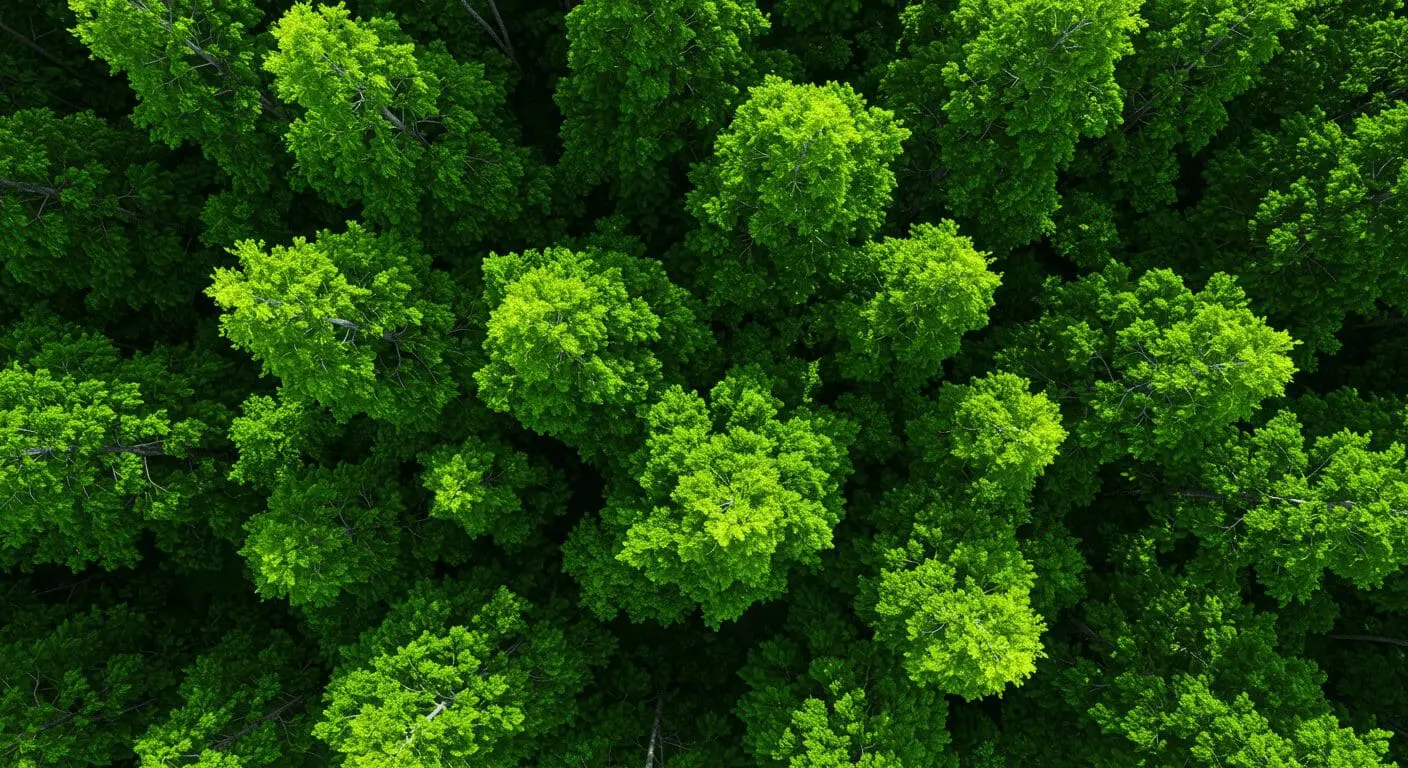
KTU scientists have developed advanced forest monitoring systems to address climate change, pests, and human activity challenges. Their innovations include a forest regeneration model utilizing Markov chains for predicting growth and mortality rates and a sound analysis system employing BiLSTM technology to detect environmental changes in real time.
These tools enhance forest conservation efforts by enabling early intervention and optimizing resource allocation. The research highlights the vulnerability of spruce trees to climate shifts and suggests broader applications for monitoring ecosystems and urban noise pollution.
Current monitoring methods struggle with ecological complexity, oversimplifying dynamics like species competition and environmental feedback loops. This limitation hinders accurate predictions of forest responses to various factors.
Climate change disproportionately affects certain tree species, such as spruce in Lithuania, which experience higher mortality rates due to changing weather patterns. Traditional models fail to capture these nuances, leading to ineffective management strategies.
Moreover, conventional monitoring methods often overlook critical indicators like animal activity and noise pollution, essential for a comprehensive ecosystem assessment. Advanced technologies, including AI and data analysis, offer solutions by enabling real-time tracking and predictive analytics, though their widespread adoption faces barriers like cost and technical expertise.
In conclusion, enhancing forest monitoring requires addressing delays in detection, improving ecological modeling accuracy, and integrating advanced technologies to provide a holistic view of forest ecosystems.
Forest Regeneration Model
KTU researchers have developed an innovative Forest Regeneration Model to enhance forest monitoring and management. This model employs advanced statistical methods, including Markov chains and multidirectional time series decomposition, to accurately predict tree growth and mortality rates. By tracking transitions between tree age groups, the model provides insights into forest dynamics, enabling better planning for sustainable forestry practices.
The application of this model is particularly beneficial in identifying suitable tree species for different environmental conditions, which is essential for adapting to climate change. For instance, in Lithuania, the model has been instrumental in predicting the vulnerability of spruce trees to changing weather patterns and pest outbreaks, allowing for timely interventions to mitigate risks.
To complement their regeneration model, KTU researchers have also integrated sound analysis using BiLSTM models into their forest monitoring systems. This comprehensive approach allows for a more holistic assessment of forest health by analyzing environmental sounds, thereby enhancing the overall effectiveness of their monitoring strategies.
Sound Analysis System
KTU researchers have developed a sound analysis system that employs BiLSTM models to analyze environmental sounds. This system is designed to detect wildlife activity and assess noise pollution in various habitats, aiding biodiversity conservation efforts and urban planning initiatives. Its application extends to detecting pollutants in water and air, offering early warning systems for environmental threats.
KTU researchers have developed an AI-driven predictive analysis system that employs advanced models to predict ecological changes in diverse ecosystems, from wetlands to grasslands. This system enhances sustainable management practices across these environments by providing insights into potential ecological shifts and challenges.
The adaptability of KTU’s technologies is evident in their potential use for monitoring water quality and air pollution. However, challenges such as algorithm adaptation for marine environments require consideration, highlighting the need for tailored solutions in different ecological contexts.
KTU’s innovations provide a robust framework for broader environmental monitoring applications, addressing diverse ecological needs while acknowledging practical implementation considerations.
More information
External Link: Click Here For More