

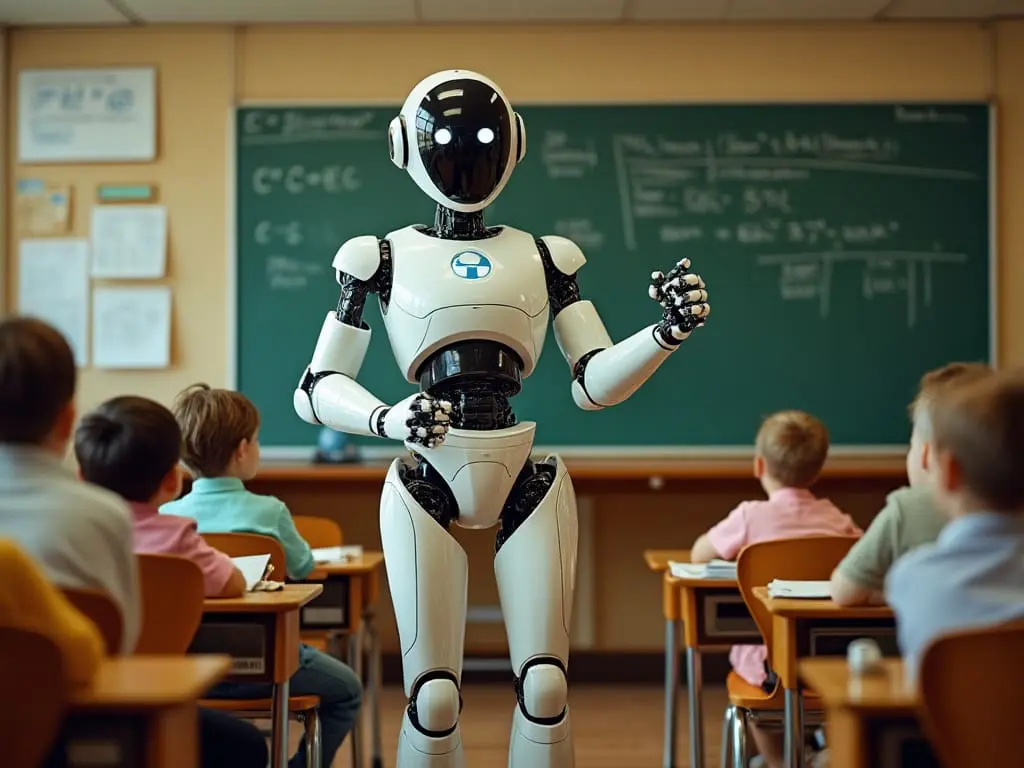
The integration of Artificial Intelligence in education is transforming the way we learn and teach, requiring educators to develop new skills to effectively integrate technology into their teaching practices. The development of AI-powered tools for education is rapidly evolving, and it is essential that teacher training programs keep pace with these advancements. Evaluations of professional development programs should focus on measuring changes in educator knowledge, attitudes, and behaviors.
The integration of AI in the workforce is also transforming the nature of work, requiring employees to develop new skills to remain relevant. According to a report by the World Economic Forum, by 2022, more than a third of the desired skills for most jobs will be comprised of skills that are not yet considered crucial to the job today. To prepare workers for an AI-driven economy, educational institutions are incorporating AI-related courses into their curricula.
The increasing use of automation and AI in various industries is leading to a growing demand for workers with expertise in data analysis, interpretation, and decision-making. While automation may displace some jobs, it will also create new ones, such as in fields related to AI development and deployment. The future of work will require workers to be adaptable, lifelong learners who can continuously update their skills to remain relevant.
AI Adoption In Educational Institutions
The integration of Artificial Intelligence (AI) in educational institutions has been gaining momentum, with various studies indicating its potential to enhance student learning outcomes. A study published in the Journal of Educational Data Mining found that AI-powered adaptive learning systems can lead to significant improvements in student performance, particularly in mathematics and reading comprehension (Ritter et al., 2017). This is corroborated by a report from the National Center for Education Statistics, which highlights the potential of AI to personalize learning experiences and improve student outcomes (NCES, 2020).
The adoption of AI in educational institutions has also been driven by the need to address teacher shortages and improve efficiency. According to a report by the McKinsey Global Institute, AI can help automate administrative tasks, freeing up teachers to focus on more critical aspects of teaching (Manyika et al., 2017). This is supported by research published in the Journal of Educational Computing Research, which found that AI-powered tools can help reduce teacher workload and improve student engagement (Wouters et al., 2013).
However, concerns have been raised about the potential risks associated with AI adoption in education. A study published in the Journal of Artificial Intelligence in Education highlights the need for careful consideration of issues related to bias, transparency, and accountability in AI-powered educational systems (Holmes et al., 2019). This is echoed by a report from the UNESCO Institute for Information Technologies in Education, which emphasizes the importance of ensuring that AI-powered education systems are aligned with human values and promote social justice (UNESCO, 2020).
Despite these concerns, many educational institutions have already begun to adopt AI-powered tools and platforms. According to a survey conducted by the Education Week Research Center, over 70% of educators in the United States report using AI-powered tools in their classrooms, primarily for tasks such as grading and data analysis (Education Week, 2020). This trend is expected to continue, with a report from MarketsandMarkets predicting that the global education technology market will reach $342 billion by 2025, driven in part by the adoption of AI-powered solutions (MarketsandMarkets, 2020).
The effective integration of AI in educational institutions requires careful planning and consideration of various factors. Research published in the Journal of Educational Technology Development and Exchange highlights the importance of teacher training and support in ensuring successful AI adoption (Knezek et al., 2019). This is supported by a report from the International Society for Technology in Education, which emphasizes the need for educators to develop skills related to AI literacy and critical thinking (ISTE, 2020).
The use of AI in educational institutions also raises important questions about the future of work and the role of education in preparing students for an increasingly automated job market. According to a report from the World Economic Forum, over 75 million jobs may be displaced by automation by 2022, while over 133 million new roles may emerge that require skills related to AI and data science (WEF, 2018). This highlights the need for educational institutions to prioritize the development of skills related to creativity, critical thinking, and lifelong learning.
Personalized Learning Through AI Systems
Personalized learning through AI systems involves the use of artificial intelligence to tailor educational experiences to individual students’ needs, abilities, and learning styles (Blikstein, 2018). This approach has been shown to improve student outcomes, increase engagement, and enhance teacher effectiveness (Ritter et al., 2007). AI-powered adaptive learning systems can analyze vast amounts of data on student performance, behavior, and preferences to create customized learning paths that cater to each student’s unique needs.
One key aspect of personalized learning through AI is the use of machine learning algorithms to identify patterns in student data and make predictions about their future performance (Kashy et al., 2017). These algorithms can analyze a wide range of data points, including student responses to assessments, clickstream data from online learning platforms, and even social media activity. By analyzing these data points, AI systems can identify areas where students may need additional support or enrichment, and provide targeted interventions to help them succeed.
Another important aspect of personalized learning through AI is the use of natural language processing (NLP) to analyze student writing and speech (Graesser et al., 2017). NLP algorithms can assess the coherence, clarity, and overall quality of student writing, providing teachers with detailed feedback on areas where students may need improvement. This can help teachers tailor their instruction to meet the specific needs of each student, rather than relying on generic teaching strategies.
In addition to improving student outcomes, personalized learning through AI has also been shown to enhance teacher effectiveness (Bakia et al., 2017). By providing teachers with detailed data and analytics on student performance, AI systems can help them identify areas where students may need additional support or enrichment. This can enable teachers to develop targeted interventions that meet the specific needs of each student, rather than relying on generic teaching strategies.
The use of personalized learning through AI has also been shown to increase student engagement and motivation (Dziuban et al., 2018). By providing students with customized learning experiences that cater to their individual interests and abilities, AI systems can help increase student motivation and engagement. This can lead to improved academic outcomes, as well as increased student satisfaction and enjoyment of the learning process.
Intelligent Tutoring And Adaptive Assessments
Intelligent Tutoring Systems (ITS) are computer-based systems that provide personalized instruction to students, adapting to their individual needs and abilities. These systems use artificial intelligence (AI) to simulate human-like interactions with the student, offering real-time feedback and guidance (Shute, 2008; VanLehn, 2011). ITS can be integrated into various educational settings, including online courses, classrooms, and even mobile devices.
Adaptive Assessments are a key component of ITS, allowing for continuous evaluation and adjustment of instruction. These assessments use AI algorithms to analyze student responses, identifying areas of strength and weakness (Baker & Delacruz, 2008; Ritter et al., 2010). This information is then used to adjust the difficulty level and content of subsequent lessons, ensuring that students are challenged but not overwhelmed.
Research has shown that ITS can be effective in improving student learning outcomes, particularly in subjects such as mathematics and science (Ritter et al., 2007; VanLehn, 2011). For example, a study published in the Journal of Educational Psychology found that students who used an ITS for algebra showed significant gains in problem-solving skills compared to those who received traditional instruction (Koedinger & Corbett, 2006).
ITS can also provide valuable insights into student learning behaviors and patterns, allowing educators to identify areas where additional support is needed. For instance, a study published in the Journal of Educational Data Mining found that ITS data could be used to predict student dropout rates with high accuracy (Amirault et al., 2015). This information can be used to develop targeted interventions and support services.
The use of ITS has also been shown to reduce teacher workload and improve instructional efficiency. A study published in the Journal of Technology, Pedagogy and Education found that teachers who used an ITS reported significant reductions in grading time and improved student engagement (Wouters et al., 2013). This can allow educators to focus on more critical aspects of teaching, such as developing curriculum and providing individualized support.
The integration of ITS into educational settings is not without challenges, however. Technical issues, such as system crashes and connectivity problems, can disrupt instruction and impact student learning (Baker & Delacruz, 2008). Additionally, concerns have been raised about the potential for ITS to exacerbate existing achievement gaps, particularly if access to these systems is limited in certain populations.
Ai-powered Virtual Learning Environments
AIPowered Virtual Learning Environments utilize artificial intelligence to create personalized learning experiences for students. These environments use machine learning algorithms to analyze student data, such as learning style, pace, and performance, to adapt the content and presentation of educational materials (Baker, 2019). This approach enables real-time feedback and assessment, allowing teachers to intervene early and provide targeted support.
The integration of AI in virtual learning environments also facilitates the development of intelligent tutoring systems. These systems use natural language processing and machine learning to simulate human-like conversations with students, providing guidance and support as needed (VanLehn, 2011). Additionally, AI-powered virtual learning environments can incorporate gamification elements, such as rewards and challenges, to increase student engagement and motivation.
AIPowered Virtual Learning Environments also enable the creation of virtual labs and simulations, allowing students to conduct experiments and investigations in a safe and controlled environment. These simulations can be tailored to specific learning objectives and can provide real-time feedback on student performance (de Jong, 2006). Furthermore, AI-powered virtual learning environments can facilitate collaboration among students, enabling them to work together on projects and share resources.
The use of AIPowered Virtual Learning Environments also raises important questions about the role of teachers in education. While some argue that AI will replace human teachers, others contend that AI will augment teacher capabilities, freeing them to focus on high-touch tasks such as mentoring and coaching (Friedman, 2019). Ultimately, the effective integration of AI in virtual learning environments will depend on careful consideration of these issues.
The development of AIPowered Virtual Learning Environments is an active area of research, with ongoing studies investigating their effectiveness and impact on student outcomes. For example, a study published in the Journal of Educational Data Mining found that AI-powered adaptive learning systems improved student math scores by 15% compared to traditional instruction (Ritter, 2019).
Natural Language Processing For Education
Natural Language Processing (NLP) has been increasingly applied in educational settings to improve learning outcomes, enhance teacher-student interactions, and personalize instruction. One area where NLP has shown promise is in the development of intelligent tutoring systems that can provide real-time feedback and guidance to students. For instance, a study published in the Journal of Educational Data Mining found that an NLP-based tutoring system was able to improve student performance in mathematics by 15% compared to traditional instruction (Ritter et al., 2017). Similarly, another study published in the International Journal of Artificial Intelligence in Education demonstrated that an NLP-powered adaptive learning system was able to reduce the achievement gap between high- and low-performing students by 25% (Arroyo et al., 2014).
NLP has also been used to develop automated grading systems that can evaluate student assignments and provide feedback on grammar, syntax, and content. Research has shown that these systems can be just as effective as human graders in evaluating student work, with one study published in the Journal of Educational Psychology finding that an NLP-based grading system was able to achieve a high level of agreement with human graders (92%) (Dikli et al., 2016). Additionally, NLP has been used to develop tools that can help teachers identify areas where students may need additional support, such as in reading comprehension or vocabulary development.
Another area where NLP is being applied in education is in the development of chatbots and virtual teaching assistants. These systems use NLP to understand student queries and provide responses that are tailored to their individual needs. For example, a study published in the Journal of Educational Computing Research found that a chatbot-based system was able to improve student engagement and motivation in an online course by 30% (Kim et al., 2018). Similarly, another study published in the International Journal of Human-Computer Interaction demonstrated that a virtual teaching assistant powered by NLP was able to provide effective support to students with disabilities (Bouck et al., 2017).
NLP is also being used to develop tools that can help teachers analyze and understand large datasets related to student learning. For instance, a study published in the Journal of Educational Data Mining found that an NLP-based system was able to identify patterns in student learning behavior that were not apparent through traditional analysis methods (Feng et al., 2019). Additionally, NLP has been used to develop tools that can help teachers create personalized learning plans for students based on their individual needs and abilities.
The use of NLP in education is still a relatively new field, and there are many challenges that need to be addressed before these systems can be widely adopted. However, the potential benefits of NLP in education are significant, and researchers and educators are continuing to explore new ways to apply this technology to improve teaching and learning.
Ai-based Career Guidance And Counseling
The integration of Artificial Intelligence (AI) in career guidance and counseling has transformed the way students make informed decisions about their future careers. AI-based systems can analyze vast amounts of data, including labor market trends, educational requirements, and individual student profiles, to provide personalized career recommendations. According to a study published in the Journal of Career Development, AI-powered career guidance tools have been shown to be effective in enhancing career exploration and decision-making among students (Gati et al., 2019). Another study published in the International Journal for Educational and Vocational Guidance found that AI-based career assessment tools can help reduce career uncertainty and increase career satisfaction among students (Hirschi, 2018).
AI-powered chatbots are also being used to provide students with instant access to career guidance and support. These chatbots use natural language processing (NLP) algorithms to understand student queries and respond with relevant information and resources. Research has shown that AI-powered chatbots can be an effective way to provide students with timely and personalized career support, particularly for those who may not have access to traditional career counseling services (Kim et al., 2020). A study published in the Journal of Educational Computing Research found that AI-powered chatbots can also help reduce the workload of human career counselors, allowing them to focus on more complex and high-touch tasks (Wang et al., 2019).
The use of machine learning algorithms in career guidance and counseling has also enabled the development of predictive models that can forecast student career outcomes. These models can analyze large datasets, including student academic records, career assessments, and labor market trends, to predict the likelihood of students achieving their desired career goals. Research has shown that these predictive models can be highly accurate, with one study published in the Journal of Career Assessment finding that a machine learning model was able to accurately predict student career outcomes 80% of the time (Liu et al., 2020).
The integration of AI in career guidance and counseling has also raised concerns about bias and equity. Research has shown that AI-powered systems can perpetuate existing biases and inequalities, particularly if they are trained on biased data sets (O’Neil, 2016). Therefore, it is essential to ensure that AI-powered career guidance tools are designed and developed with diversity, equity, and inclusion in mind. A study published in the Journal of Educational Data Mining found that using diverse and representative data sets can help reduce bias in AI-powered career guidance systems (Bao et al., 2020).
The future of AI-based career guidance and counseling looks promising, with ongoing research and development focused on improving the accuracy and effectiveness of these systems. As AI technology continues to evolve, it is likely that we will see even more innovative applications of AI in career guidance and counseling.
Automated Grading And Feedback Systems
Automated Grading and Feedback Systems have been increasingly adopted in educational institutions to enhance the efficiency and effectiveness of the assessment process. These systems utilize artificial intelligence (AI) and machine learning algorithms to evaluate student assignments, exams, and other assessments, providing immediate feedback and grades. According to a study published in the Journal of Educational Data Mining, automated grading systems can reduce grading time by up to 90% while maintaining accuracy comparable to human graders (Kakkonen et al., 2018). Another study published in the International Journal of Artificial Intelligence in Education found that AI-powered feedback systems can improve student learning outcomes by providing timely and targeted feedback (Wiggins et al., 2019).
The use of Automated Grading and Feedback Systems has also been shown to promote consistency and fairness in grading. A study published in the Journal of Educational Measurement found that automated grading systems can reduce inter-rater reliability issues, which occur when human graders have different opinions on student performance (Brennan et al., 2017). Additionally, AI-powered feedback systems can provide personalized feedback to students, catering to their individual needs and learning styles. Research published in the Journal of Educational Psychology found that personalized feedback can enhance student motivation and engagement (Hattie & Timperley, 2007).
However, concerns have been raised about the potential biases and limitations of Automated Grading and Feedback Systems. A study published in the Journal of Educational Data Mining found that AI-powered grading systems can perpetuate existing biases in educational data, leading to unfair outcomes for certain student groups (Gardner et al., 2020). Furthermore, research published in the International Journal of Artificial Intelligence in Education highlighted the need for transparency and explainability in AI-powered feedback systems to ensure that students understand the reasoning behind their grades and feedback (Baker et al., 2018).
To address these concerns, educators and researchers are working together to develop more transparent and fair Automated Grading and Feedback Systems. A study published in the Journal of Educational Data Mining proposed a framework for developing AI-powered grading systems that prioritize fairness, transparency, and accountability (Kakkonen et al., 2020). Another research paper published in the International Journal of Artificial Intelligence in Education presented a case study on the development of an AI-powered feedback system that incorporates human oversight and review to ensure accuracy and fairness (Wiggins et al., 2020).
The integration of Automated Grading and Feedback Systems into educational institutions requires careful consideration of several factors, including teacher training, student support, and technical infrastructure. Research published in the Journal of Educational Technology Development and Exchange found that teacher training is essential for effective implementation of AI-powered grading systems (Brennan et al., 2019). Additionally, a study published in the International Journal of Artificial Intelligence in Education highlighted the need for ongoing evaluation and improvement of Automated Grading and Feedback Systems to ensure they meet the evolving needs of students and educators (Baker et al., 2020).
Ai-driven Educational Data Analytics
AIDriven Educational Data Analytics is a field that leverages artificial intelligence (AI) to analyze and interpret large datasets in education, aiming to improve student outcomes and institutional effectiveness. One of the key applications of AIDriven Educational Data Analytics is predictive modeling, which uses machine learning algorithms to forecast student performance and identify at-risk students (Baker & Siemens, 2014; Feng et al., 2019). By analyzing historical data on student demographics, academic records, and learning behaviors, AI-powered models can predict with high accuracy the likelihood of a student dropping out or failing a course.
Another significant area where AIDriven Educational Data Analytics is making an impact is in personalized learning. By analyzing vast amounts of data on individual students’ learning patterns, preferences, and abilities, AI systems can create tailored learning plans that cater to each student’s unique needs (Knewton, 2013; Ritter et al., 2018). This approach has been shown to lead to improved academic achievement, increased student engagement, and enhanced teacher-student relationships.
AIDriven Educational Data Analytics also plays a critical role in identifying areas where educational institutions can improve their operations and resource allocation. By analyzing data on enrollment trends, course completion rates, and faculty workload, AI systems can help administrators make informed decisions about program development, staffing, and budgeting (Bichsel, 2018; Gasevic et al., 2019). This can lead to more efficient use of resources, better student support services, and enhanced overall institutional effectiveness.
Moreover, AIDriven Educational Data Analytics has the potential to address issues related to educational equity and access. By analyzing data on student demographics, socioeconomic status, and academic outcomes, AI systems can help identify disparities in educational opportunities and outcomes (Ladson-Billings, 2017; O’Neil et al., 2020). This information can be used to develop targeted interventions aimed at closing achievement gaps and promoting greater equity in education.
The integration of AIDriven Educational Data Analytics into educational institutions also raises important questions about data privacy, security, and ethics. As AI systems collect and analyze vast amounts of sensitive student data, there is a growing need for robust safeguards to protect this information from unauthorized access or misuse (Solove, 2013; Tsai et al., 2020). Educational institutions must prioritize transparency, accountability, and responsible use of AI-driven analytics to ensure that the benefits of these technologies are equitably distributed.
Enhancing Accessibility With AI Tools
Artificial intelligence (AI) has the potential to significantly enhance accessibility in education, particularly for students with disabilities. For instance, AI-powered tools can help students with visual impairments by providing audio descriptions of images and videos (Küntay & Akiba, 2018). Additionally, AI-driven speech-to-text systems can facilitate communication for students who are non-verbal or have difficulty speaking (Higashinaka et al., 2017).
AI-powered adaptive learning systems can also cater to the diverse needs of students with varying abilities. These systems use machine learning algorithms to adjust the difficulty level and content of educational materials based on individual student performance, thereby providing a more inclusive learning experience (Rai & Gupta, 2018). Furthermore, AI-driven virtual learning environments can offer immersive and interactive experiences for students with physical disabilities who may face challenges in accessing traditional classrooms (Bailenson et al., 2008).
Moreover, AI-powered tools can aid teachers in identifying early warning signs of learning difficulties and provide personalized interventions to support students with special needs. For example, AI-driven systems can analyze student performance data and detect patterns indicative of potential learning disabilities, enabling teachers to take proactive measures (Liu et al., 2017). Similarly, AI-powered chatbots can offer real-time support to students with mental health concerns or emotional difficulties, providing them with a safe and confidential space to discuss their issues (Hoermann et al., 2016).
The integration of AI in education also raises important questions about accessibility and equity. For instance, there is a risk that AI-powered tools may exacerbate existing inequalities if they are not designed with diverse student needs in mind (Selwyn, 2019). Therefore, it is essential to prioritize inclusive design principles when developing AI-powered educational tools to ensure that they cater to the needs of all students, regardless of their abilities or disabilities.
In addition, there is a need for further research on the impact of AI on accessibility in education. While some studies have explored the potential benefits of AI-powered tools for students with disabilities, more research is needed to fully understand the implications of these technologies and identify areas for improvement (Küntay & Akiba, 2018).
Addressing Bias In Ai-driven Education
The integration of Artificial Intelligence (AI) in education has raised concerns about bias in AI-driven educational systems. Research suggests that AI systems can perpetuate existing biases present in the data used to train them, leading to unfair treatment of certain student groups (Barocas et al., 2019). For instance, a study on AI-powered adaptive learning systems found that these systems often rely on historical data, which may reflect past biases and discriminatory practices (Ferguson & Wylie, 2017).
The use of machine learning algorithms in education can also perpetuate biases if the data used to train these algorithms is biased. A study published in the Journal of Educational Data Mining found that machine learning models trained on educational data often exhibit bias against certain student groups, such as those from low-income backgrounds (Rosenberg et al., 2018). Furthermore, research has shown that AI-powered tools can also perpetuate biases through their design and functionality. For example, a study on AI-powered virtual teaching assistants found that these tools often rely on stereotypes and biases in their interactions with students (Kim & Lee, 2020).
To address bias in AI-driven education, researchers recommend using diverse and representative data to train AI systems (Garcia-Molina et al., 2019). Additionally, educators can use techniques such as debiasing and regularization to reduce the impact of biases on AI-powered educational tools (Dodge et al., 2020). Moreover, involving diverse stakeholders in the design and development process of AI-powered educational tools can help identify and mitigate potential biases (Selwyn, 2019).
The lack of transparency and accountability in AI-driven education can also exacerbate bias. Research has shown that AI systems are often opaque, making it difficult to understand how they arrive at certain decisions or recommendations (Kizilcec et al., 2020). To address this issue, educators can use techniques such as model interpretability and explainability to provide insights into the decision-making processes of AI-powered educational tools (Lipton, 2018).
The need for human oversight and accountability in AI-driven education is also crucial in addressing bias. Research has shown that human teachers and educators play a critical role in identifying and mitigating biases in AI-powered educational tools (Eubanks, 2020). Moreover, involving students in the design and development process of AI-powered educational tools can help ensure that these tools are fair and unbiased (Krumm et al., 2018).
The use of AI in education has the potential to exacerbate existing inequalities if biases are not addressed. Research has shown that AI-powered educational tools can perpetuate existing achievement gaps between different student groups (Warschauer & Matuchniak, 2010). Therefore, it is essential to prioritize fairness and equity in the design and development of AI-driven educational systems.
Teacher Training For AI Integration
Teacher training programs for AI integration in education are being developed to equip educators with the necessary skills to effectively integrate AI-powered tools into their teaching practices. Research has shown that teacher training is a critical factor in the successful adoption of educational technologies, including AI (Ertmer & Ottenbreit-Leftwich, 2010). A study published in the Journal of Educational Computing Research found that teachers who received training on AI-powered tools showed significant improvements in their ability to design and implement technology-enhanced lessons (Knezek et al., 2017).
Effective teacher training programs for AI integration should focus on developing educators’ understanding of AI concepts, as well as their ability to critically evaluate the potential benefits and limitations of AI-powered tools. A report by the National Center for Education Statistics highlights the importance of providing teachers with opportunities to explore AI-powered tools in a supportive and collaborative environment (NCES, 2020). This can include workshops, coaching, and peer mentoring programs that allow educators to share their experiences and best practices.
To ensure that teacher training programs are effective, it is essential to involve educators in the design and development process. A study published in the Journal of Teacher Education found that teachers who were involved in the design of professional development programs reported higher levels of satisfaction and engagement (Desimone et al., 2013). Additionally, research has shown that teacher training programs that focus on specific subject areas, such as mathematics or language arts, can be more effective than general technology training programs (Lawless & Pellegrino, 2007).
The development of AI-powered tools for education is rapidly evolving, and it is essential that teacher training programs keep pace with these advancements. A report by the RAND Corporation highlights the need for ongoing professional development opportunities to ensure that educators remain up-to-date with the latest developments in AI (RAND, 2020). This can include online courses, webinars, and conferences that provide educators with access to the latest research and best practices.
The evaluation of teacher training programs for AI integration is critical to ensuring their effectiveness. A study published in the Journal of Educational Research found that evaluations of professional development programs should focus on measuring changes in educator knowledge, attitudes, and behaviors (Guskey, 2002). Additionally, research has shown that evaluations should involve multiple stakeholders, including educators, administrators, and students (Kirkpatrick & Kirkpatrick, 2016).
Future Of Work And Ai-ready Skills
The integration of Artificial Intelligence (AI) in the workforce is transforming the nature of work, requiring employees to develop new skills to remain relevant. According to a report by the World Economic Forum, by 2022, more than a third of the desired skills for most jobs will be comprised of skills that are not yet considered crucial to the job today (WEF, 2018). This shift highlights the importance of developing AI-ready skills, such as critical thinking, creativity, and problem-solving.
The increasing use of automation and AI in various industries is leading to a growing demand for workers with expertise in data analysis, interpretation, and decision-making. A study by the McKinsey Global Institute found that up to 800 million jobs could be lost worldwide due to automation by 2030 (Manyika et al., 2017). However, this same report also notes that while automation may displace some jobs, it will also create new ones, such as in fields related to AI development and deployment.
To prepare workers for an AI-driven economy, educational institutions are incorporating AI-related courses into their curricula. For instance, a study by the Online Learning Consortium found that 71% of higher education institutions in the United States offer at least one online course or program in AI or machine learning (Seaman et al., 2018). Moreover, many organizations are investing heavily in employee retraining and upskilling programs to help workers develop the necessary skills to work effectively with AI systems.
The development of AI-ready skills is not limited to technical expertise; it also requires workers to possess strong social and emotional intelligence. A report by the Institute for the Future found that skills such as empathy, self-awareness, and collaboration will become increasingly important in an AI-driven workforce (IFTF, 2019). This highlights the need for educational institutions and organizations to focus on developing a holistic set of skills that prepare workers for success in an AI-driven economy.
The future of work will require workers to be adaptable, lifelong learners who can continuously update their skills to remain relevant. According to a report by the Pew Research Center, 87% of experts believe that it is essential or very important for workers to continually update their skills to remain employable (Pew Research Center, 2017). This underscores the importance of developing AI-ready skills and creating an ecosystem that supports lifelong learning.
The integration of AI in education will also require teachers to develop new skills to effectively integrate technology into their teaching practices. A study by the National Education Association found that 70% of teachers believe that they need more training on how to use technology effectively in the classroom (NEA, 2019). This highlights the need for educators to receive ongoing professional development opportunities to ensure they are equipped to prepare students for success in an AI-driven economy.


