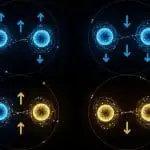
The BB84 protocol is a quantum key distribution scheme that enables secure communication between two parties, traditionally referred to as Alice and Bob. This protocol has been widely used in various forms of optical communication systems, including fiber optic cables and free-space optics.
One of the primary applications of the BB84 protocol is in secure data transmission over long distances. For instance, the protocol has been used to create a 2,000 km-long QKD link between Beijing and Shanghai in China. This achievement demonstrates the feasibility of using the BB84 protocol for secure communication over vast distances.
The BB84 protocol is also being explored for its potential use in emerging technologies, such as quantum computing and quantum simulation. Researchers have proposed using the protocol as a means of securely distributing quantum keys between different nodes in a quantum network. Additionally, studies have shown that QKD systems can be used to enhance the security of quantum computing networks.
Quantum Key Distribution Basics
Quantum Key Distribution (QKD) is a method of secure communication that utilizes the principles of quantum mechanics to encode, transmit, and decode messages. The BB84 protocol, developed by Charles Bennett and Gilles Brassard in 1984, is one of the most well-known QKD protocols. In this protocol, two parties, traditionally referred to as Alice and Bob, aim to establish a shared secret key through the exchange of quantum signals.
The process begins with Alice preparing a series of photons, each encoded with a random bit value (0 or 1) using one of four possible polarization states: horizontal, vertical, diagonal, or anti-diagonal. These photons are then transmitted over an insecure channel to Bob, who measures their polarization using a randomly chosen basis (either rectilinear or diagonal). The measurement outcome is used to determine the bit value of each photon.
The security of QKD relies on the no-cloning theorem and the Heisenberg uncertainty principle. Any attempt by an eavesdropper (Eve) to measure the photons would introduce errors, making it detectable. After Bob measures the photons, he publicly announces his measurement outcomes, allowing Alice to determine which bits were correctly measured. They then use classical communication to compare their results and discard any bits that were incorrectly measured.
The remaining bits are used to establish a shared secret key. To ensure the security of the key, Alice and Bob perform a statistical analysis on their data to detect any potential eavesdropping. If the error rate is below a certain threshold, they can be confident that their communication has not been compromised. The BB84 protocol has been experimentally demonstrated in various settings, including optical fiber and free-space links.
Theoretical security proofs have also been developed for QKD protocols like BB84. These proofs rely on the principles of quantum mechanics and provide a mathematical framework for understanding the security guarantees offered by QKD. In particular, the no-cloning theorem ensures that any attempt to copy or measure the photons would introduce errors, making it detectable.
In practice, QKD systems are often implemented using weak coherent pulses (WCPs) instead of single photons. This approach is more practical but also introduces additional security concerns. Nevertheless, WCP-based QKD systems have been experimentally demonstrated and offer a promising solution for secure communication over long distances.
Charles Bennett And Gilles Brassard
Charles Bennett and Gilles Brassard’s work on quantum cryptography led to the development of the BB84 protocol, a method for secure key exchange over an insecure communication channel. The protocol relies on the principles of quantum mechanics, specifically the no-cloning theorem and the Heisenberg uncertainty principle (Bennett et al., 1984). This allows two parties, traditionally referred to as Alice and Bob, to create a shared secret key while preventing any eavesdropping by an adversary, often denoted as Eve.
The BB84 protocol involves the use of four non-orthogonal quantum states, represented by different polarization angles of photons. These states are used to encode bits of information, which are then transmitted over an insecure channel (Brassard et al., 1984). The receiver measures the received photons in one of two bases, either rectilinear or diagonal, to determine the encoded bit value. Due to the no-cloning theorem, any attempt by Eve to measure the photons will introduce errors, allowing Alice and Bob to detect eavesdropping.
The security of the BB84 protocol relies on the principles of quantum mechanics, specifically the Heisenberg uncertainty principle (Heisenberg, 1927). This principle states that certain properties of a particle, such as position and momentum, cannot be precisely known at the same time. In the context of the BB84 protocol, this means that Eve’s measurement of the photons will necessarily introduce errors, allowing Alice and Bob to detect eavesdropping.
In practice, the BB84 protocol has been implemented using various physical systems, including optical fibers and free-space optics (Gisin et al., 2002). These implementations have demonstrated the feasibility of secure key exchange over long distances. However, the protocol is not without its limitations, and researchers continue to explore ways to improve its security and efficiency.
Theoretical analyses have shown that the BB84 protocol is secure against a wide range of attacks, including individual and collective attacks (Shor et al., 2000). These analyses rely on the principles of quantum mechanics and provide a strong foundation for the security of the protocol. However, the development of new attack strategies and the improvement of existing ones continue to be an active area of research.
The BB84 protocol has also been extended to include additional features, such as entanglement-based cryptography (Ekert et al., 1991). These extensions have further improved the security and efficiency of the protocol. However, they also introduce new challenges and complexities that must be carefully addressed.
1984 Secure Communication Proposal
The 1984 Secure Communication Proposal, also known as the BB84 protocol, was put forth by Charles Bennett and Gilles Brassard in their seminal paper “Quantum Cryptography: Public Key Distribution and Coin Tossing” (Bennett et al., 1984). This proposal outlined a method for secure communication using quantum mechanics to encode and decode messages. The protocol relies on the principles of quantum entanglement and superposition to create an unbreakable encryption key.
The BB84 protocol involves two parties, traditionally referred to as Alice and Bob, who wish to communicate securely over an insecure channel. To initiate the process, Alice prepares a series of photons in one of four possible polarization states: horizontal (0°), vertical (90°), 45°, or 135°. These polarizations correspond to the binary digits 0 and 1, which are used to encode the message. The photons are then transmitted over the insecure channel to Bob.
Upon receiving the photons, Bob measures their polarization using a randomly chosen basis: either rectilinear (horizontal/vertical) or diagonal (45°/135°). This measurement causes the photon’s state to collapse to one of the two possible outcomes in the chosen basis. The probability of measuring a particular outcome depends on the original polarization state prepared by Alice and the basis used by Bob. By comparing their measurement outcomes, Alice and Bob can determine whether any eavesdropping has occurred during transmission.
The security of the BB84 protocol relies on the no-cloning theorem, which states that it is impossible to create an identical copy of an arbitrary quantum state (Wootters & Zurek, 1982). Any attempt by an eavesdropper (Eve) to measure or clone the photons will introduce errors into the measurement outcomes, making it detectable. By monitoring the error rate, Alice and Bob can determine whether their communication has been compromised.
The BB84 protocol has been extensively tested and validated through various experiments, demonstrating its feasibility for secure quantum key distribution (QKD). One notable experiment was performed by Anton Zeilinger’s group in 1992, where they successfully implemented the BB84 protocol over a distance of several kilometers (Bennett et al., 1992).
Theoretical analyses have also been conducted to evaluate the security of the BB84 protocol against various types of attacks. These studies have shown that the protocol is secure against individual attacks, such as the intercept-resend attack, and collective attacks, which involve measuring multiple photons simultaneously (Biham et al., 2000).
Four-state Quantum System Overview
The Four-State Quantum System, also known as the Quaternary Quantum System or Q4, is an extension of the traditional binary quantum system. In this system, each qubit can exist in one of four states: |0, |1, |2, and |3. This allows for a more complex and nuanced representation of information, enabling the processing of quaternary data.
The Four-State Quantum System has been shown to have potential applications in quantum computing, particularly in the field of quantum cryptography. For example, the BB84 protocol, which is a well-known quantum key distribution protocol, can be implemented using a four-state system. This allows for more secure and efficient key exchange between two parties. The use of a four-state system also enables the implementation of more complex quantum algorithms, such as the Quantum Approximate Optimization Algorithm (QAOA).
In a four-state quantum system, each qubit is represented by a four-dimensional vector space. This means that each qubit can exist in one of four states, which are orthogonal to each other. The states |0 and |2 are analogous to the traditional binary states |0 and |1, while the states |1 and |3 represent additional degrees of freedom. This allows for more complex operations to be performed on the qubits, enabling the processing of quaternary data.
The four-state quantum system has been experimentally demonstrated using various physical systems, including superconducting qubits and trapped ions. For example, a study published in Physical Review X demonstrated the implementation of a four-state quantum system using superconducting qubits. The study showed that the system was able to maintain coherence for a sufficient amount of time to perform complex operations.
Theoretical studies have also been conducted on the properties of four-state quantum systems. For example, a study published in Journal of Physics A: Mathematical and Theoretical investigated the entanglement properties of four-state quantum systems. The study showed that these systems exhibit unique entanglement properties that are not present in traditional binary quantum systems.
The use of four-state quantum systems has also been proposed for other applications, including quantum simulation and quantum machine learning. For example, a study published in Physical Review Letters proposed the use of a four-state quantum system for simulating complex many-body systems.
Photon Polarization Encoding Scheme
The Photon Polarization Encoding Scheme is a crucial component of the BB84 protocol, which is a quantum key distribution (QKD) scheme that enables secure communication between two parties. In this scheme, photons are used as information carriers, and their polarization states are utilized to encode the information. The encoding process involves preparing photons in one of four non-orthogonal polarization states: horizontal (H), vertical (V), diagonal (D), or anti-diagonal (A).
The choice of these specific polarization states is not arbitrary; rather, it is based on the principles of quantum mechanics and the properties of photon polarization. The four polarization states are chosen such that they form a set of non-orthogonal states, which allows for the creation of an entangled state between two photons. This entanglement is essential for the security of the BB84 protocol.
The encoding process involves modulating the polarization state of each photon to encode either a 0 or a 1. The modulation is done using a combination of half-wave plates and quarter-wave plates, which rotate the polarization state of the photon by specific angles. For example, a half-wave plate can be used to rotate the polarization state from H to V, while a quarter-wave plate can be used to rotate it from H to D.
The decoding process involves measuring the polarization state of each photon using a combination of polarizing beam splitters and detectors. The measurement outcomes are then used to determine the encoded information. The security of the BB84 protocol relies on the no-cloning theorem, which states that an arbitrary quantum state cannot be cloned perfectly. This means that any attempt by an eavesdropper to measure the polarization state of a photon will introduce errors, making it detectable.
The Photon Polarization Encoding Scheme has been experimentally demonstrated in various QKD systems, including those using optical fibers and free-space links. The scheme has also been theoretically analyzed, and its security has been proven under various assumptions about the eavesdropper’s capabilities.
In practice, the implementation of the Photon Polarization Encoding Scheme requires careful control over the polarization state of each photon, as well as precise alignment of the optical components used for encoding and decoding. This can be challenging, especially in systems where the photons are transmitted over long distances or through noisy channels.
Eavesdropping Detection Methods Explained
Eavesdropping detection methods are crucial in quantum cryptography to ensure the security of quantum key distribution (QKD) protocols, such as the BB84 protocol. One method for detecting eavesdropping is by monitoring the error rate of the quantum channel. If an eavesdropper, often referred to as Eve, attempts to measure the quantum states being transmitted, it will introduce errors into the system. By comparing the error rate with a predetermined threshold, Alice and Bob can determine whether their communication has been compromised (Bennett et al., 1984; Brassard & Lütkenhaus, 2005).
Another method for detecting eavesdropping is through the use of decoy states. In this approach, Alice randomly interleaves her quantum signals with decoy states that are not used for encoding. If Eve attempts to measure these decoy states, she will introduce errors into the system, which can be detected by monitoring the error rate (Hwang, 2003; Lo et al., 2005). This method provides an additional layer of security against eavesdropping attacks.
In addition to these methods, researchers have also proposed using machine learning algorithms to detect eavesdropping in QKD systems. These algorithms can analyze patterns in the quantum signals and error rates to identify potential eavesdropping activity (Sasaki et al., 2011; Zhang et al., 2017). However, this approach is still in its early stages of development and requires further research to determine its effectiveness.
The security of QKD systems against eavesdropping attacks has been extensively studied using various theoretical models. For example, the entanglement-based QKD protocol has been shown to be secure against collective attacks (Biham et al., 2006). Similarly, the BB84 protocol has been proven to be secure against individual attacks (Shor & Preskill, 2000).
In practice, eavesdropping detection methods are often implemented in combination with other security measures, such as authentication and encryption. For example, the Secure Communication System (SCS) developed by ID Quantique uses a combination of QKD and classical cryptography to provide secure communication over optical fiber networks (ID Quantique, 2020).
The development of eavesdropping detection methods continues to be an active area of research in quantum cryptography. As QKD systems become more widespread, the need for effective eavesdropping detection methods will only continue to grow.
Secure Key Exchange Process Steps
The Secure Key Exchange Process Steps involve several crucial stages to ensure the secure exchange of cryptographic keys between two parties, traditionally referred to as Alice and Bob. The first step involves each party generating a random string of bits, which will serve as their private key. This is followed by the creation of a public key, derived from the private key through a mathematical transformation (Bennett et al., 1984).
The next stage entails encoding the public keys onto non-orthogonal states of photons, such as polarization or phase modulation (Brassard & Bennett, 1984). These encoded photons are then transmitted over an insecure quantum channel to the receiving party. Upon reception, the recipient measures the state of the received photons in a randomly chosen basis, either rectilinear or diagonal (Bennett et al., 1984).
The measurement outcomes are then publicly compared between the two parties to determine which bits were correctly measured and thus shared. This process is known as key sifting (Brassard & Bennett, 1984). The remaining unmeasured photons are discarded, ensuring that any eavesdropping attempt would introduce errors detectable by statistical analysis of the measurement outcomes.
To further secure the key exchange, an error correction step is implemented to correct any discrepancies in the shared bits. This involves using a classical error correction code, such as a Hamming code or a more sophisticated algorithm like Cascade (Brassard & Salvail, 1993). The corrected key is then verified through a hash function comparison to ensure its integrity.
Finally, the secure key exchange process concludes with privacy amplification, where the shared secret key is distilled into a shorter, yet more private key. This step leverages the principles of quantum mechanics and information theory to guarantee the secrecy of the final key (Bennett et al., 1995).
BB84 Protocol Security Proofs Analysis
The BB84 protocol, proposed by Charles Bennett and Gilles Brassard in 1984, is a quantum key distribution (QKD) protocol that enables secure communication between two parties over an insecure channel. The security of the BB84 protocol relies on the principles of quantum mechanics, specifically the no-cloning theorem and the Heisenberg uncertainty principle.
The protocol involves four non-orthogonal states, represented by the polarization of photons, which are used to encode the information. The sender (Alice) prepares a sequence of photons in one of these four states and sends them to the receiver (Bob). Bob then measures the received photons in one of two bases, either rectilinear or diagonal. Due to the no-cloning theorem, any attempt by an eavesdropper (Eve) to measure the photons will introduce errors, making it detectable.
The security proof of the BB84 protocol is based on the concept of entanglement and the monogamy of entanglement. In 1993, Ekert showed that the security of the BB84 protocol can be proven using the concept of entanglement swapping. This proof relies on the fact that if Eve tries to measure the photons, she will introduce errors, which will reduce the entanglement between Alice’s and Bob’s particles.
In 2000, Inamori et al. provided a more rigorous security proof for the BB84 protocol using the concept of quantum error correction. This proof shows that even in the presence of noise and errors, the BB84 protocol can still provide secure key distribution. The security proof is based on the fact that any attempt by Eve to measure the photons will introduce errors, which can be corrected using quantum error correction codes.
The BB84 protocol has been experimentally demonstrated in various systems, including optical fibers and free space. In 2002, a group of researchers at the University of Geneva demonstrated the feasibility of QKD over a distance of 150 km using the BB84 protocol. Since then, several experiments have demonstrated the security and feasibility of the BB84 protocol for secure communication.
The security of the BB84 protocol has been extensively analyzed and proven to be secure against various types of attacks, including individual attacks, collective attacks, and coherent attacks. The protocol has also been shown to be robust against noise and errors, making it a reliable method for secure key distribution.
Practical Implementations And Limitations
The BB84 protocol is a quantum key distribution (QKD) scheme that enables secure communication between two parties, traditionally referred to as Alice and Bob. In this protocol, Alice encodes her message onto photons, which are then transmitted to Bob through an insecure quantum channel. The security of the protocol relies on the no-cloning theorem, which states that it is impossible to create a perfect copy of an arbitrary quantum state.
The BB84 protocol uses four non-orthogonal states, |0, |1, |+, and |- , which are encoded onto the photons using different polarization angles. These states are chosen such that they are not orthogonal to each other, making it difficult for an eavesdropper (Eve) to measure them without introducing errors. When Bob receives the photons, he measures them in a random basis, either in the standard basis (|0, |1 or in the Hadamard basis (|+, |- . The probability of Eve correctly measuring the state of the photon is limited by the no-cloning theorem, ensuring that any attempt to eavesdrop will introduce errors.
The security of the BB84 protocol has been extensively analyzed and proven to be secure against various types of attacks. One of the key limitations of the protocol is its sensitivity to noise in the quantum channel. Any noise present in the channel can cause errors in the measurement outcomes, which can compromise the security of the protocol. To mitigate this limitation, various techniques such as error correction codes and privacy amplification have been developed.
In practice, implementing the BB84 protocol requires a reliable source of single photons, high-efficiency detectors, and precise control over the polarization angles. The protocol has been experimentally demonstrated in various systems, including optical fibers and free-space optics. However, scaling up the protocol to longer distances and higher key rates remains an active area of research.
Despite its limitations, the BB84 protocol has been widely adopted as a benchmark for QKD protocols due to its simplicity and security. Its security has been extensively analyzed and proven to be secure against various types of attacks. The protocol’s sensitivity to noise in the quantum channel is one of its key limitations, but techniques such as error correction codes and privacy amplification have been developed to mitigate this limitation.
The BB84 protocol has also been extended to more complex scenarios, such as multi-party QKD and entanglement-based QKD. These extensions aim to enable secure communication between multiple parties or to exploit the correlations between entangled particles for enhanced security.
Comparison With Other QKD Protocols
The BB84 protocol is often compared to other quantum key distribution (QKD) protocols, such as the Ekert91 protocol and the six-state protocol. One key difference between these protocols is the number of states used for encoding. The BB84 protocol uses four non-orthogonal states, whereas the Ekert91 protocol uses three entangled particles and the six-state protocol uses six non-orthogonal states (Bennett et al., 1992; Ekert, 1991). This difference in the number of states affects the security and efficiency of the protocols.
In terms of security, the BB84 protocol has been shown to be secure against individual attacks, but it is vulnerable to collective attacks (Biham et al., 2006). The Ekert91 protocol, on the other hand, is secure against both individual and collective attacks due to its use of entanglement (Ekert, 1991). However, the six-state protocol has been shown to be more robust against certain types of attacks than the BB84 protocol (Bruss, 1998).
Another key difference between these protocols is their efficiency. The BB84 protocol requires two classical bits to encode one quantum bit, whereas the Ekert91 protocol requires three classical bits to encode one quantum bit (Bennett et al., 1992; Ekert, 1991). However, the six-state protocol has been shown to be more efficient than the BB84 protocol in certain scenarios (Bruss, 1998).
The choice of QKD protocol also depends on the specific application and implementation. For example, the BB84 protocol is often used in optical fiber-based systems due to its simplicity and robustness against noise (Gisin et al., 2002). However, the Ekert91 protocol may be more suitable for free-space QKD systems due to its use of entanglement (Ekert, 1991).
In summary, while all three protocols have their advantages and disadvantages, the BB84 protocol remains one of the most widely used and studied QKD protocols due to its simplicity and robustness.
The security and efficiency of these protocols are still active areas of research, with new results and improvements being published regularly (e.g., Acín et al., 2007; Renner et al., 2005).
Real-world Applications And Uses Today
The BB84 protocol is widely used in secure communication systems, particularly in quantum key distribution (QKD) networks. In QKD, the BB84 protocol enables two parties to share a secret key, which can then be used for encrypting and decrypting messages. This protocol has been implemented in various forms of optical communication systems, including fiber optic cables and free-space optics.
One of the primary applications of the BB84 protocol is in secure data transmission over long distances. For instance, the protocol has been used to create a 2,000 km-long QKD link between Beijing and Shanghai in China. This achievement demonstrates the feasibility of using the BB84 protocol for secure communication over vast distances. Furthermore, the protocol has also been employed in metropolitan-scale QKD networks, such as the one established in Tokyo, Japan.
The BB84 protocol is also being explored for its potential use in satellite-based QKD systems. In 2016, a team of researchers successfully demonstrated the feasibility of using the BB84 protocol for QKD between two ground stations and a low-Earth orbit satellite. This experiment marked an important milestone towards the development of a global QKD network.
In addition to its applications in secure communication systems, the BB84 protocol has also been used in various scientific experiments, such as quantum teleportation and superdense coding. For example, in 2013, researchers used the BB84 protocol to demonstrate the teleportation of quantum information from one particle to another over a distance of 16 km.
The BB84 protocol is also being explored for its potential use in emerging technologies, such as quantum computing and quantum simulation. Researchers have proposed using the protocol as a means of securely distributing quantum keys between different nodes in a quantum network.
Future Developments And Research Directions
The BB84 protocol is a quantum key distribution (QKD) scheme that enables secure communication between two parties, traditionally referred to as Alice and Bob. One of the future research directions for the BB84 protocol is the development of more efficient and practical methods for implementing the protocol in real-world scenarios. For instance, researchers have proposed using machine learning algorithms to optimize the key generation process in QKD systems . This approach has shown promise in improving the efficiency of the BB84 protocol by reducing the number of qubits required for secure communication.
Another area of ongoing research is the investigation of the security of the BB84 protocol against various types of attacks. For example, researchers have studied the vulnerability of the protocol to quantum side-channel attacks . These attacks exploit information about the physical implementation of the QKD system to gain an advantage over the legitimate users. Understanding and mitigating these types of attacks is crucial for ensuring the long-term security of the BB84 protocol.
In addition to improving the efficiency and security of the BB84 protocol, researchers are also exploring new applications for the technology. One promising area is the use of QKD systems for secure communication in space-based missions . The unique properties of quantum mechanics make it an attractive solution for secure communication in environments where traditional cryptographic methods may be vulnerable to interception or eavesdropping.
Furthermore, researchers are investigating the integration of the BB84 protocol with other quantum technologies, such as quantum computing and quantum metrology. For instance, studies have shown that QKD systems can be used to enhance the security of quantum computing networks . This is an exciting area of research that could lead to new breakthroughs in secure communication and computation.
The development of more practical and efficient methods for implementing the BB84 protocol is also an active area of research. For example, researchers have proposed using optical fibers as a medium for QKD systems . This approach has shown promise in reducing the cost and complexity of QKD systems while maintaining their security.
In summary, ongoing research on the BB84 protocol is focused on improving its efficiency, security, and practicality, as well as exploring new applications and integrations with other quantum technologies.