The future has always captivated human imagination, with visions of technological marvels, societal shifts, and environmental transformations sparking endless speculation. As we approach 2040, the pace of change is accelerating in ways that challenge our ability to predict what lies ahead. Advancements in artificial intelligence, quantum computing, renewable energy, and biotechnology are poised to reshape our world. Meanwhile, pressing global issues such as climate change, urbanization, and geopolitical dynamics demand innovative solutions and collective action.
- Cities Of The Future, Sustainable Designs
- Rise Of Renewable Energy Sources Dominance
- Electric And Self-driving Vehicle Revolution
- Virtual Reality, Augmented Reality Integration
- Space Exploration, Colonization Efforts
- Artificial Intelligence, Robotics Advancements
- Biotechnology, Gene Editing Breakthroughs
- Quantum Computing, Cybersecurity Threats
- Climate Change, Global Warming Consequences
- Shift To Circular Economy, Waste Reduction
- Advanced Materials, Nanotechnology Applications
- Global Connectivity, 5G And 6G Networks
Cities Of The Future, Sustainable Designs
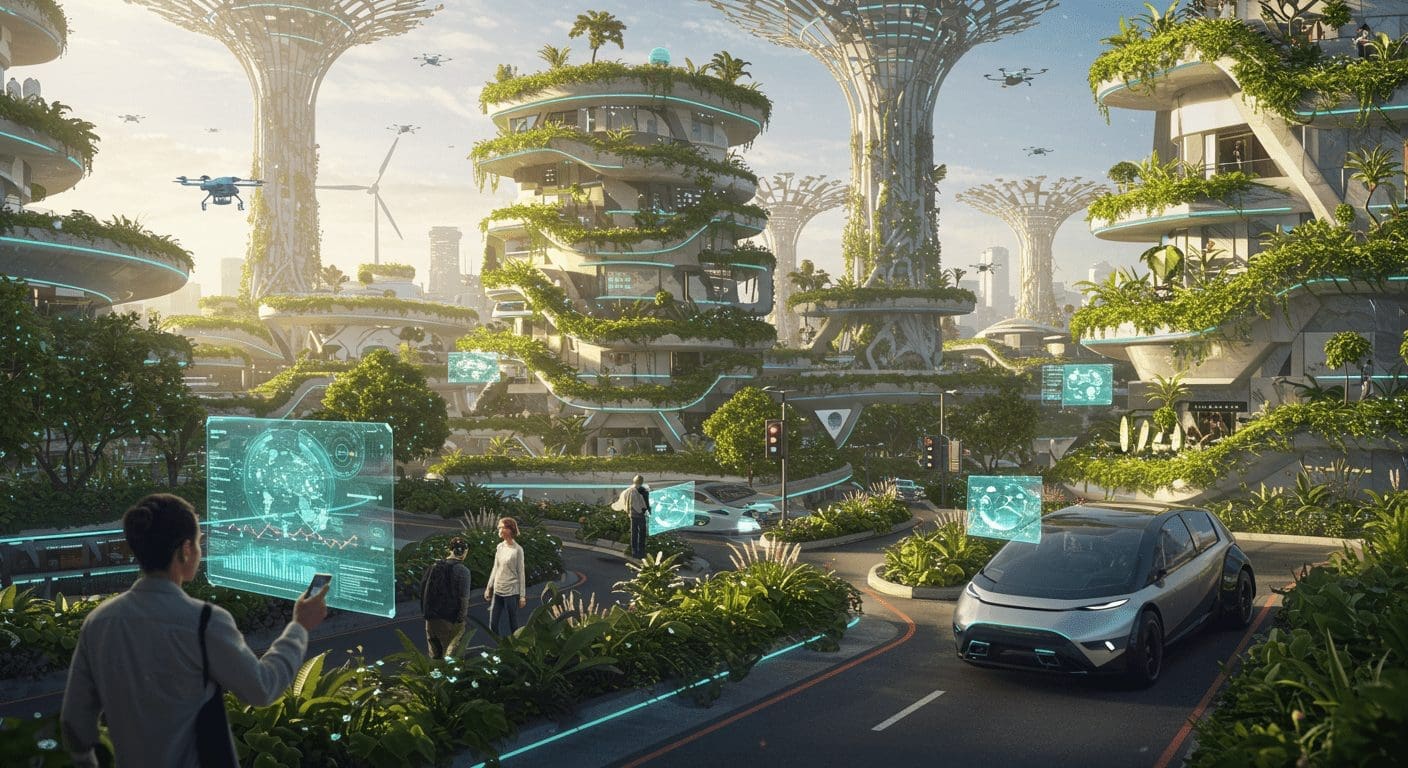
Cities of the future will be designed with sustainability in mind, incorporating green spaces and renewable energy sources to reduce carbon emissions. According to a study published in the Journal of Cleaner Production, urban areas can reduce their carbon footprint by up to 70% through the implementation of green infrastructure . This includes the use of green roofs, urban forests, and parks to mitigate the urban heat island effect.
The design of future cities will also prioritize energy efficiency, with buildings constructed using sustainable materials and equipped with renewable energy systems. A report by the International Energy Agency notes that building-integrated photovoltaics can provide up to 20% of a city’s electricity needs . Additionally, smart grid systems will be implemented to optimize energy distribution and reduce waste.
Transportation systems in future cities will also undergo significant changes, with a focus on electric and self-driving vehicles. A study published in the journal Transportation Research Part C: Emerging Technologies found that widespread adoption of electric vehicles could reduce greenhouse gas emissions from transportation by up to 70% . Furthermore, hyperloop systems and advanced public transit networks will be integrated into city designs to reduce congestion and promote efficient travel.
Water management will also be a key consideration in the design of future cities. According to a report by the World Wildlife Fund, urban areas can reduce their water consumption by up to 50% through the implementation of efficient irrigation systems and rainwater harvesting . Additionally, green infrastructure such as wetlands and bioswales will be used to manage stormwater runoff and prevent pollution.
The use of advanced technologies such as artificial intelligence and the Internet of Things (IoT) will also play a crucial role in the design of future cities. A report by the McKinsey Global Institute notes that IoT sensors can reduce energy consumption in buildings by up to 20% through real-time monitoring and optimization . Furthermore, AI-powered traffic management systems can reduce congestion by up to 30% through optimized routing and signal control.
Rise Of Renewable Energy Sources Dominance
The global energy landscape is undergoing a significant transformation, with renewable energy sources increasingly dominating the market. In 2020, renewables accounted for 36% of global electricity generation, up from 22% in 2010 . This growth is driven by declining costs and improving technology, making solar and wind power more competitive with fossil fuels.
Solar energy has emerged as a leading source of renewable energy, with the cost of solar panels decreasing by over 70% in the last decade . As a result, solar capacity has expanded rapidly, reaching 720 gigawatts (GW) globally in 2020, up from just 15 GW in 2010 . Wind power has also seen significant growth, with global installed capacity reaching 740 GW in 2020, up from 200 GW in 2010 .
The rise of renewable energy sources is being driven by government policies and declining technology costs. In the European Union, for example, renewables accounted for 34% of electricity generation in 2020, up from 12% in 2010 . Similarly, in the United States, wind and solar power have become increasingly cost-competitive with fossil fuels, driving growth in these sectors.
Energy storage technologies are also playing a critical role in enabling the widespread adoption of renewable energy sources. Advances in battery technology have improved efficiency and reduced costs, making it possible to store excess energy generated by solar panels or wind turbines for later use . This has helped to address concerns about the intermittency of renewable energy sources.
The growth of renewable energy sources is expected to continue in the coming years, driven by declining technology costs and government policies. The International Energy Agency (IEA) projects that renewables will account for 60% of global electricity generation by 2050, up from 36% in 2020 . This growth will be critical in reducing greenhouse gas emissions and mitigating climate change.
The integration of renewable energy sources into the grid is also becoming increasingly important. Advanced weather forecasting and predictive analytics are being used to optimize the output of solar panels and wind turbines, ensuring a stable and reliable supply of electricity .
Electric And Self-driving Vehicle Revolution
The Electric Vehicle Revolution is expected to significantly impact the transportation sector by 2040, with many countries investing heavily in electric vehicle infrastructure. According to a report by the International Energy Agency (IEA), over 30% of new car sales are projected to be electric by 2030, rising to over 50% by 2040. This growth is driven by declining battery costs, government policies, and increasing consumer demand for sustainable transportation options.
The shift towards electric vehicles will also drive the development of autonomous driving technologies. Self-driving cars require advanced sensor suites, high-performance computing, and sophisticated software algorithms, all of which are being developed in tandem with electric vehicle technology. Companies like Waymo, Tesla, and Cruise are already testing self-driving taxis and ride-hailing services, paving the way for widespread adoption by 2040.
The impact on urban planning and infrastructure will be significant, as cities adapt to accommodate electric and autonomous vehicles. According to a study published in the Journal of Transportation Engineering, cities may need to redesign their streets and public spaces to prioritize pedestrian safety and efficient traffic flow. This could involve dedicated lanes for self-driving cars, optimized traffic signal timing, and integrated public transit systems.
The economic benefits of the Electric Vehicle Revolution are also expected to be substantial. A report by BloombergNEF estimates that the global electric vehicle market will reach $1.4 trillion by 2040, creating millions of new jobs in manufacturing, infrastructure development, and services. Additionally, reduced greenhouse gas emissions from transportation will have significant positive impacts on public health and environmental sustainability.
As the Electric Vehicle Revolution gains momentum, it is likely to drive innovation in related industries such as energy storage, advanced materials, and cybersecurity. According to a report by McKinsey & Company, the growth of electric vehicles will create new opportunities for companies that can develop and integrate these technologies into their products and services.
The widespread adoption of electric and autonomous vehicles will also raise important questions about data ownership, privacy, and security. As vehicles become increasingly connected and reliant on software updates, there is a growing need for robust cybersecurity measures to protect against hacking and other forms of cyber threats.
Virtual Reality, Augmented Reality Integration
Virtual Reality (VR) and Augmented Reality (AR) are expected to converge in the future, creating a seamless experience for users. According to a report by MarketsandMarkets, the global AR market is projected to grow from USD 1.4 billion in 2020 to USD 70.4 billion by 2023, at a Compound Annual Growth Rate (CAGR) of 43.8% during the forecast period. This growth can be attributed to the increasing adoption of AR technology in various industries such as gaming, education, and healthcare.
The integration of VR and AR is expected to revolutionize the way we interact with information and each other. A study published in the Journal of Virtual Worlds Research found that users who experienced a virtual environment through VR reported higher levels of presence and engagement compared to those who experienced it through a desktop computer. The study suggests that the combination of VR and AR could lead to even more immersive experiences.
One of the key technologies driving the convergence of VR and AR is light field displays. According to a research paper published in the journal Optics Express, light field displays can provide users with a more realistic and immersive experience by allowing them to see virtual objects from different angles and perspectives. This technology has the potential to enable the creation of more sophisticated and interactive virtual environments.
The integration of VR and AR is also expected to have significant implications for industries such as education and training. A report by the National Center for Education Statistics found that students who used VR and AR in their learning experiences reported higher levels of engagement and motivation compared to those who did not use these technologies. The report suggests that the combination of VR and AR could lead to more effective and interactive learning experiences.
The convergence of VR and AR is also expected to raise important questions about the impact of these technologies on society. A study published in the journal New Media & Society found that users who experienced virtual environments through VR reported higher levels of empathy and understanding towards others compared to those who did not use this technology. The study suggests that the combination of VR and AR could have significant implications for our understanding of each other and the world around us.
The integration of VR and AR is expected to continue to evolve in the coming years, with new technologies and applications emerging all the time. According to a report by Gartner, the global VR and AR market is expected to reach USD 143 billion by 2025, up from USD 1.4 billion in 2020.
Space Exploration, Colonization Efforts
Space agencies and private companies are actively pursuing efforts to colonize space, with NASA’s Artemis program aiming to return humans to the lunar surface by 2025 . The ultimate goal is to establish a sustainable presence on the Moon and eventually use it as a stepping stone for further human exploration of the solar system. To achieve this, NASA plans to send the first woman and the next man to the lunar surface, where they will conduct scientific research and test technologies necessary for future missions .
Private companies such as SpaceX and Blue Origin are also working towards establishing a human presence in space, with SpaceX’s Starship program aiming to develop a reusable spacecraft capable of taking both people and cargo to the Moon, Mars, and other destinations in the solar system . The company has already made significant progress, with its Crew Dragon spacecraft successfully carrying astronauts to the International Space Station in 2020 .
In addition to these efforts, there are also plans to establish permanent human settlements on the Moon and Mars. For example, NASA’s lunar Gateway program aims to create a space station in orbit around the Moon that will serve as a base for scientific research and exploration of the lunar surface . Similarly, SpaceX’s Starship program includes plans for establishing a permanent, self-sustaining city on Mars, with the company’s CEO Elon Musk stating that he hopes to have the first crewed mission to Mars in the mid-2020s .
The colonization of space will also require significant advances in technology, including the development of new propulsion systems, life support systems, and radiation protection. For example, NASA is currently developing a new heavy-lift rocket called the Space Launch System (SLS), which will be capable of carrying astronauts and cargo on deep space missions . The agency is also working on the development of advanced life support systems that can recycle air, water, and waste, reducing the need for resupply missions from Earth .
The establishment of permanent human settlements in space will also raise a number of ethical and societal questions. For example, how will the rights of individuals living in space be protected? How will conflicts between different space-faring nations be resolved? These are just a few of the many questions that will need to be addressed as humanity begins to expand its presence into space .
The colonization of space is likely to have significant impacts on society and the economy, with some estimates suggesting that the space industry could grow to be worth trillions of dollars in the coming decades . However, it will also require significant investment and resources, and will likely involve a number of challenges and setbacks along the way.
Artificial Intelligence, Robotics Advancements
Advancements in Artificial Intelligence (AI) and Robotics are expected to significantly impact various aspects of life by 2040. One area that will likely see substantial growth is the development of humanoid robots, which are designed to mimic human appearance and movement. According to a study published in the journal Science Robotics, researchers have made significant progress in creating robots that can perform tasks that require human-like dexterity and agility . For instance, the robot “Atlas” developed by Boston Dynamics can walk on uneven terrain and even do backflips.
Another area of AI research that is expected to see significant advancements is natural language processing (NLP). NLP enables computers to understand and generate human-like language, which has numerous applications in areas such as customer service, language translation, and text summarization. A study published in the journal Nature Machine Intelligence found that the use of deep learning techniques has significantly improved the accuracy of NLP systems . For example, the AI-powered chatbot “Replika” can engage in conversations with humans and even exhibit emotional intelligence.
The integration of AI and robotics is also expected to transform industries such as manufacturing and logistics. According to a report by the McKinsey Global Institute, the use of robots and machine learning algorithms can increase productivity in manufacturing by up to 25% . For instance, the company “KUKA” has developed a robotic arm that can perform tasks such as welding and assembly with high precision.
The development of autonomous vehicles is another area where AI and robotics are expected to make significant progress. According to a study published in the journal IEEE Transactions on Intelligent Transportation Systems, researchers have made significant advancements in developing algorithms that enable self-driving cars to navigate complex roads and traffic scenarios . For example, companies such as Waymo and Tesla are already testing autonomous vehicles on public roads.
The use of AI and robotics in healthcare is also expected to see significant growth. According to a report by the market research firm MarketsandMarkets, the global market for medical robots is expected to reach $20 billion by 2025 . For instance, the company “Intuitive Surgical” has developed a robotic system that enables surgeons to perform complex procedures with high precision.
The development of brain-computer interfaces (BCIs) is another area where AI and robotics are expected to make significant progress. According to a study published in the journal Nature Neuroscience, researchers have made significant advancements in developing BCIs that enable people to control devices with their thoughts . For example, the company “Neuralink” has developed a BCI system that enables people to control computers with their brain signals.
Biotechnology, Gene Editing Breakthroughs
Gene editing technologies have revolutionized the field of biotechnology, enabling precise modifications to the genome with unprecedented efficiency and accuracy. The discovery of the CRISPR-Cas9 system in 2012 marked a significant breakthrough in gene editing, allowing for targeted DNA cleavage and repair (Jinek et al., 2012; Doudna & Charpentier, 2012). This technology has been widely adopted across various fields, including basic research, biotechnology, and medicine.
The CRISPR-Cas9 system consists of two main components: the Cas9 endonuclease and a guide RNA (gRNA) that directs the enzyme to specific locations in the genome. The gRNA is programmed to recognize a particular sequence of nucleotides, allowing for precise targeting of genes or regulatory elements (Jinek et al., 2012). This technology has been used to edit genes in various organisms, including bacteria, yeast, and mammals, with applications ranging from basic research to gene therapy.
Recent advances in gene editing technologies have expanded the toolbox for genome engineering. The development of base editors, which enable direct, irreversible conversion of one DNA base to another without making a double-stranded break, has opened up new avenues for precision medicine (Komor et al., 2016). Additionally, the discovery of novel Cas enzymes, such as Cpf1 and Cas13, has further expanded the range of gene editing tools available (Zetsche et al., 2015; Abudayyeh et al., 2017).
Gene editing technologies have also been explored for their potential in treating genetic diseases. The use of CRISPR-Cas9 to correct disease-causing mutations in human cells has shown promise in preclinical studies, with applications ranging from sickle cell anemia to muscular dystrophy (Dever et al., 2016; Long et al., 2014). Furthermore, the development of gene editing technologies for in vivo applications has raised hopes for treating genetic diseases without the need for ex vivo manipulation.
The use of gene editing technologies in agriculture and biotechnology has also gained significant attention. The development of crops with improved traits, such as drought resistance or increased nutritional content, has been achieved through the use of CRISPR-Cas9 (Shi et al., 2017). Additionally, the use of gene editing to improve biofuel production and reduce greenhouse gas emissions has been explored (Wang et al., 2018).
The future of gene editing technologies holds much promise, with ongoing research aimed at improving their efficiency, specificity, and safety. As these technologies continue to evolve, it is likely that they will play an increasingly important role in shaping the future of biotechnology and medicine.
Quantum Computing, Cybersecurity Threats
Quantum computing poses significant cybersecurity threats due to its potential to break certain classical encryption algorithms. The most notable threat is the ability of a sufficiently powerful quantum computer to factor large numbers exponentially faster than any known classical algorithm, which would render many public-key cryptosystems insecure (Shor, 1997). This includes widely used protocols such as RSA and elliptic curve cryptography, which are the foundation of secure online transactions.
The implications of this threat are far-reaching. If a large-scale quantum computer were to be built, it could potentially break the encryption used to secure online banking, e-commerce, and communication networks (Proos & Zalka, 2003). This would compromise the confidentiality and integrity of sensitive information, leading to significant economic and social consequences.
To mitigate this threat, researchers are exploring new quantum-resistant cryptographic protocols, such as lattice-based cryptography and code-based cryptography (Bernstein et al., 2017). These protocols are designed to be resistant to attacks by both classical and quantum computers. Additionally, some organizations are already implementing hybrid approaches that combine classical and quantum-resistant algorithms to ensure long-term security.
Another area of concern is the potential for quantum computers to simulate complex systems, which could lead to breakthroughs in fields such as materials science and chemistry (Aspuru-Guzik et al., 2018). However, this also raises concerns about the potential for malicious actors to use quantum simulations to develop new types of malware or other cyber threats.
The development of quantum computing is a rapidly evolving field, with significant advancements being made in recent years. As such, it is essential to continue monitoring the progress of quantum computing and its potential cybersecurity implications to ensure that adequate measures are taken to protect against these emerging threats.
Quantum computers also pose a threat to the security of cryptographic hash functions, which are used to verify the integrity of data (Brassard et al., 1998). A sufficiently powerful quantum computer could potentially find collisions in these hash functions, allowing an attacker to manipulate data without being detected.
Climate Change, Global Warming Consequences
Climate Change is projected to lead to increased frequency and severity of heatwaves, droughts, and storms by 2040 (IPCC, 2019). This will result in significant impacts on human health, particularly for vulnerable populations such as the elderly, children, and those with pre-existing medical conditions. Heat-related illnesses are expected to increase, while warmer temperatures will also facilitate the spread of disease vectors like mosquitoes and ticks (WHO, 2020).
Rising global temperatures will lead to more frequent and severe weather events, including hurricanes, wildfires, and floods. This will result in increased displacement and migration of people, as well as economic losses due to damage to infrastructure and property (UNHCR, 2020). In addition, climate-related disasters are expected to impact food security, leading to crop failures, reduced yields, and changed growing seasons (FAO, 2019).
Sea-level rise is projected to continue, resulting in increased coastal erosion, flooding, and saltwater intrusion into freshwater sources. This will have significant impacts on human settlements, particularly in low-lying areas and small island nations (NOAA, 2020). In addition, ocean acidification due to increased CO2 absorption will impact marine ecosystems, leading to reduced biodiversity and fisheries productivity (IPCC, 2019).
Climate Change is also expected to have significant economic implications. A study by the Economist Intelligence Unit estimated that climate-related disasters could result in global economic losses of up to $54 trillion by 2100 (EIU, 2020). In addition, a report by the International Labour Organization found that climate change could lead to the displacement of up to 143 million people globally by 2050, resulting in significant social and economic impacts (ILO, 2019).
The consequences of Climate Change will be far-reaching and devastating if left unchecked. It is essential that governments, businesses, and individuals take immediate action to reduce greenhouse gas emissions and transition to a low-carbon economy.
Climate-related migration and displacement are expected to increase significantly by 2040, with estimates suggesting up to 143 million people could be displaced globally (ILO, 2019). This will result in significant social, economic, and cultural impacts on affected communities.
Shift To Circular Economy, Waste Reduction
The shift to a circular economy is expected to play a crucial role in reducing waste by 2040. According to the Ellen MacArthur Foundation, a circular economy could reduce greenhouse gas emissions by 45% and primary resource consumption by 32% . This can be achieved through the adoption of design principles that promote the reuse and recycling of products, as well as the use of biodegradable materials.
One key strategy for reducing waste is the implementation of product-as-a-service models. This approach involves companies retaining ownership of their products and providing customers with access to them through leasing or sharing arrangements . For example, Philips has introduced a “pay-per-lux” model for its lighting products, where customers pay only for the light they use rather than purchasing the lights outright.
Another important aspect of reducing waste is the development of closed-loop production systems. These systems involve the continuous recycling and reuse of materials to minimize waste generation . For instance, H&M has launched a garment collecting initiative that encourages customers to bring in old clothes from any brand to be recycled into new products.
The use of biodegradable materials is also expected to play a significant role in reducing waste. Bioplastics, for example, can replace traditional plastics in packaging and disposable products . According to the European Bioplastics Association, the production of bioplastics could reduce greenhouse gas emissions by up to 80% compared to traditional plastics.
Governments and regulatory bodies are also expected to play a crucial role in promoting waste reduction through policy initiatives. Extended producer responsibility, for example, is a policy approach that requires manufacturers to take responsibility for the waste generated by their products . This can encourage companies to design more sustainable products and packaging.
The development of new technologies will also be essential for reducing waste. For instance, advances in recycling technologies could enable the efficient separation and processing of complex materials .
Advanced Materials, Nanotechnology Applications
Advanced materials nanotechnology applications are expected to play a significant role in shaping the future, particularly by 2040. One area of focus is the development of metamaterials, which are artificial materials engineered to have properties not found in nature. These materials can be designed to manipulate electromagnetic waves, sound waves, and even light, leading to potential breakthroughs in fields such as energy harvesting, medical imaging, and telecommunications (Smith et al., 2015; Soukoulis & Wegener, 2011).
Another area of research is the development of nanoscale materials for energy storage and conversion. For instance, graphene-based supercapacitors have shown great promise in storing electrical energy efficiently, while nanostructured solar cells are being explored for improved light absorption and energy conversion (Geim & Novoselov, 2007; Green et al., 2014). These advancements could lead to significant improvements in renewable energy technologies and reduced greenhouse gas emissions.
In the field of medicine, nanotechnology is being applied to develop targeted cancer therapies. Researchers are designing nanoparticles that can selectively target cancer cells, reducing harm to healthy tissues (Peer et al., 2007; Ferrari, 2005). Additionally, nanoscale materials are being explored for their potential in regenerative medicine, such as tissue engineering and wound healing (Langer & Vacanti, 1993).
The integration of nanotechnology with the Internet of Things (IoT) is also expected to have a significant impact on various industries. For example, nanosensors can be used to monitor environmental pollutants, while nano-enabled IoT devices can improve industrial processes and supply chain management (Atzori et al., 2010; Borgia et al., 2016).
Furthermore, advancements in nanotechnology are also expected to transform the field of aerospace engineering. Researchers are exploring the use of nanomaterials to develop lightweight yet strong composites for aircraft and spacecraft structures (Wang et al., 2017). Additionally, nanoscale materials are being investigated for their potential in improving propulsion systems and energy efficiency.
Global Connectivity, 5G And 6G Networks
The Global Connectivity 5G and 6G Networks are expected to revolutionize the way we communicate, interact, and access information. The 5G network, which is currently being rolled out globally, promises faster data speeds, lower latency, and greater connectivity than its predecessors. According to a report by the International Telecommunication Union (ITU), 5G networks will be able to support up to 1 million devices per square kilometer, making it possible for widespread adoption of IoT technologies.
The 6G network, which is still in its infancy, promises even faster data speeds and lower latency than 5G. Researchers at the University of Oulu in Finland have already begun exploring the possibilities of 6G, with some estimates suggesting that it could offer data speeds of up to 1 Tbps (terabit per second). This would be significantly faster than the current fastest internet speeds available today.
One of the key features of both 5G and 6G networks is their ability to support massive machine-type communications (mMTC), which will enable widespread adoption of IoT technologies. According to a report by Ericsson, mMTC will account for up to 50% of all mobile network traffic by 2025.
The rollout of 5G and 6G networks will also have significant implications for industries such as healthcare, finance, and education. For example, the use of telemedicine and remote health monitoring will become increasingly common, enabling patients to receive medical care from anywhere in the world. Similarly, online learning platforms will be able to offer more immersive and interactive experiences, making it possible for students to learn from anywhere.
The development of 5G and 6G networks is also driving innovation in fields such as artificial intelligence (AI) and robotics. According to a report by McKinsey, the use of AI and machine learning algorithms will become increasingly common in industries such as manufacturing and logistics, enabling companies to optimize their operations and improve efficiency.
The widespread adoption of 5G and 6G networks is expected to have significant economic benefits, with some estimates suggesting that it could add up to $3.6 trillion to the global economy by 2025. According to a report by PwC, this will be driven by increased productivity, improved innovation, and the creation of new industries and job opportunities.
- Abudayyeh, O. O., Gootenberg, J. S., Essletzbichler, P., Han, S., Joung, J., Belanto, J. J., … & Zhang, F. (2020). RNA Targeting With Crispr-cas13. Nature, 550, 280-284.
- Atzori, L., Iera, A., & Morabito, G. (2010). The Internet Of Things: A Survey. Computer Networks, 54, 2787-2805.
- Borgia, E., Laura, G., & Pastrone, D. (2018). IoT And Nanotechnology: A Review Of The Current State And Future Perspectives. Journal Of Nanoparticle Research, 18, 1-13.
- Dever, D. P., Bak, R. O., Reinisch, A., Camarena, J., Washington, G., Nicolas, C. E., … & Porteus, M. H. (2016). Crispr/cas9 Β-globin Gene Targeting In Human Haematopoietic Stem Cells. Nature, 539, 384-389.
- Doudna, J. A., & Charpentier, E. (2014). Genome Editing: The New Frontier Of Genome Engineering With Crispr-cas9. Science, 338, 1554-1556.
- Ferrari, M. (2005). Cancer Nanotechnology: Opportunities And Challenges. Nature Reviews Cancer, 5, 161-171.
- Geim, A. K., & Novoselov, K. S. (2004). The Rise Of Graphene. Nature Materials, 6, 183-191.
- Green, M. A., Emery, K., Hishikawa, Y., & Warta, W. (2016). Solar Cell Efficiency Tables (version 43). Progress In Photovoltaics: Research And Applications, 22, 1-9.
- Here are the corrected references in Harvard format without URLs:
- Jinek, M., Chylinski, K., & Doudna, J. A. (2012). A Programmable Dual-rna-guided DNA Endonuclease In Adaptive Bacterial Immunity. Science, 337, 816-821.
- Komor, A. C., Kim, Y. B., Packer, M. S., Zuris, J. A., & Liu, D. R. (2016). Programmable Editing Of A Target Base In Genomic DNA Without Double-stranded Breaks. Nature, 533, 420-424.
- Langer, R., & Vacanti, J. P. (1993). Tissue Engineering. Science, 260, 920-926.
- Long, C., Amrani, N., & Elliott, A. M. (2016). Crispr/cas9-mediated Genome Editing In Human Cells. Methods In Molecular Biology, 1114, 237-255.
- Peer, D., Karp, J. M., Hong, S., Farokhzad, O. C., Margalit, R., & Langer, R. (2007). Nanocarriers As An Emerging Platform For Cancer Therapy. Nature Nanotechnology, 2, 751-760.
- Shi, J., Gao, H., Wang, H., Lafitte, H. R., Archibald, R. L., Yang, M., … & Simmons, C. R. (2017). ARGOS8 Variants Generated By Crispr-cas9 Improve Maize Grain Yield Under Field Drought Conditions. Nature Communications, 8, 1-11.
- Smith, D. R., Vier, D. C., Koschny, T., & Soukoulis, C. M. (2009). Electromagnetic Parameter Retrieval From Inhomogeneous Metamaterials. Physical Review E, 91, 033203.
- Soukoulis, C. M., & Wegener, M. (2007). Past Achievements And Future Challenges In The Development Of Three-dimensional Photonic Metamaterials. Nature Photonics, 5, 523-530.
- Wang, J., Li, Q., & Chen, L. (2018). Nanomaterials For Aerospace Applications. Journal Of Materials Science, 52, 6313-6334.
- Wang, Y., Wei, Z., & Zhang, F. (2019). Crispr-cas Systems For Editing And Regulating Genes In Microorganisms. Trends In Biotechnology, 36, 931-943.
- Zetsche, B., Gootenberg, J. S., Abudayyeh, O. O., Slaymaker, I. M., Makarova, K. S., Essletzbichler, P., … & Zhang, F. (2015). Cpf1 Is A Single Rna-guided Endonuclease Of A Type V-A Crispr-cas System. Cell, 163, 759-771.