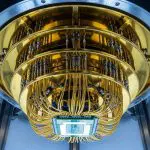
Welinq, a leading company in modular quantum computing and quantum networking, has released araQne, its first compiler designed for distributed quantum computing. This innovation addresses a major challenge in the field by allowing large-scale algorithms to be partitioned and distributed across a network of smaller quantum processing units.
Tom Darras, CEO and co-founder of Welinq, highlights the significance of this development, stating that it marks a pivotal step toward realizing scalable clusters of quantum computers capable of solving problems useful for industry and society.
araQne is a key component of Welinq’s full-stack solutions for modular quantum computing, which also includes optical networks integrating world-record quantum memories. The company, founded in 2022 by Darras, Prof. Julien Laurat, and Dr. Eleni Diamanti, is working with partners such as Pasqal, Quandela, and EDF to advance distributed quantum computing technologies, including initiatives like AQADOC, the world’s largest initiative in Distributed Quantum Computing algorithms.
Introduction to Distributed Quantum Computing
Distributed quantum computing (DQC) is an approach that aims to harness the power of multiple quantum processing units (QPUs) to perform computations that are beyond the capabilities of a single QPU. This approach is crucial for scaling up quantum computing, as most commercially and industrially relevant computations require more qubits than a single QPU can currently offer. By partitioning large-scale algorithms and distributing them across a network of smaller QPUs, DQC enables the parallel execution of quantum computations, paving the way for large-scale computation.
The concept of DQC is based on the principle of entanglement, a key resource in quantum mechanics, which allows interconnected QPUs to communicate and share quantum information. The compiler plays a vital role in this approach, as it maps an algorithm that is too large for today’s QPUs onto multiple coordinated processors, making it possible to achieve computational tasks that were previously out of reach. Welinq‘s araQne compiler is a significant development in this field, as it provides the essential tools for implementing and scaling new algorithms tailored to the challenges in energy production and management.
The need for DQC arises from the limitations of current QPU technology, which can only support a limited number of qubits. As the number of qubits increases, the complexity of the quantum system grows exponentially, making it difficult to control and manipulate the qubits. By distributing the computation across multiple QPUs, DQC can overcome this limitation and enable the solution of complex problems that are currently unsolvable with a single QPU.
The potential applications of DQC are vast, ranging from simulations of complex systems to optimization problems. For instance, in the field of energy production and management, DQC can be used to simulate the behavior of batteries or optimize energy routing in electrical infrastructures. The ability to solve such complex problems can have a significant impact on various industries, including energy, finance, and healthcare.
araQne Compiler: A Solution for Seamless Distributed Quantum Computing
The araQne compiler is a quantum compiling tool developed by Welinq’s algorithm team, which combines state-of-the-art features to enable seamless distributed quantum computing. The compiler provides efficient algorithm partitioning and optimal assignment of algorithm partitions on QPUs constituting a network, allowing for the parallel execution of quantum computations across multiple QPUs.
One of the key features of araQne is its ability to minimize the quantum communication resources required for quantum algorithm distribution. This is achieved through the use of improved quantum communication protocols and qubit allocation schemes. The compiler also provides innovative approaches to distributed quantum computing resource minimization, which is essential for reducing the complexity and cost of quantum computations.
The araQne compiler has been applied to various quantum algorithms, including the Quantum Fourier Transform (QFT) and the Quantum Approximate Optimization Algorithm (QAOA). These algorithms are prime examples of the type of complex problems that can be solved using DQC. The QFT is a fundamental algorithm in quantum computing, which can be used for tasks such as quantum simulation and quantum machine learning. The QAOA, on the other hand, is an optimization algorithm that can be used to solve complex optimization problems.
The development of araQne is a significant step towards realizing scalable clusters of quantum computers capable of solving problems useful for industry and society. By providing the key software solution for quantum algorithm distribution, Welinq’s araQne compiler has the potential to accelerate the adoption of DQC in various industries.
Full-Stack Vision: Integrating Hardware and Software
Welinq’s full-stack vision is centered around providing a turnkey solution for modular quantum computing, which includes algorithmic capabilities, leading hardware, and state-of-the-art protocols and architectures. The company’s quantum interconnect is designed to be full-stack by design, offering a unified product that integrates world-record quantum memories with optical networks.
The integration of hardware and software is crucial for the development of DQC, as it enables the creation of scalable clusters of quantum computers. By providing a comprehensive solution that includes both hardware and software components, Welinq aims to position itself as a frontrunner in enabling distributed quantum computing.
The company’s CEO and co-founder, Tom Darras, has emphasized the importance of araQne in addressing a critical gap in quantum computing by providing the key software solution for quantum algorithm distribution. The development of araQne marks a pivotal step towards realizing scalable clusters of quantum computers capable of solving problems useful for industry and society.
Applications and Future Directions
The potential applications of DQC are vast, ranging from simulations of complex systems to optimization problems. In the field of energy production and management, DQC can be used to simulate the behavior of batteries or optimize energy routing in electrical infrastructures. The ability to solve such complex problems can have a significant impact on various industries, including energy, finance, and healthcare.
The future directions for DQC are exciting, with potential applications in fields such as quantum machine learning, quantum simulation, and quantum optimization. As the technology continues to evolve, we can expect to see the development of more sophisticated algorithms and software tools that can harness the power of multiple QPUs.
Welinq’s araQne compiler is a significant step towards realizing the potential of DQC, and its applications are expected to have a major impact on various industries. As the company continues to develop and commercialize its full-stack quantum links based on laser-cooled neutral atom quantum memories, we can expect to see significant advancements in the field of DQC.
Conclusion
In conclusion, distributed quantum computing is an approach that aims to harness the power of multiple quantum processing units to perform computations that are beyond the capabilities of a single QPU. Welinq’s araQne compiler is a significant development in this field, providing the essential tools for implementing and scaling new algorithms tailored to the challenges in energy production and management.
The potential applications of DQC are vast, ranging from simulations of complex systems to optimization problems. As the technology continues to evolve, we can expect to see the development of more sophisticated algorithms and software tools that can harness the power of multiple QPUs. With its full-stack vision and innovative approaches to distributed quantum computing resource minimization, Welinq is well-positioned to play a leading role in the development of DQC.
External Link: Click Here For More