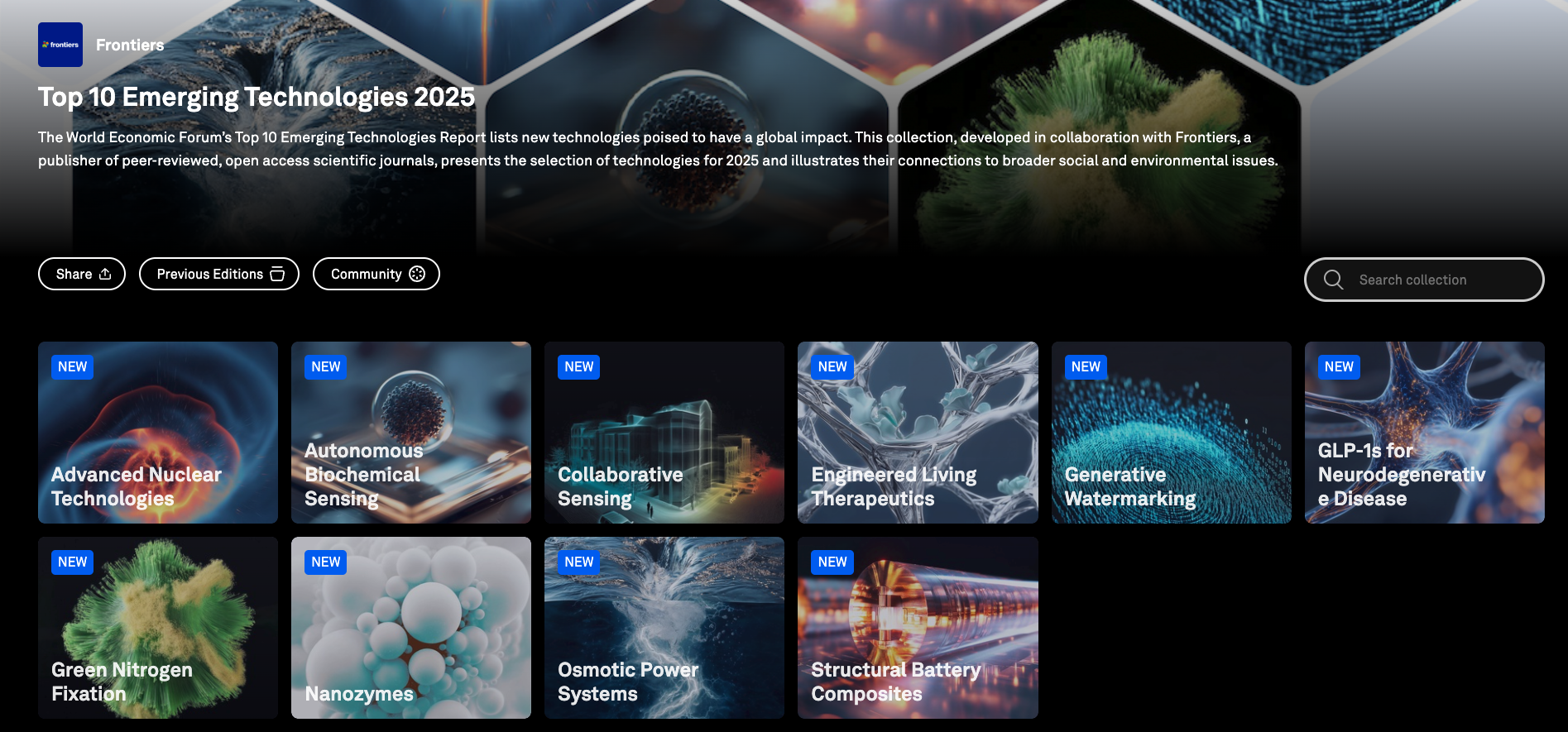
The World Economic Forum, in collaboration with Frontiers, this week released its annual list of top emerging technologies poised to reshape industries. The report highlights ten innovations – ranging from advanced nuclear technologies to generative watermarking – expected to yield significant commercial applications within the next five years. Notably, the Forum estimates that advancements in green nitrogen fixation, offering a sustainable alternative to current fertiliser production, could reduce industrial carbon emissions by up to 36% if scaled effectively. The analysis underscores a growing investor focus on technologies addressing both environmental sustainability and the escalating threat of digital misinformation.
Emerging Technologies for 2025
Several emerging technologies detailed in the World Economic Forum’s latest report address critical resource and sustainability challenges. Green nitrogen fixation, for instance, seeks to circumvent the substantial energy demands of the Haber-Bosch process – currently integral to global food production – by developing more efficient and environmentally benign methods of ammonia synthesis. Similarly, osmotic power systems offer a potential source of renewable energy by exploiting salinity gradients, though practical large-scale implementation remains a significant hurdle. These technologies represent attempts to decouple economic activity from environmentally damaging processes.
Beyond resource management, advances in biotechnology are yielding novel diagnostic and therapeutic tools. Autonomous biochemical sensing promises to facilitate rapid, on-site analysis of biological samples, potentially revolutionising healthcare delivery, particularly in resource-limited settings. Engineered living therapeutics, utilising genetically modified organisms, represent a sophisticated approach to targeted drug delivery, though questions regarding long-term safety and efficacy will require thorough investigation. The repurposing of GLP-1 agonists – initially designed for diabetes management – for neurodegenerative diseases illustrates the potential for serendipitous discoveries within established pharmaceutical research.
The convergence of digital technologies and materials science is also generating innovations with far-reaching implications. Generative watermarking, designed to authenticate digitally generated content, addresses the growing problem of misinformation and intellectual property theft, though its effectiveness will depend on widespread adoption and the development of robust anti-tampering measures. Structural battery composites, integrating energy storage directly into materials, offer potential benefits in weight reduction and space optimisation, particularly in applications such as electric vehicles and portable electronics. These developments highlight the impact of emerging technologies on both information integrity and physical infrastructure.
Finally, advancements in nanomaterials, such as nanozymes, are offering alternatives to traditional enzymes in catalysis, diagnostics and therapeutics. Their enhanced stability and cost-effectiveness could broaden access to these technologies, though careful consideration of potential environmental and health impacts is essential. The report underscores that while these technologies hold considerable promise, realising their full potential requires careful consideration of both technical feasibility and broader societal implications.
Innovations in Biotechnology and Medicine
Beyond these developments, the report highlights innovations in nuclear technology. Advanced nuclear technologies explore alternatives to conventional fission, potentially offering improved safety profiles and more sustainable energy production, though public acceptance and regulatory frameworks remain significant obstacles.
New collaborative sensing technologies aim to establish comprehensive monitoring systems by aggregating data from diverse sources. These systems could provide valuable insights into environmental changes and societal trends, but raise important questions regarding data privacy and security.
Finally, the potential of nanozymes extends beyond established applications. These nanomaterial-based enzymes offer advantages in catalysis, diagnostics, and therapeutics due to their stability and cost-effectiveness, presenting opportunities for broader accessibility, provided potential environmental and health impacts are rigorously assessed.
Sustainable Technologies and Material Science
The exploration of advanced nuclear technologies represents a departure from conventional fission processes, with the potential to yield both safer operational profiles and more sustainable energy generation. However, realising this potential is contingent upon addressing persistent public concerns and establishing robust regulatory frameworks.
New collaborative sensing technologies seek to create comprehensive monitoring systems through the aggregation of data from disparate sources. While offering valuable insights into environmental changes and societal trends, these systems necessitate careful consideration of data privacy and security protocols.
The versatility of nanozymes extends beyond established applications in catalysis, diagnostics, and therapeutics. Their inherent stability and cost-effectiveness present opportunities for wider accessibility, provided potential environmental and health impacts are subjected to rigorous assessment.
More information
External Link: Click Here For More