
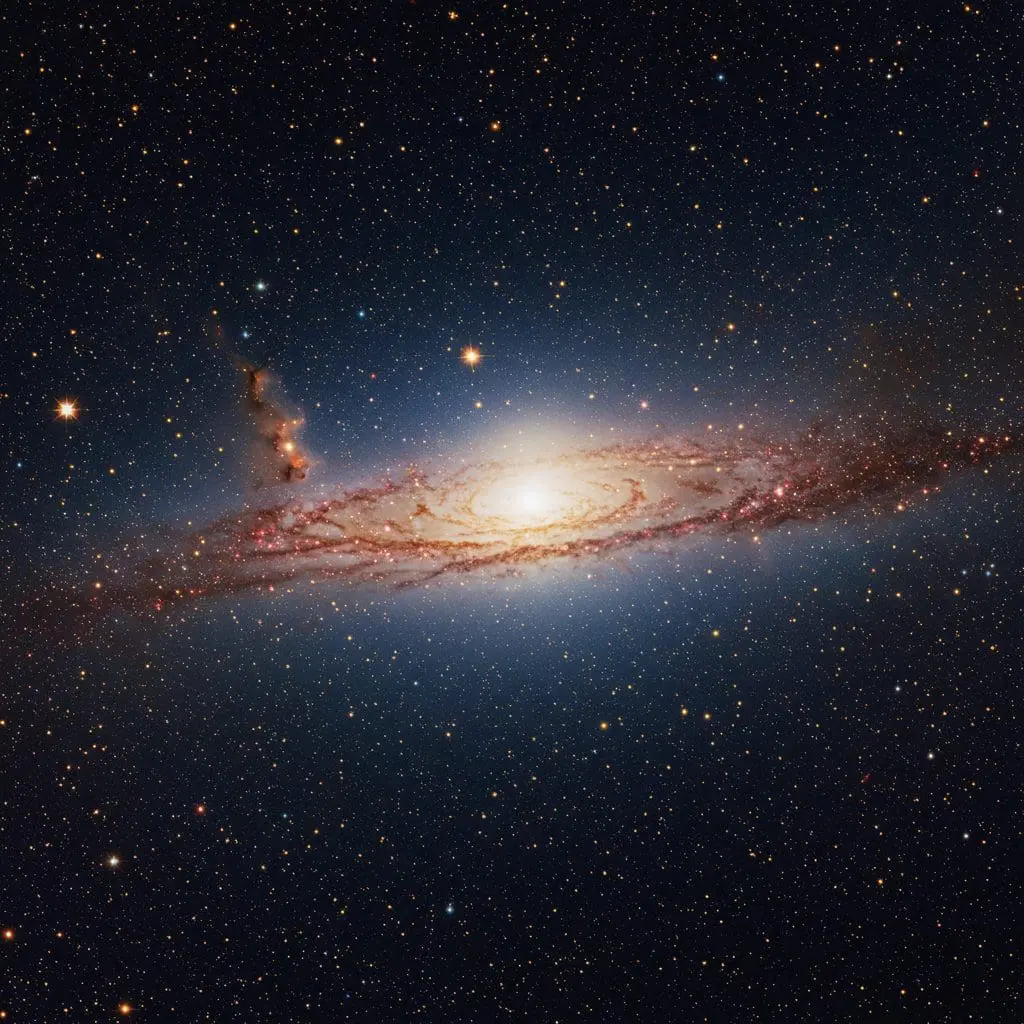
James Webb Space Telescope data suggest Population III stars may have formed in larger halos or exhibited more sporadic activity than previously thought. These findings challenge existing models of early star formation, requiring a reassessment of both star-forming environments and the intensity of stellar birthrates.
The earliest stars, designated Population III, represent a pivotal, yet poorly understood, phase in cosmic history. These primordial stellar objects, formed from pristine hydrogen and helium, reionised the universe and seeded the first heavy elements. Recent observations from the James Webb Space Telescope (JWST) are beginning to reveal their characteristics, presenting a surprising picture of brighter-than-expected ultraviolet emission. A team led by Alessandra Venditti, Julian B. Muñoz, and Volker Bromm from the University of Texas at Austin, alongside Seiji Fujimoto of the University of Toronto, and Steven L. Finkelstein and John Chisholm, also of the University of Texas at Austin, investigate these findings in their paper, ‘Bursty or heavy? The surprise of bright Population III systems in the Reionization era’. Their analysis suggests that either Population III stars formed within larger than anticipated halos, or their formation was characterised by intense, intermittent bursts of star formation, challenging established models of early star formation.
James Webb Telescope Data Challenges Models of First Stars
Observations from the James Webb Space Telescope (JWST) are currently refining our understanding of Population III (Pop III) stars – the first stars to form in the universe – and posing challenges to existing theoretical models. The data indicate a higher prevalence of bright, ultraviolet (UV)-emitting Pop III sources than previously predicted, suggesting current models may be incomplete.
The key observational constraint is the UV luminosity function (UVLF), a measure quantifying the number of stars emitting UV radiation at different intensities. Analysis of the UVLF reveals a discrepancy between observations and predictions based on models that primarily focus on star formation within small, molecularly-cooled dark matter halos.
Research identifies two primary model families capable of explaining the observed luminosity function. One proposes Pop III star formation occurring in more massive halos, utilising atomic cooling – a process where gas cools through the emission of photons – extending up to $10^9$ solar masses. The other proposes a highly stochastic, or bursty, star formation process. This burstiness is characterised by a stochasticity parameter, $\sigma$, which influences the rate at which stars ignite. Both scenarios necessitate a departure from conventional assumptions. The heavier halo model expands the plausible environments for early star formation, while the bursty model suggests a more irregular and less continuous process than typically simulated.
Identifying which model accurately describes Pop III star formation is crucial for refining cosmological models and understanding the reionization of the universe – a pivotal epoch where neutral hydrogen gas was ionised by the first sources of light.
Current and future JWST observations will be vital in distinguishing between these models, as the predicted characteristics of Pop III systems differ significantly depending on the dominant formation pathway. Further investigation should focus on refining the parameters within these two model families, with detailed simulations needed to explore the relationship between halo mass, star formation efficiency, and the resulting UV luminosity. Quantifying the impact of different stellar initial mass functions – the distribution of stellar masses at birth – within these models is also crucial, as this affects the overall UV output.
Future work should also address the observational signatures that can differentiate between the two proposed scenarios. The spatial distribution of Pop III sources, as revealed by future deep-field observations, may provide clues about the relative importance of atomic-cooling versus bursty star formation. Additionally, exploring the potential for detecting metal enrichment – the presence of elements heavier than hydrogen and helium – from these early stars would offer further constraints on their formation and evolution, as metals indicate previous generations of stars have already processed primordial gas.
Extending these models to incorporate the effects of dark matter halo mergers and the influence of the surrounding intergalactic medium will be essential for creating a more complete and realistic picture of Pop III star formation during the Epoch of Reionization. The observed abundance of UV-bright sources necessitates a careful re-evaluation of the physical processes governing the birth of the first stars and their subsequent impact on the early cosmos, prompting a reassessment of existing simulations and theoretical frameworks. The ongoing analysis of JWST data promises to revolutionise our understanding of the first stars and galaxies, providing crucial insights into the early universe and the origins of cosmic structure.
👉 More information
🗞 Bursty or heavy? The surprise of bright Population III systems in the Reionization era
🧠 DOI: https://doi.org/10.48550/arXiv.2505.20263