

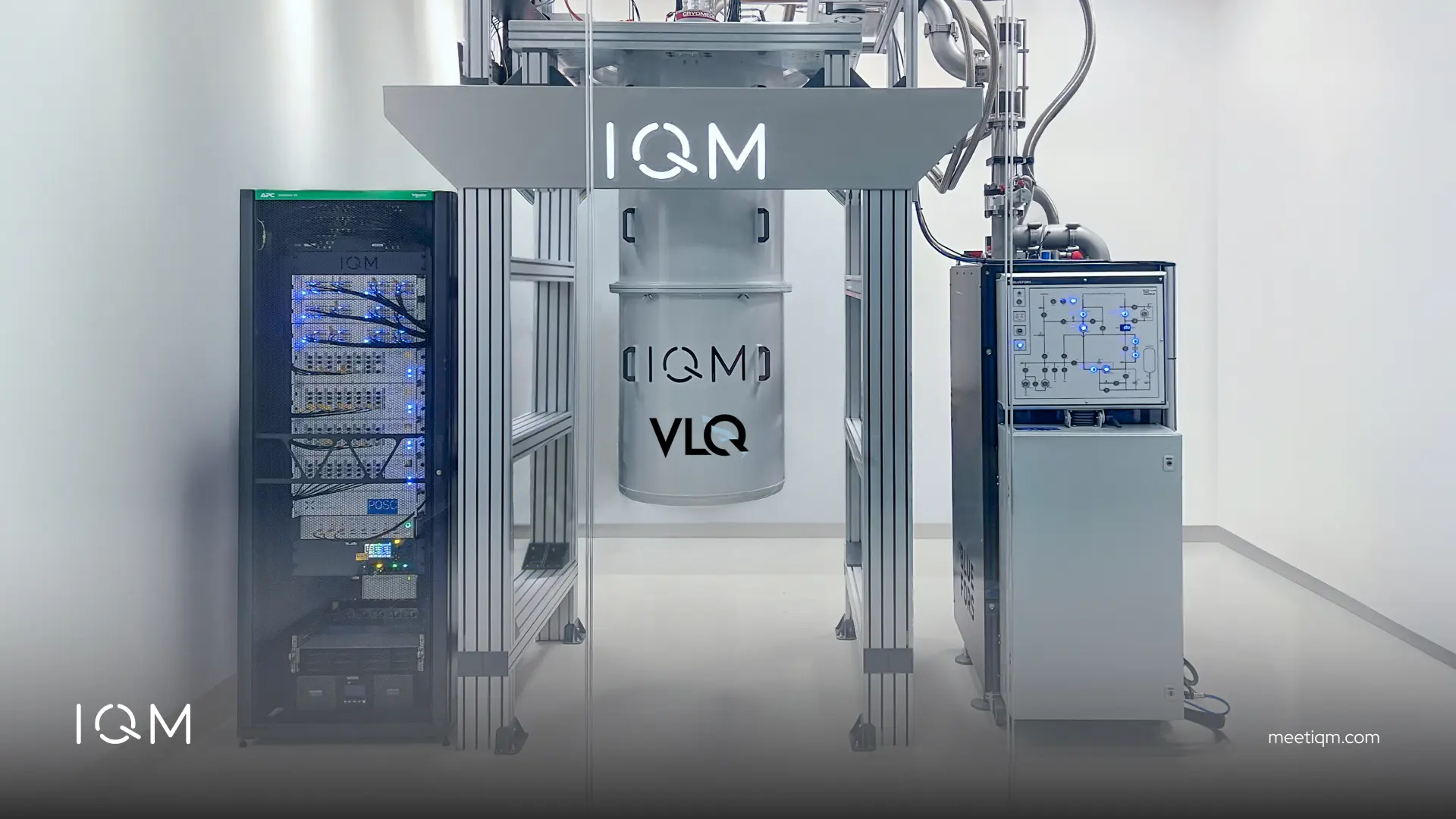
A 24‑qubit superconducting quantum computer, the VLQ, has been inaugurated at the IT4Innovations National Supercomputing Centre in Ostrava, Czech Republic, marking the second European machine to join the Euro HPC JU network. The VLQ’s star‑shaped topology delivers full connectivity between all qubits, dramatically reducing swap operations and enhancing computational efficiency—a feature that sets it apart from competing systems. The € 5 million acquisition, split evenly between EuroHPC JU and the pan-European LUMI-Q consortium, brings together thirteen partners from eight countries and positions the Czech Republic at the forefront of a continent-wide quantum-computing infrastructure.
The LUMI‑Q consortium has officially unveiled the VLQ quantum computer, a milestone that reinforces Europe’s ambition to build a world‑class quantum‑computing infrastructure. The inauguration took place on 23 September 2025 at the IT4Innovations National Supercomputing Centre, a facility operated by VSB – Technical University of Ostrava in the Czech Republic. The ceremony was attended by a host of distinguished guests, including Gustav Kalbe, director of the European Commission’s Directorate‑General for Communications and Information Technologies, and other senior officials from the Czech Republic and across the European Union.
VLQ is the second quantum computer to be launched in Europe under the EuroHPC Joint Undertaking (EuroHPC JU). It is jointly managed by the pan‑European LUMI‑Q consortium, which brings together thirteen partners from eight countries. The consortium’s collaborative framework aims to accelerate the development of quantum technologies and to support research and innovation across the continent.
The VLQ system represents a significant step forward for the Czech and European scientific community. Its deployment at IT4Innovations will provide a high‑performance platform for researchers in academia, industry, and the public sector, enabling advanced simulations in materials science, computational physics, and other data‑intensive fields. The consortium emphasises that the VLQ will serve a broad spectrum of users, from university laboratories to industrial R&D departments, and that its capabilities will open new avenues for scientific inquiry and technological innovation.
While the inauguration did not involve any specific experimental results, the LUMI‑Q consortium highlighted the system’s potential to accelerate progress across multiple related fields. The VLQ’s architecture incorporates state‑of‑the‑art qubit technology and error‑correction protocols designed to maximise coherence times and computational fidelity. The consortium’s leadership, represented by Dr. Alessandro Curioni, director of IBM Research at Zurich, and Prof. Marta García, chair of the European Quantum Initiative, underscored the importance of collaborative science in bridging theoretical and applied research.
Looking ahead, the VLQ quantum computer is expected to play a pivotal role in the European quantum ecosystem. Its availability will support the development of new algorithms, foster cross-disciplinary collaborations, and contribute to the broader goal of establishing a competitive, secure, and sustainable quantum computing landscape in Europe.
Original Press Release
Source: LUMI‑Q consortium (pan‑European consortium of thirteen partners from eight countries)
View Original Source


