

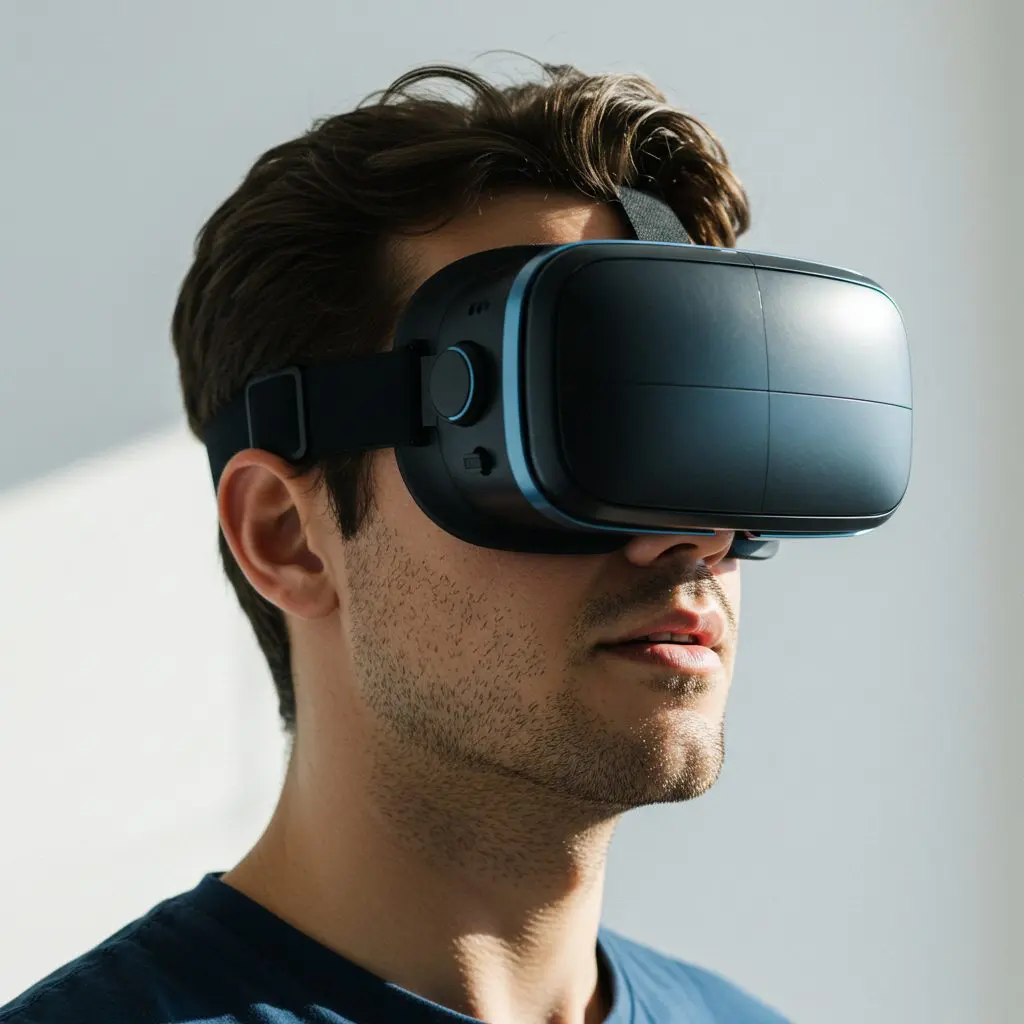
Injection mold design presents a unique engineering challenge, as the high costs and lengthy lead times of physical prototypes make early validation crucial, yet difficult. Jorge Manuel Mercado-Colmenero, Diego Francisco Garcia-Molina, and Bartolomé Gutierrez-Jiménez, from the University of Jaen and Moldes Tuccibérica S. L., alongside Cristina Martin-Doñate, address this problem by introducing a novel virtual reality environment for comprehensive mold design validation. Their research demonstrates that this multimodal approach, integrating interactive 3D models and dynamic visualizations, significantly improves the detection of design interference, internal topology tracking, and assessment of assembly accessibility compared to traditional CAD-based methods. The team’s findings reveal substantial gains in efficiency and accuracy, suggesting that this technology has the potential to reduce costly manufacturing errors and become an essential tool for injection mold manufacturers in the years to come.
VR and DLP for Precision Microfabrication
This research details how virtual reality (VR) and digital light processing (DLP) technologies are improving precision microfabrication, particularly in injection molding. Researchers integrated VR with DLP technology to create a more effective and user-friendly workflow, with the VR system, called AuroraVR, allowing users to interact with and visualize 3D models of molds and parts in an immersive environment. This integration has specific applications in injection molding, microfabrication, factory planning, and training, representing a significant advancement in manufacturing for industries including automotive, aerospace, medical devices, and consumer electronics. The research demonstrates that VR enhances design reviews by enabling stakeholders to visualize and interact with 3D models realistically, and improves usability testing by simulating real-world scenarios and gathering user feedback on product designs. Furthermore, VR aids efficient factory planning by allowing users to visualize and simulate different layouts, and provides immersive training experiences for operators and technicians. The combination of VR and DLP enables the creation of accurate microstructures with improved efficiency.
Virtual Reality Validates Injection Mold Designs
Researchers developed a new method for validating complex injection mold designs, overcoming the limitations of traditional computer-aided design (CAD) systems and the high costs of physical prototypes. The team used virtual reality (VR) to create an immersive and interactive validation environment, allowing operators to explore mold designs in three dimensions and offering a more intuitive understanding of the assembly and its functionality. This VR validation tool is readily accessible through QR codes, improving communication and collaboration. Rather than relying on two-dimensional CAD views, the VR system allows for a comprehensive assessment of internal topology, identifying potential problems with assembly, disassembly, and maintenance. Rigorous testing demonstrated significant improvements in detecting interference, tracking internal features, and assessing ease of assembly and disassembly, reducing manufacturing errors and improving the quality of injection-molded products.
VR Validates Faster, Cheaper Mold Designs
Injection mold design presents significant challenges due to the complexity of the tooling and the high costs associated with physical prototypes. This study focused on developing a multimodal VR system integrating interactive 3D models and dynamic visualizations, allowing users to explore designs in a realistic and intuitive manner. Quantitative results showed a clear preference for VR across all validation categories, suggesting that VR is not simply a complementary tool, but a potentially transformative technology for the injection molding industry. Specifically, VR demonstrated a marked advantage in identifying interference issues, tracking internal mold topology, and assessing the ease of assembly and disassembly, crucial factors in successful mold performance. Participants consistently rated VR as superior to CAD in facilitating a deeper comprehension of complex geometries and improving their ability to visualize the mold’s functionality, translating to a more effective training tool.
VR Improves Injection Mold Design Validation
This research introduces a new multimodal virtual environment designed to improve the validation of complex injection mold designs, integrating interactive 3D models and dynamic visualizations. The study demonstrates that this virtual reality approach significantly enhances the detection of interference and functional errors, as well as improves the validation of assembly and disassembly processes, when compared to traditional CAD-based methods. The findings indicate strong positive evaluations from mold experts regarding the use of VR for understanding design functionality and supporting the learning process. Importantly, the study found that prior experience with VR technology does not significantly influence its assessment within the injection molding industry, suggesting broad applicability. The results firmly establish VR as a valuable tool for improving efficiency and accuracy in injection mold design, offering considerable advantages for manufacturers.
🗞 Enhancing Complex Injection Mold Design Validation Using Multicombined RV Environments
🧠 ArXiv: https://arxiv.org/abs/2507.20732


