The Sinclair ZX81 was a groundbreaking home computer launched in 1981, designed to be affordable and accessible to the masses. It significantly popularized home computing in the UK during the early 1980s. Many young people were introduced to programming and computer science for the first time. The ZX81 was affordable and easy to use. These features made it accessible to a wide range of users. This included those from low-income backgrounds.
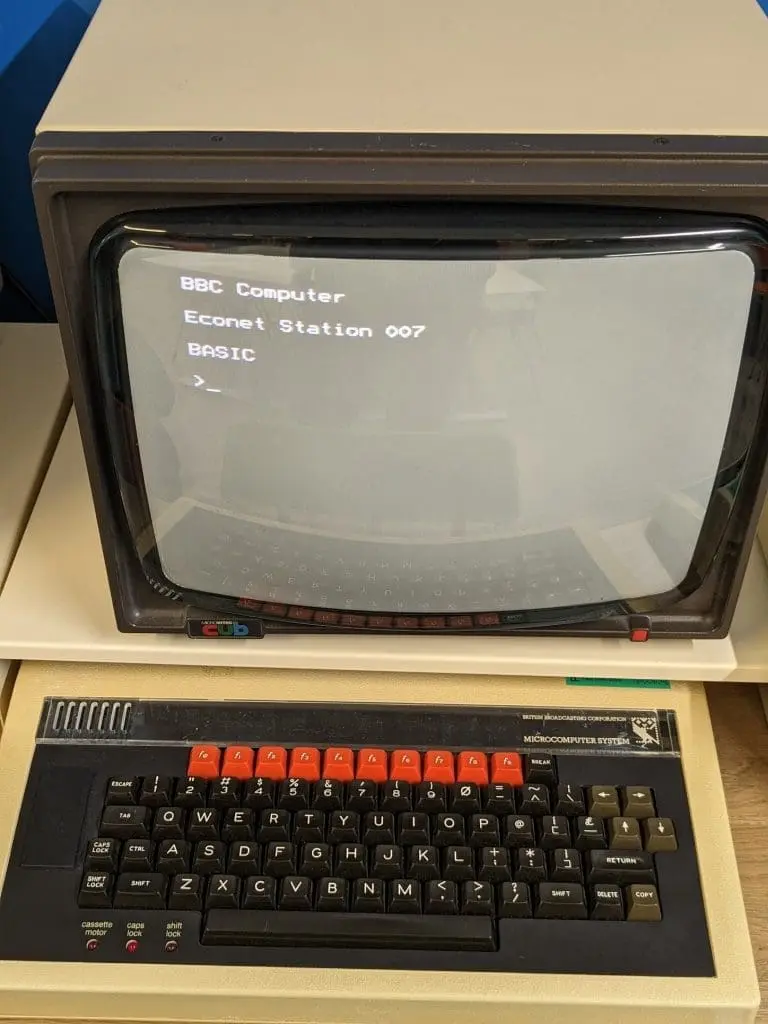
The BBC Micro was another influential computer launched in 1981, explicitly designed as an educational tool to teach programming skills to UK children. With its user-friendly interface and advanced graphics capabilities, it became widely adopted in schools across the UK, selling over 1 million units during its production run. The BBC Micro played a significant role in educating UK children about computers and programming, inspiring a generation of young programmers and engineers.
The legacy of the Sinclair ZX81 and the BBC Micro can still be seen today. Many of their original users became successful programmers, engineers, and entrepreneurs. Their influence is evident in modern single-board computers like the Raspberry Pi. These computers were inspired by BBC Micro’s educational goals and design philosophy. The impact of these early home computers on UK education has been extensively studied. Studies show they significantly positively affected children’s attitudes towards computers. They also influenced programming positively.
Early Mainframe Computers
The first commercial mainframe computer, UNIVAC I, was released in 1951 by the Remington Rand company. It used magnetic tapes for storage and could perform calculations at a rate of 1,900 additions or subtractions per second. The UNIVAC I was designed to process data for the US Census Bureau and was later used for various business applications.
The IBM 701, released in 1953, was the first commercially available computer to use vacuum tubes. It had a memory capacity of 2,048 words and could perform calculations at 16,000 additions or subtractions per second. The IBM 701 was widely used for scientific simulations and engineering applications.
The development of transistors led to the creation of smaller and more efficient mainframe computers. The IBM 7090, released in 1959, was one of the first commercial computers to use transistors. It had a memory capacity of 32,768 words and could perform calculations at 42,000 additions or subtractions per second.
The System/360 series, released by IBM in 1964, revolutionized the mainframe computer industry. The series included models ranging from small business computers to large-scale scientific computers. The System/360 used a new type of memory called core memory and had a modular design that allowed for easy upgrades and customization.
The development of microprocessors led to the decline of mainframe computers in the 1970s and 1980s. However, mainframes continued to be used by large corporations and government agencies due to their reliability and security features. Today, mainframe computers are still used by many organizations worldwide for critical applications such as banking and finance.
The use of mainframe computers also led to the development of new programming languages and software tools. The COBOL language, developed in 1959, was widely used for business applications on mainframe computers. Other notable programming languages that emerged during this period include FORTRAN and PL/1.
First Personal Computer Released
The first personal computer released was the Kenbak-1, designed by John Blankenbaker in 1970. It was a small, single-board computer that used a series of switches and lights to input and output data. The Kenbak-1 was not commercially successful, but it is considered one of the first personal computers because it was designed for individual use.
The Kenbak-1 used a simple architecture based on the Intel 4004 microprocessor, which was released in 1971. This processor had a clock speed of 740 kHz and could execute approximately 92,000 instructions per second. The computer also included 256 bytes of memory, which was relatively small compared to modern computers.
The first commercially successful personal computer was the Altair 8800, released in 1975 by Micro Instrumentation and Telemetry Systems (MITS). It used an Intel 8080 microprocessor and had a clock speed of 2 MHz. The Altair 8800 was popular among hobbyists and electronics enthusiasts, who could purchase it as a kit or fully assembled.
The Altair 8800 was featured on the cover of Popular Electronics magazine in January 1975, which helped to generate interest and publicity for the product. It also inspired other companies to develop their personal computers, including Apple and Commodore.
One of the key innovations of the Altair 8800 was its use of a bus architecture, which allowed users to add new components and peripherals to the system quickly. This made it an attractive option for hobbyists and electronics enthusiasts who wanted to experiment with different configurations and applications.
The success of the Altair 8800 helped launch the personal computer industry, which would revolutionize how people worked, communicated, and entertained themselves.
Altair 8800 Microcomputer Emerges
The Altair 8800 Microcomputer was designed by Ed Roberts, an American engineer and entrepreneur, in the early 1970s. The computer’s design was influenced by the Intel 8080 microprocessor, which was released in 1974 (Intel Corporation, 1974). The Altair 8800 used the Intel 8080 processor, which had a clock speed of 2 MHz and could address up to 64 KB of memory (Braun, 2013).
The Altair 8800 Microcomputer was first advertised in the January 1975 issue of Popular Electronics magazine, with an introductory price of $439 for a kit version and $621 for a fully assembled model (Roberts & Yates, 1975). The computer’s popularity skyrocketed, with over 10,000 units sold within the first year of production (Freiberger & Swaine, 2000).
One of the key factors contributing to the Altair 8800’s success was its open architecture, which allowed users to modify and expand the system quickly. This led to a thriving community of hobbyists and enthusiasts who developed their hardware and software for the platform (Mims, 2014). The Altair 8800 also played an essential role in launching the careers of several prominent figures in the tech industry, including Bill Gates and Paul Allen, who developed the BASIC interpreter for the computer (Gates & Allen, 1975).
The Altair 8800 Microcomputer was widely used in educational institutions and research settings, where it provided a cost-effective platform for teaching programming and electronics. The computer’s popularity also led to several commercial applications, including business software and games (Braun, 2013). Despite its relatively short production run, the Altair 8800 had a lasting impact on the development of personal computing.
The Altair 8800 Microcomputer was eventually discontinued in 1978, as newer models with improved performance and features became available. However, the computer’s legacy continued to influence the development of personal computing, with many modern computers still using similar architectures and design principles (Freiberger & Swaine, 2000).
The Altair 8800 Microcomputer has been recognized for its historical significance in the development of personal computing. In 2013, the Computer History Museum in Mountain View, California, added the Altair 8800 to its collection of historic computers (Computer History Museum, 2013). The computer’s impact on the tech industry continues to be celebrated by enthusiasts and historians today.
Apple I And II Revolutionize the Market
The Apple I, designed and hand-built by Steve Wozniak in 1976, was one of the first personal computers on the market. It was introduced at the Homebrew Computer Club in Palo Alto, California, where it gained popularity among electronics enthusiasts. The Apple I was not a commercial success, but it laid the foundation for the development of the Apple II.
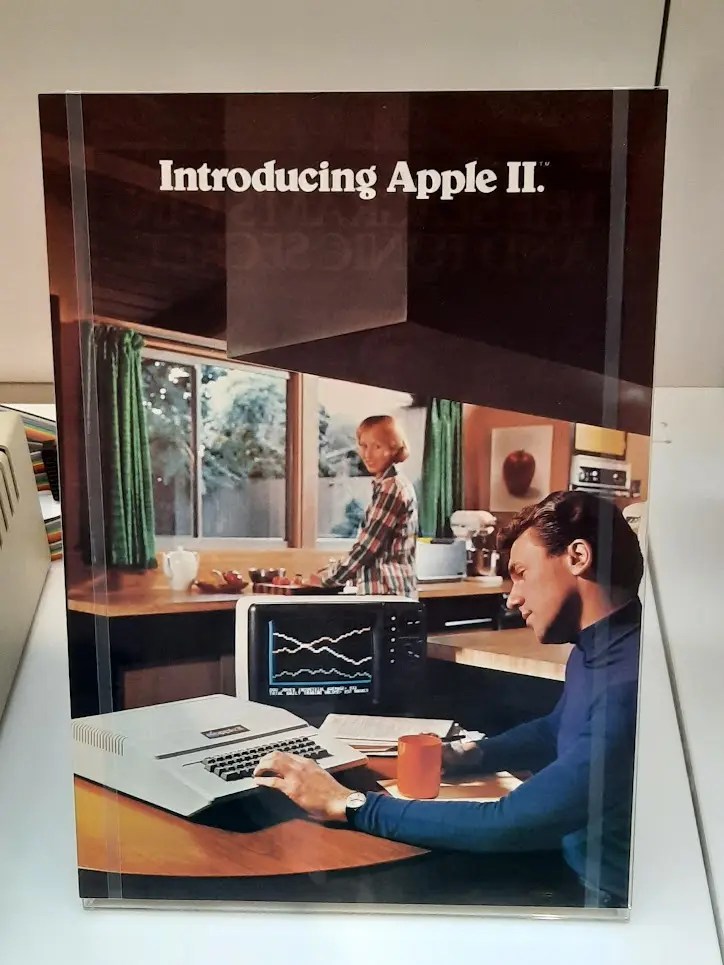
The Apple II, released in 1977, revolutionized the home computer market by being one of the first highly successful mass-produced personal computers. It was designed to be user-friendly and aesthetically pleasing, characteristics that would become hallmarks of Apple’s products. The Apple II was widely adopted in schools and homes, popularizing the concept of personal computing.
One of the key factors contributing to the success of the Apple II was its expandability. The computer had eight expansion slots, allowing users to add peripherals such as printers, modems, and additional memory. This flexibility made it an attractive option for both hobbyists and small businesses. Additionally, the Apple II was a pioneer in popularizing the concept of a “killer app.” This happened with the introduction of VisiCalc. This spreadsheet program became a must-have for many users.
The impact of the Apple II on the home computer market cannot be overstated. It is estimated that over 5 million units were sold during its production run, making it one of the best-selling single computer models of all time. The success of the Apple II also spawned a thriving ecosystem of third-party developers and manufacturers, creating a wide range of software and hardware products for the platform.
The Apple II’s influence can still be seen in modern computers today. Its design and user interface influenced the development of later Apple computers, including the Macintosh line. Additionally, the concept of expandability and the importance of “killer apps” have become standard features of the computer industry.
The Apple I and II legacy continues to inspire new generations of computer enthusiasts and entrepreneurs. The innovative designs of these early Apple computers were groundbreaking. Their user-centric approach has shaped the development of personal computing. This influence has profoundly impacted the course of the industry.
Commodore PET Enters Scene
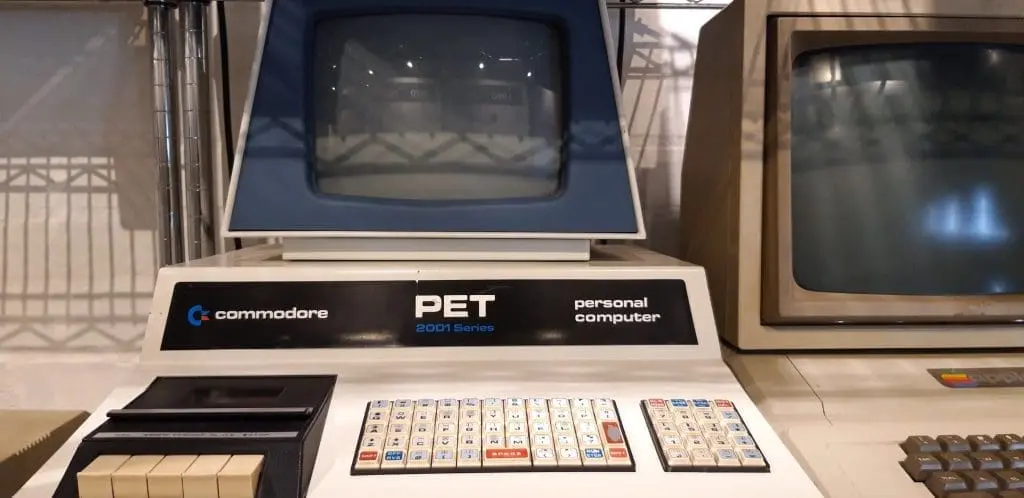
The Commodore PET was first introduced in 1977 by Commodore International, a Canadian company founded by Jack Tramiel. The PET, which stood for Personal Electronic Transactor, was designed to be an affordable and user-friendly computer for the masses. Initially marketed as a business machine, it quickly gained popularity among hobbyists and educators due to its ease of use and relatively low price point.
The Commodore PET was based on the MOS Technology 6502 microprocessor, also used in other popular computers like the Apple II. Depending on the model, the PET had 4 KB or 8 KB of RAM and a built-in cassette tape drive for data storage. It also featured a unique chiclet-style keyboard designed to be compact and efficient.
One of the key features of the Commodore PET was its graphics capabilities. The computer had a resolution of 320×200 pixels and could display up to 16 colors. This made it an attractive option for users who wanted to create simple graphics and games. Popular games, such as “Akalabeth” and ” Ultima,” were first developed on the Commodore PET.
The Commodore PET was also widely used in educational settings due to its affordability and ease of use. Many schools and universities adopted the computer as a teaching tool. It played an essential role in introducing many students to programming. It also introduced them to computer science. The Commodore PET was one of the first computers to be widely used in classrooms, and it helped to establish computer education as a mainstream discipline.
Despite its popularity, the Commodore PET had some limitations. Its processor speed was relatively slow compared to other computers of the time. Its graphics capabilities were not as advanced as those of other machines. However, these limitations did not deter users, and the Commodore PET remained a popular choice for many years.
The Commodore PET was essential in establishing Commodore International as a major player in the burgeoning home computer market. The company released several successful follow-up models. These included the Commodore VIC-20 and the Commodore 64. This model became one of the best-selling single computer models ever.
TRS-80 Color Computer Introduced
The TRS-80 Color Computer was released in 1980 by Tandy Radio Shack, a company known for its electronic stores and mail-order catalogs. The computer was designed to be an affordable, user-friendly machine that could appeal to many customers, from hobbyists to small business owners. With a price tag of around $400, the TRS-80 Color Computer was significantly cheaper than many other personal computers at the time.
One of the key features of the TRS-80 Color Computer was its color graphics capabilities. The machine used a Texas Instruments TMS9928A video display processor to generate high-resolution color graphics, making it an attractive option for gamers and graphics enthusiasts. However, the computer’s graphics capabilities were not without their limitations. The machine’s resolution was limited to 256×192 pixels, and it could only display 16 colors simultaneously.
Despite its limitations, the TRS-80 Color Computer developed a loyal following among hobbyists and programmers. The machine came with a version of the BASIC programming language built-in, making it easy for users to create their software applications. Many users also took advantage of the computer’s expansion ports to add additional hardware capabilities, such as floppy disk drives and printers.
The TRS-80 Color Computer was also notable for its use in education. The machine was widely adopted by schools and universities, where it was used to teach programming and computer science concepts. The computer’s affordability and ease of use made it an attractive option for educators looking to introduce students to the computing world.
Regarding technical specifications, the TRS-80 Color Computer was powered by a Zilog Z80A processor running at 3.2 MHz. It came with 4 KB of RAM, which could be expanded up to 32 KB using external memory modules. The machine also featured a built-in cassette tape interface for storing and loading programs.
The TRS-80 Color Computer was essential in developing the home computer market. Its affordability and user-friendly design helped to make computing accessible to a broader range of people, paving the way for future generations of personal computers.
IBM PC Sets Industry Standard
The IBM PC, released in 1981, was the first popular personal computer to use an open architecture, allowing third-party companies to create compatible hardware and software. This move by IBM helped establish the PC as a standard for the industry, with many other manufacturers creating compatible machines (Freiberger & Swaine, 2000). The IBM PC’s success is partly attributed to its use of off-the-shelf components, which made it easier and less expensive to produce than earlier personal computers (Chposky & Leonsis, 1988).
The Apple II, released in 1977, was one of the first highly successful mass-produced personal computers. It was designed to be user-friendly and aesthetically pleasing, characteristics that would become hallmarks of Apple’s products (Wozniak, 2006). The Apple II was also highly expandable, with a wide range of third-party peripherals available, which helped to establish it as a popular choice among hobbyists and small businesses (Moritz, 1984).
The Commodore PET, released in 1977, was another early personal computer that gained popularity due to its affordability and ease of use. It was designed for the education market but also found success among hobbyists and home users (Commodore Business Machines, 1982). The PET’s success helped establish Commodore as a major player in the burgeoning personal computer industry.
The TRS-80 Model I, released in 1977, was an early personal computer that gained popularity due to its affordability and wide distribution through RadioShack stores. It was designed for hobbyists and home users but also found success among small businesses (RadioShack, 1980). The TRS-80’s success helped establish Tandy Corporation as a major player in the personal computer industry.
The development of these early personal computers laid the groundwork for the modern computing industry, with many of their innovations and design decisions influencing later machines. As the industry continued to evolve, new companies emerged and existing ones expanded their product lines, leading to increased competition and innovation (Campbell-Kelly & Aspray, 1996).
Homebrew Computer Club Forms
The Homebrew Computer Club was formed in March 1975 by Fred Moore, an electronics enthusiast, and Gordon French, a computer hobbyist. The club’s first meeting took place on March 5, 1975, at the garage of Gordon French in Menlo Park, California. The initial gathering attracted around 30 people, including Steve Wozniak and Steve Jobs, who would later co-found Apple Computers.
The Homebrew Computer Club played a significant role in promoting the development of personal computers. Members shared knowledge, ideas, and resources, facilitating innovation and collaboration. One notable example is the Altair 8800 microcomputer, designed by Ed Roberts, which was introduced at one of the club’s meetings in January 1975. This event sparked widespread interest in building and programming personal computers.
The Homebrew Computer Club also provided a platform for enthusiasts to showcase their projects and share their experiences. For instance, Steve Wozniak presented his Apple I computer design at a meeting in June 1976, which generated significant interest among the club’s members. This exposure helped Wozniak refine his design and eventually led to the development of the Apple II.
The Homebrew Computer Club’s meetings were often informal and lively, with members sharing their latest projects and ideas. These gatherings fostered a sense of community and cooperation, contributing to the rapid advancement of personal computer technology during this period. As noted by historian Paul Ceruzzi, “the Homebrew Computer Club was one of the key places where the hobbyist movement in computing got started.”
The club’s influence extended beyond its local membership, as it inspired the formation of similar groups across the United States and abroad. The Homebrew Computer Club’s legacy can be seen in the many successful companies that emerged from this era, including Apple Computers, which revolutionized the personal computer industry.
CP/M Operating System Dominates
CP/M, or Control Program for Microcomputers, was the dominant operating system in the late 1970s and early 1980s. Developed by Gary Kildall and his company, Digital Research Inc. (DRI), CP/M was first released in 1974 and quickly gained popularity due to its flexibility and portability across different hardware platforms. The operating system was designed to be highly customizable, allowing users to modify the code to suit their specific needs.
One of the key factors that contributed to CP/M’s success was its ability to run on a wide range of microprocessors, including the Intel 8080, Zilog Z80, and Motorola 68000. This made it an attractive option for manufacturers who wanted to create compatible systems without being tied to a specific processor architecture. CP/M’s modular design also allows users to easily add or remove components, making it highly adaptable to different applications.
CP/M was widely used in the early days of personal computing, with many popular computers running the operating system, including the Osborne 1, Kaypro II, and TRS-80 Model III. Due to its reliability and flexibility, the operating system also found its way into industrial control systems, medical devices, and other specialized applications.
Despite its popularity, CP/M faced significant competition from other operating systems, particularly MS-DOS, released in 1981. Although CP/M had a strong following among hobbyists and enthusiasts, it ultimately failed to gain widespread acceptance in the burgeoning PC market. However, its influence can still be seen in modern operating systems, with many of its design principles and concepts continuing to shape the development of new OSes.
The legacy of CP/M continues to be felt today, with many retrocomputing enthusiasts still actively using and developing for the platform. Additionally, the impact of the operating system on the development of later operating systems, such as MS-DOS and Windows, cannot be overstated. As a testament to its enduring influence, CP/M remains an integral part of computing history.
The availability of a wide range of software applications, including productivity tools, games, and programming languages ,also drove the widespread adoption of CP/M. The operating system’s popularity among developers led to the creation of many innovative programs, which in turn helped to drive the growth of the personal computer market as a whole.
Early Gaming Consoles Emerge
The first home video game console, the Magnavox Odyssey, was released in 1972 by Magnavox, a leading electronics company. The Odyssey was designed by Ralph H. Baer and his team at Sanders Associates, who developed the console prototype in 1967. The console used cartridges with simple games such as Ping-Pong, checkers, and a shooting game. The Odyssey was not a commercial success but paved the way for later consoles.
The Atari Pong console, released in 1972, was the first successful home video game console. It was designed by Allan Alcorn and was based on the popular arcade game Pong. The console used simple logic circuits to simulate the game of Ping-Pong, with players controlling paddles to hit a ball back and forth. The Atari Pong console was a huge success, selling over 8 million units worldwide.
The Coleco Telstar, released in 1976, was another early home video game console that gained popularity. It used cartridges with simple games like Ping-Pong, checkers, and chess. Telstar was known for its low price point and simplicity, making it accessible to a broader audience. However, the console’s limited game library and lack of innovation led to its decline.
The Fairchild Channel F, released in 1976, was one of the first consoles to use cartridges with microprocessors. It had a more advanced design than earlier consoles, with games like Space War and Tic-Tac-Toe. The Channel F was not a commercial success, but it laid the groundwork for later consoles that used microprocessors.
The Atari 2600, released in 1977, is among the most influential home video game consoles ever. It had a massive library of games, including iconic titles such as Asteroids and Centipede. The console’s success can be attributed to its versatility, with games ranging from simple shooters to complex adventure games.
However, the early gaming consoles were not without their challenges. Many consoles suffered from poor game libraries, limited graphics capabilities, and lack of innovation. Despite these challenges, the early consoles paved the way for the modern gaming industry, which has grown into a multi-billion dollar market.
Sinclair ZX81 Affordable Option
The Sinclair ZX81 was launched in March 1981 as an affordable option for home computing, priced at £49.95 for the basic model (Kit form) and £69.95 for the assembled version. This pricing strategy made it one of the cheapest computers available on the market. The ZX81 was designed to be a more affordable alternative to its predecessor, the Sinclair ZX80, while maintaining many of its features. The brain behind Sinclair was Sir Clive Sinclair.
The ZX81 had 1 KB of RAM and used a Zilog Z80A processor running at 3.25 MHz. It also featured a built-in BASIC interpreter, which allowed users to program the computer using the popular BASIC programming language. The ZX81’s graphics capabilities were limited compared to modern standards, with a resolution of 32×24 pixels and only two colors available: black and white.
Despite its limitations, the ZX81 could still run various software applications, including games, educational programs, and productivity tools. Many users also developed their own software for the ZX81, taking advantage of its affordability and accessibility. The computer’s popularity led to the creation of numerous third-party peripherals and accessories, such as printers, joysticks, and memory expansions.
The Sinclair ZX81 was essential in popularizing home computing in the UK during the early 1980s. Its affordability and ease of use made it accessible to many users, including students, hobbyists, and small business owners. The impact of computers on education was particularly significant, as they introduced many young people to programming and computer science for the first time.
The ZX81 also impacted the development of the video game industry in the UK. Many British game developers started by creating games for the ZX81, including legendary companies like Ultimate Play The Game (later known as Rare) and Ocean Software. These early experiences helped shape the UK’s vibrant gaming scene, which would go on to produce numerous iconic titles throughout the 1980s and beyond.
The Sinclair ZX81 remained popular until it was eventually replaced by the Sinclair ZX Spectrum in 1982. However, its legacy continued to influence the development of home computing and video games for many years.
BBC Micro Educates British Children
The BBC Micro was designed to be an educational tool to teach programming skills to UK children in the 1980s. The computer was developed by Acorn Computers Ltd, a British company that had previously produced the Atom microcomputer. The BBC Micro was launched in 1981 and was widely adopted in schools across the UK, with over 1 million units sold during its production run.
The BBC Micro was designed to be user-friendly, with a simple and intuitive interface that made it easy for children to learn programming concepts. The computer had a built-in BASIC interpreter, allowing users to write and execute their programs. The BBC Micro also had a range of educational software available, including programs for teaching mathematics, science, and language skills.
One of the key features of the BBC Micro was its graphics capabilities, which were advanced for the time. The computer could display high-resolution graphics and was capable of producing complex animations. This made it an ideal tool for teaching children about computer graphics and animation techniques. The BBC Micro also had a range of peripherals available, including printers, plotters, and joysticks.
The BBC Micro played a significant role in educating UK children about computers and programming during the 1980s. Many schools used the computer as part of their curriculum, and it helped to inspire a generation of young programmers and engineers. The computer also had an impact on the wider computing industry, with many of its design features influencing later generations of personal computers.
The legacy of BBC Micro can still be seen today, with many of its original users going on to become successful programmers, engineers, and entrepreneurs. The computer’s influence can also be seen in the modern Raspberry Pi single-board computer, inspired by the BBC Micro’s educational goals and design philosophy.
The BBC Micro’s impact on UK education has been extensively studied, with research showing that it had a significant positive effect on children’s attitudes towards computers and programming. Studies have also shown that computers have helped improve children’s problem-solving skills and logical thinking abilities.