

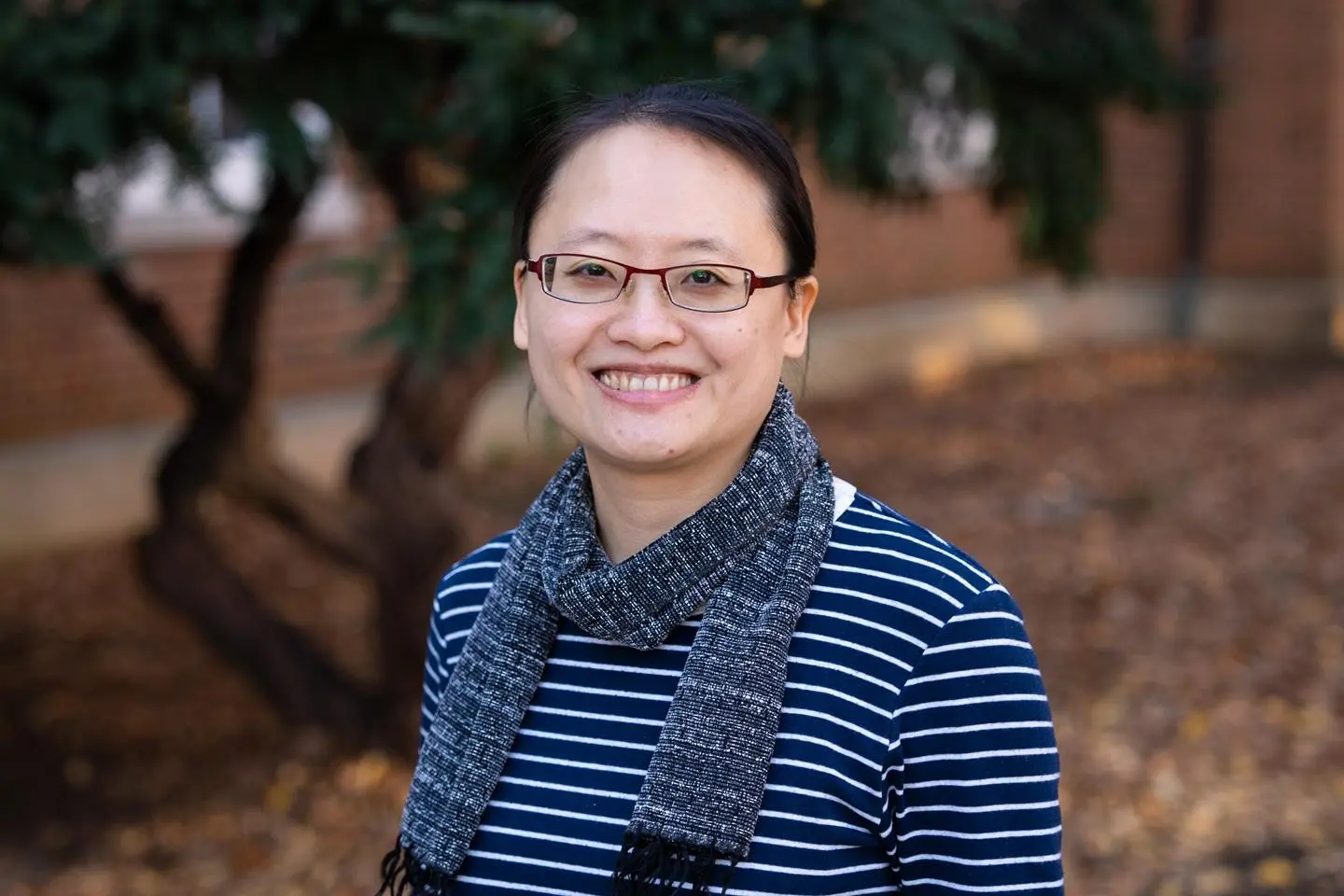
University of Virginia computer scientist Yen-Ling Kuo has secured a $665,000 National Science Foundation CAREER Award to advance research into ‘theory of mind’ capabilities in robotics. Kuo’s work, begun in 2023 and projected over five years, aims to equip robots with the ability to interpret human intentions and behaviour through non-verbal cues, potentially enhancing collaboration in sectors including healthcare and manufacturing. This builds on prior accolades, including an Outstanding Paper Award from the Association for Computational Linguistics in 2024, and reflects a growing focus on improving human-robot interaction through cognitive modelling.
Advancing Robotic Social Cognition
Central to Kuo’s research is the development of computational models that enable robots to interpret multimodal signals – encompassing linguistic input, gaze direction, and body language – to better understand human communicative intent. This extends beyond simple command recognition, aiming to facilitate a more nuanced understanding of underlying goals and motivations. The objective is to move beyond purely reactive robotic behaviour towards proactive collaboration based on inferred human needs.
A key focus is the implementation of “theory of mind” capabilities, enabling robots to construct internal representations of the knowledge, beliefs, and intentions of interacting humans. This is achieved through the creation of shared representations, such as a mutual understanding of spatial relationships or aligned task objectives, fostering a common ground for reasoning about actions and predicting future behaviour. Such capabilities are critical for effective robotic social interaction, particularly in complex or unpredictable environments.
Recent work investigates methods for robots to learn from human feedback, responding to natural language instructions and executing actions deemed socially appropriate within a given context. This adaptive learning component is intended to enhance the usability and acceptance of robots in diverse settings, ranging from domestic assistance to collaborative manufacturing. The research team’s prolific output, with over half a dozen publications in the first half of 2025 alone, demonstrates a sustained commitment to advancing the field.
A Focus on ‘Theory of Mind’
The underpinning of these advancements lies in the computational modelling of human social cognition. Kuo’s team is actively developing algorithms that allow robots to not merely detect cues – such as a pointed finger or a change in vocal tone – but to infer the underlying mental states driving those cues. This necessitates a move beyond statistical correlations to causal reasoning, enabling robots to predict how a human is likely to behave based on an understanding of their beliefs and desires.
A crucial aspect of this work is the development of robust methods for handling uncertainty and ambiguity inherent in human communication. Humans rarely articulate their intentions explicitly; rather, they rely on shared context and implicit understanding. Kuo’s research addresses this challenge by incorporating probabilistic models that allow robots to reason about multiple possible interpretations of a given action or utterance, weighting them based on prior knowledge and observed evidence. This is particularly relevant for robotic social interaction in dynamic, real-world settings where perfect information is rarely available.
Furthermore, the team is investigating how robots can leverage prior experience and learn from interactions with multiple individuals. Humans possess a vast repertoire of social knowledge accumulated over a lifetime; replicating this in artificial systems requires developing mechanisms for knowledge representation, transfer learning, and continual adaptation. The ultimate goal is to create robots capable of building and maintaining long-term relationships with humans, based on mutual understanding and trust.
Recognition and Accolades
Recognition of Kuo’s contributions to the field extends beyond grant funding. She has been awarded the Outstanding Women in Robotics and Automation (WiRA) Early Career Contribution Award from the Institute of Electrical and Electronics Engineers Robotics and Automation Society (IEEE RAS), to be presented at the 2025 International Conference on Robotics and Automation (ICRA). This award acknowledges her significant impact on the development of robotics and automation technologies.
Further demonstrating the quality of her research, Kuo received an Outstanding Paper Award from the 2024 Annual Meeting of the Association for Computational Linguistics (ACL), a leading international forum for natural language processing and computational linguistics. This accolade highlights the innovative nature and scholarly merit of her work in enabling more effective robotic social interaction through advanced language processing techniques.
Kuo’s early career achievements are also supported by a Young Faculty Researcher grant from the Toyota Research Institute, signifying external validation of her potential to drive impactful innovation in robotics and artificial intelligence. Prior to joining the University of Virginia, Kuo’s foundational training at the Massachusetts Institute of Technology, encompassing a Ph.D. in computer science with a minor in cognitive science, and research internships at both the MIT-IBM Watson AI Lab and Google, provided a strong base for her current research endeavours.
More information
External Link: Click Here For More


