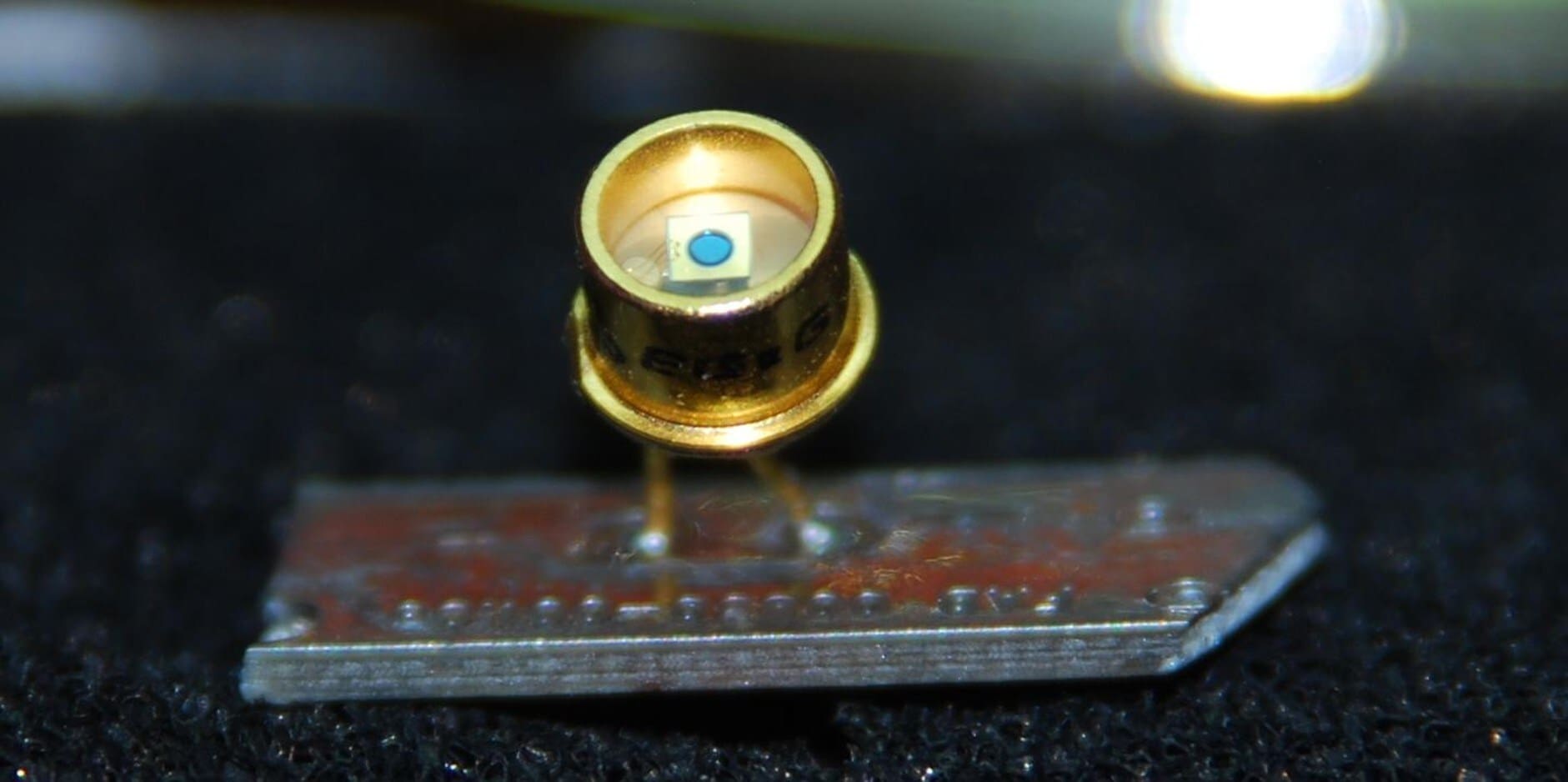
Detecting ultraviolet light with greater efficiency is now closer to reality thanks to a new study from IEEE researchers. A team led by Dr. Jonathan Schuster has developed a sophisticated numerical model to optimize the design of avalanche photodiodes – key components in UV light sensors. This advancement addresses a critical challenge in detecting near-ultraviolet wavelengths, which require thicker, more complex designs. By overcoming these hurdles, this research paves the way for improved sensors in a range of applications, from environmental monitoring and industrial processes to defense technologies and advanced imaging systems.
Optimizing Avalanche Photodiode Design for UV Detection
Optimizing avalanche photodiode (APD) design for ultraviolet (UV) detection, particularly in the near-UV (NUV) range, presents significant challenges due to the lower energy of these photons. Researchers at DEVCOM Army Research Laboratory have addressed this with a new numerical model, published in the IEEE Journal of Quantum Electronics, designed to enhance single-photon detection efficiency. The model utilizes a calibrated 4H-SiC material library, enabling the development of separate-absorptioncharge-multiplication (SACM) structures with thicker absorber layers – necessary for NUV response but traditionally difficult to implement. Specifically, the team explored both non-reach-through (NRT) and reach-through (RT) SACM architectures, achieving promising results: NRT designs demonstrated a unity gain quantum efficiency (QE) of up to 32% at 340nm, while RT designs reached 71%, all while maintaining the strong electric field needed for Geiger-mode operation. This advancement promises improvements in applications like solar-blind UV detection, combustion monitoring, and environmental sensing.
Numerical Model Improves NUV Performance & Efficiency
A new numerical model is significantly improving the performance and efficiency of avalanche photodiodes (APDs) designed for near-ultraviolet (NUV) light detection. Researchers at DEVCOM Army Research Laboratory, led by Dr. Jonathan Schuster, developed the model, complete with a calibrated 4H-SiC material library, to address the challenges of detecting higher-wavelength ultraviolet photons. Traditional APDs struggle with NUV light absorption, necessitating thicker absorber layers—a design shift from conventional structures. The model facilitates the creation of separate-absorptioncharge-multiplication (SACM) architectures, specifically non-reach-through (NRT) and reach-through (RT) designs. Through this modeling, researchers achieved promising results, with NRT-SACM APDs demonstrating a unity gain quantum efficiency of up to 32% at 340nm, and RT-SACM APDs reaching 71%, all while maintaining the necessary electric field for Geiger-mode operation. This advancement has broad implications for applications like solar-blind UV detection, combustion monitoring, and environmental sensing.