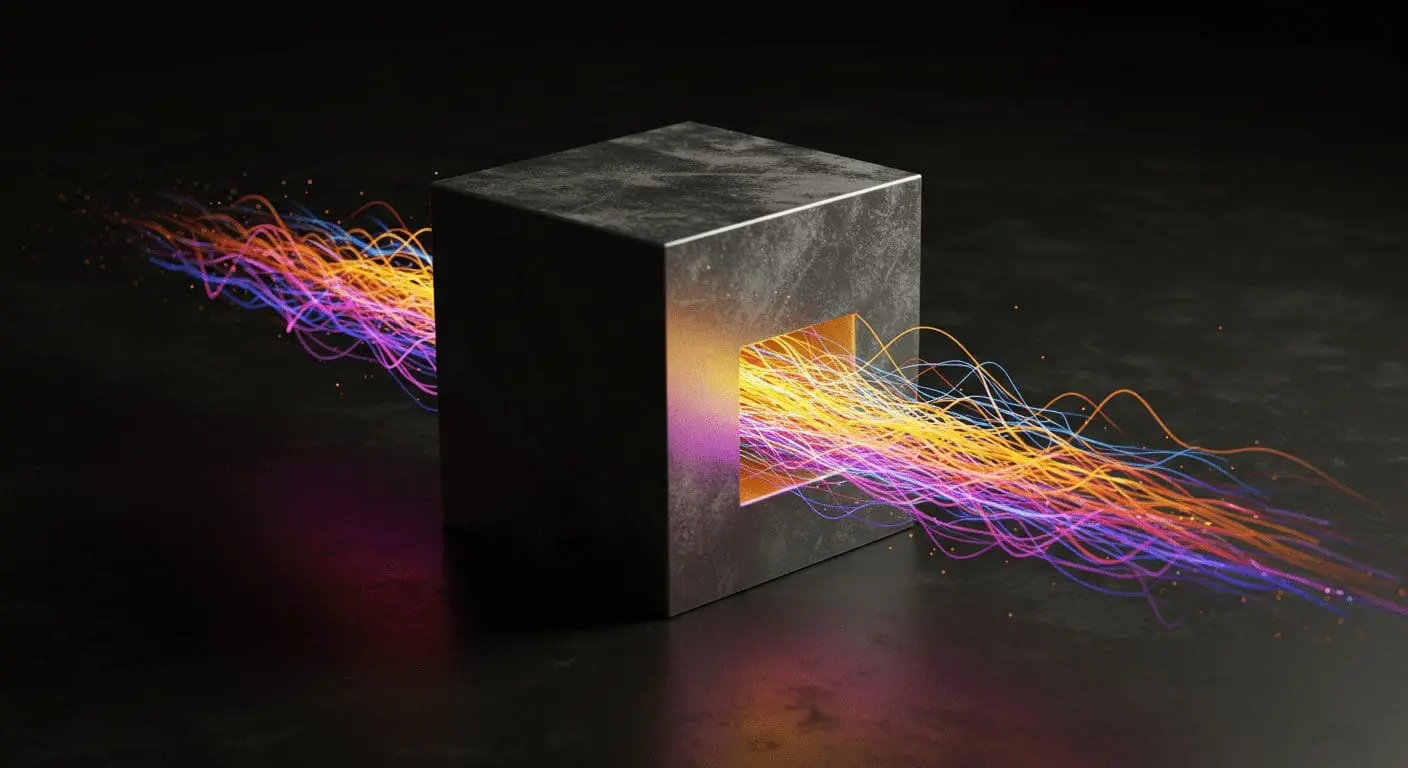
USC researchers have developed a novel optical filter capable of isolating and preserving quantum entanglement with high precision, marking a significant advancement in quantum technology. The study, conducted by professors Mercedeh Khajavikhan and Demetri Christodoulides at the USC Viterbi Ming Hsieh Department of Electrical and Computer Engineering and School of Advanced Computing, along with graduate student Mahmoud A. Selim, introduces an innovative approach using anti-parity-time (APT) symmetry to filter out noise and preserve entanglement in photonic systems.
This development, published in Science, demonstrates the potential for scalable, high-performance quantum photonic circuits, enabling more reliable quantum computing and communication network architectures. The filter’s ability to recover entangled states with over 99% fidelity represents a critical step toward overcoming the fragility of quantum entanglement, a phenomenon essential for advancing quantum technologies.
USC Researchers Develop First-Ever Quantum Filter
USC researchers have developed a novel quantum entanglement filter, marking a significant advancement in optical filtering for quantum technologies. This first-ever achievement enables the isolation of entangled states with unprecedented precision, addressing a critical challenge in maintaining quantum coherence.
Quantum entanglement, a phenomenon where particles become interconnected regardless of distance, is fundamental to quantum computing, communication, and sensing. However, its fragility makes it susceptible to disruption by environmental noise, necessitating innovative solutions to preserve these delicate states.
The USC filter employs anti-parity-time (APT) symmetry, contrasting with traditional systems that avoid loss. This mechanism allows the filter to strip away unwanted components, effectively preserving entangled states by focusing on their essential characteristics.
Experimental validation involved testing with single photons and entangled pairs, utilizing quantum tomography to measure results. The outcomes demonstrated high fidelity, confirming the filter’s effectiveness in maintaining entanglement under various conditions.
This breakthrough holds profound implications for scalable and reliable quantum technologies. By enhancing the ability to isolate and maintain entangled states, the USC quantum entanglement filter paves the way for advancements in computing, communication, and sensing, potentially revolutionizing these fields with more robust and efficient systems.
Understanding Quantum Entanglement
Quantum entanglement is a phenomenon in which particles become interconnected so that the state of one particle instantaneously influences the state of another, regardless of the distance separating them. This fundamental aspect of quantum mechanics is crucial for various applications, including quantum computing, communication, and sensing.
However, maintaining entangled states in noisy environments presents significant challenges. The fragility of entanglement requires innovative solutions to preserve these delicate connections and ensure reliable performance in real-world applications.
Overcoming Fragility with Anti-Parity-Time Symmetry
The USC quantum entanglement filter addresses the challenge of maintaining entangled states by employing anti-parity-time (APT) symmetry. This approach contrasts with traditional methods that typically avoid loss, but instead, it enhances signal clarity and preserves essential characteristics of entanglement.
By exploiting APT symmetry, the filter effectively removes unwanted components while preserving the coherence of entangled states. This method provides a reliable way to maintain quantum entanglement in noisy environments, offering practical solutions for advancing quantum technologies.
Experimental Validation
The effectiveness of the USC quantum entanglement filter was demonstrated through experimental validation involving both single photons and entangled pairs. The setup leveraged a specific configuration of optical elements designed to exploit APT symmetry, ensuring minimal error rates compared to conventional methods.
Quantum tomography was used to measure fidelity, with results demonstrating high coherence maintenance under various conditions. These findings confirm the filter’s effectiveness in preserving entanglement despite external disturbances, highlighting its potential for enhancing quantum communication and sensing applications.
The successful implementation of the USC quantum entanglement filter opens new possibilities for advancing quantum technologies. By providing a reliable method to preserve entanglement, the APT-based approach could significantly enhance the performance of quantum communication systems and improve the accuracy of quantum sensing applications.
This development underscores the potential of anti-parity-time symmetry as a transformative tool in quantum optics. It offers practical solutions to challenges in maintaining entangled states for real-world applications.
More information
External Link: Click Here For More