Every day, humans make many decisions, from trivial choices like selecting a restaurant to life-altering ones such as pursuing a new career or relocating. The brain’s ability to gauge risk and reward in these decisions remains an enigma for scientists. However, recent research published in Nature offers intriguing insights into this complex process.
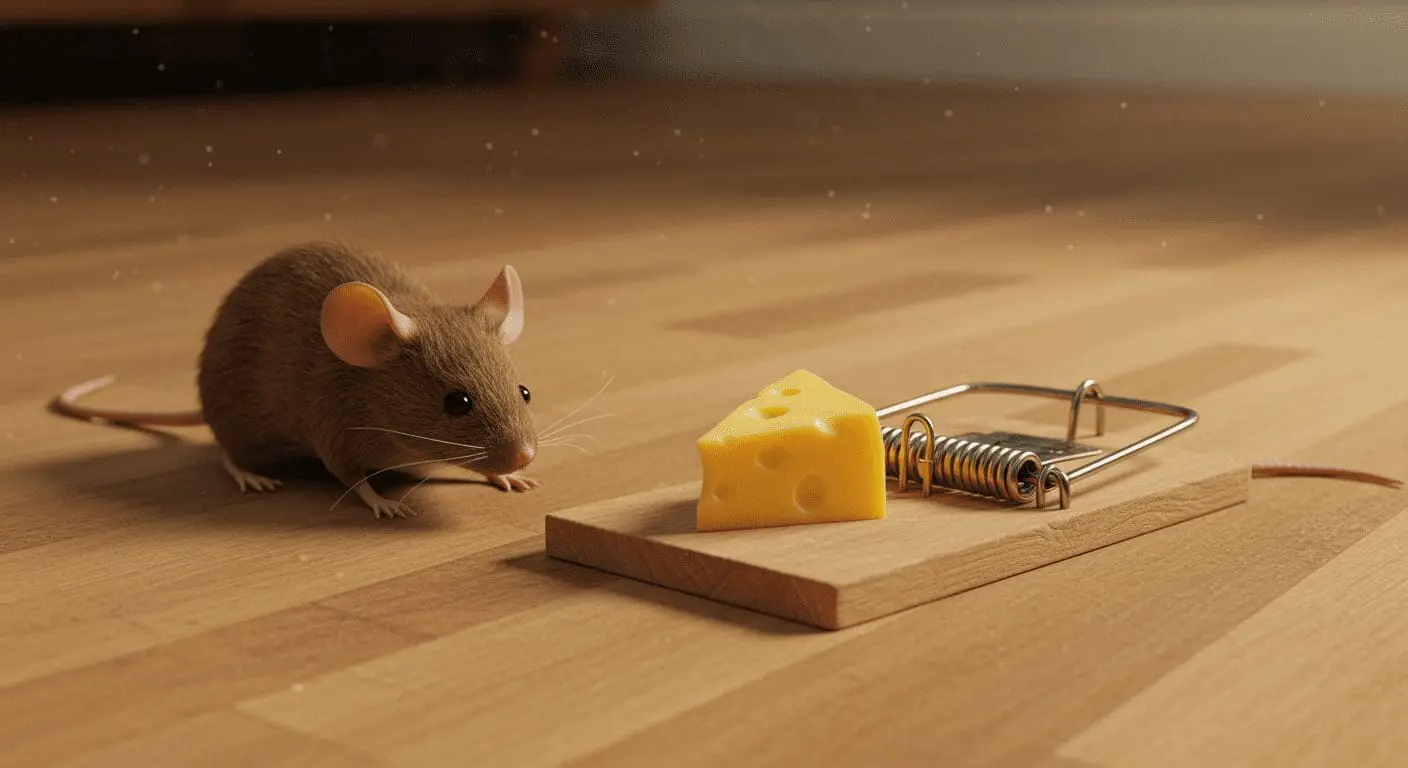
A team of researchers from Harvard Medical School and Harvard University employed machine-learning concepts in mouse experiments to study the brain circuitry that supports reward-based decision-making. Their findings suggest that mice, like humans, have a more nuanced understanding of risk and reward than previously thought. The scientists identified two groups of brain cells in mice: one associated with above-average outcomes and another linked to below-average ones.
The researchers found that these cells allow the brain to gauge the full range of potential rewards associated with a choice. This discovery could provide a framework for understanding human decision-making and the impact of reward circuitry failures on the ability to judge risk and reward.
The study, titled “An opponent striatal circuit for distributional reinforcement learning,” was authored by Jan Drugowitsch, Naoshige Uchida, Adam Lowet, Qiao Zheng, Melissa Meng, and Sara Matias. It was funded by the National Institutes of Health, the Human Frontier Science Program, the Harvard Brain Science Initiative, and the Brain & Behavior Research Foundation. The research offers a promising avenue for further exploration into human decision-making and the assessment of risk in choices.
Machine Learning and Reward-Based Decisions
Neuroscientists have traditionally struggled to explain how the brain uses past experiences to make new decisions, particularly when it comes to balancing risk and reward. However, a new study incorporates machine learning concepts into mouse experiments to shed light on the brain circuitry that supports reward-based decisions.
The research, published in Nature, reveals two groups of brain cells in mice: one that helps mice learn about above-average outcomes and another associated with below-average outcomes. Together, these cells allow the brain to gauge the full range of possible rewards associated with a choice.
The Ventral Striatum: A Key Player
The researchers focused on the ventral striatum, a brain region that stores information about potential rewards associated with a decision. By training mice to associate different odors with rewards of varying magnitudes and observing their licking behavior while recording neural activity in the ventral striatum, the team identified two distinct groups of neurons: one for better-than-expected outcomes and another for worse-than-expected outcomes.
While more research is needed to confirm these findings in humans and adapt them to the complexity of human decision-making, the parallels between mouse and human brains suggest that this work may already shed some light on how humans assess risk in decisions. This could help explain why people with certain conditions such as depression or addiction may struggle with such assessments.
External Link: Click Here For More