

The efficient selection of specialised modules for artificial intelligence tasks remains a key challenge, particularly when privacy is paramount. William Fleshman and Benjamin Van Durme, from Johns Hopkins University, address this problem with a new approach to ‘LoRA routing’, a technique for quickly choosing the best module for a given input. Their work introduces SEQR, an algorithm that identifies the most appropriate module by analysing internal activity patterns, rather than relying on labelled training data. This unsupervised method not only improves performance across multiple tasks, but also offers a scalable and secure solution for composing adaptable AI systems, representing a significant step towards more flexible and privacy-preserving artificial intelligence.
Researchers are addressing growing privacy concerns surrounding large language models with a new approach to efficiently selecting the most appropriate low-rank adaptation (LoRA) module for a given input. Building on previous work, they formalized unsupervised LoRA routing as maximizing activation norms, establishing a theoretical framework for analysis and improvement. The team demonstrates that activation norms effectively distinguish between relevant and irrelevant information, providing a reliable signal for routing decisions. They introduce SEQR, an unsupervised LoRA routing algorithm designed to maximize efficiency while guaranteeing selection of the best adapter.
Efficient LoRA Routing via Activation Norms
This study pioneers a novel approach to efficiently selecting the most appropriate low-rank adaptation (LoRA) module for a given input, termed Secure and Efficient QR (SEQR) routing. Researchers formalized unsupervised LoRA routing as maximizing activation norms, providing a theoretical foundation for understanding how these systems operate and improving their performance. This work leverages the principle that in-distribution data consistently produces larger activation spikes within neural networks, providing a reliable signal for routing decisions. To enhance efficiency, the team employed a mathematical transformation to simplify each LoRA adapter, represented as a product of matrices.
This transformation allows SEQR to focus on smaller matrices, significantly reducing computational demands during inference. Building on existing routing techniques, SEQR provably identifies the norm-maximizing adapter with greater efficiency. Furthermore, the study introduces a method for converting each adapter into a streamlined form, maintaining its original functionality while simplifying the routing process. This conversion allows for a generalized scoring method, enabling the system to quickly assess the suitability of each adapter based on its activation norm. Experiments demonstrate that this approach not only improves multi-task performance but also provides strict routing guarantees, crucial for applications with stringent security and privacy requirements.
Activation Norms Efficiently Route Low-Rank Adaptations
Scientists have developed a new method, SEQR, for efficiently selecting the most appropriate low-rank adaptation (LoRA) module from a collection of specialized modules, each trained on different datasets. This work formalizes unsupervised LoRA routing as maximizing activation norms, providing a theoretical foundation for understanding how these systems operate and improving their performance. The team demonstrated that measuring the norm, or magnitude, of activation vectors within a language model effectively identifies the LoRA best suited for a given input, without requiring any additional training of a routing mechanism. Experiments reveal that SEQR provably identifies the LoRA that maximizes this activation norm with greater efficiency than existing approaches.
This is achieved by leveraging a mathematical decomposition of LoRA matrices, allowing the system to route inputs using smaller, more manageable matrices, significantly reducing computational cost. The research demonstrates a practical solution for dynamic LoRA composition, enabling the creation of adaptable language models that can seamlessly switch between specialized knowledge bases. The team’s analysis establishes a clear connection between activation norms and the problem of identifying inputs similar to the data used to train a specific LoRA. By maximizing the activation norm, SEQR effectively determines which LoRA was trained on data most relevant to the current input.
Efficient Unsupervised LoRA Routing with SEQR
The team introduced SEQR, a new unsupervised LoRA routing algorithm, achieving a significant advancement in parameter-efficient fine-tuning techniques. Researchers formalized the goal of unsupervised LoRA routing by framing it as an activation norm-maximization problem, providing a theoretical foundation for evaluating existing methods and guiding the development of SEQR. Results demonstrate that algorithms guaranteeing selection of the norm-maximizing adapter consistently achieve improved multi-task performance, a characteristic that SEQR demonstrably possesses. Notably, SEQR achieves this performance with significantly greater efficiency than alternative approaches, representing a substantial step forward in scalability for dynamic LoRA composition.
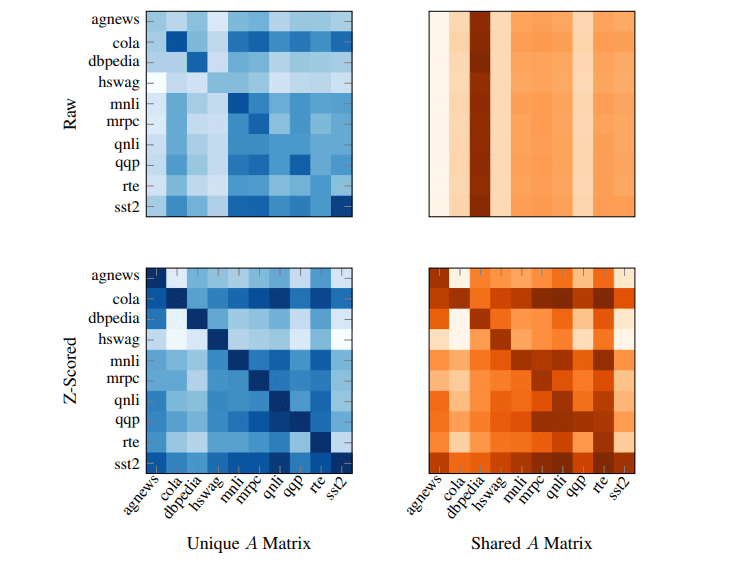
The algorithm leverages the finding that comparable performance can be achieved using LoRAs with shared, frozen matrices, a result validated empirically by the researchers. An offline calibration step addressed variance in activation norms resulting from shared matrices, further enhancing performance for both SEQR and a related method. This work maintains the security benefits of unsupervised methods, preventing data leakage without requiring access to the LoRA weights themselves.
👉 More information
🗞 SEQR: Secure and Efficient QR-based LoRA Routing
🧠 ArXiv: https://arxiv.org/abs/2509.18093


