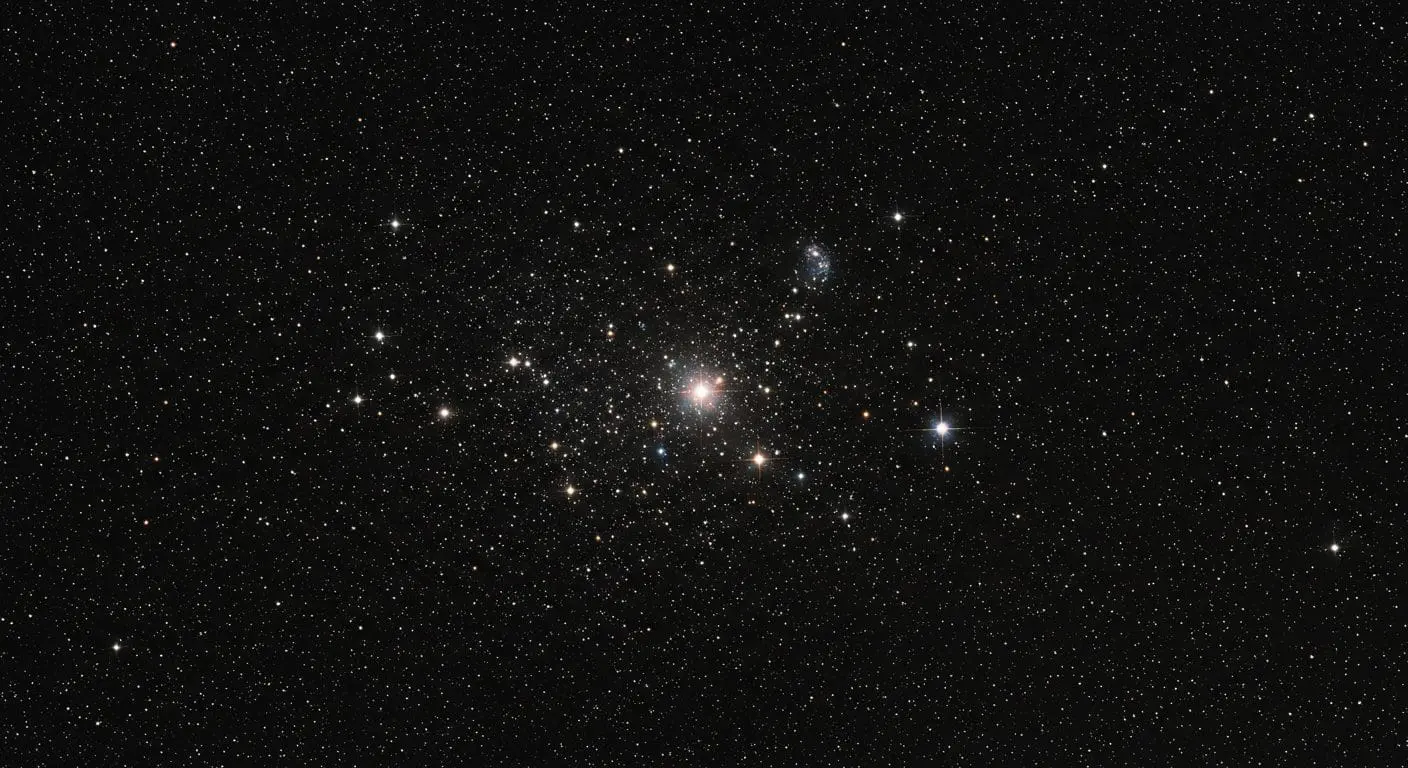
In their paper titled Population Models for Star Formation Timescales in Early Galaxies: The First Step Towards Solving Outshining in Star Formation History Inference, published on April 21, 2025, researchers propose a novel approach to address the outshining challenge in early galaxy studies using data from the James Webb Space Telescope.
The study investigates galaxies in the early universe with enhanced star formation variability, highlighting challenges in modeling due to outshining effects. Current methods struggle to capture short-term fluctuations and often underestimate galaxy masses and star formation rates in bursty systems. However, incorporating priors that account for burstiness improves accuracy, reducing biases in mass and SFR estimates. The research introduces a population-level approach to measure recent star formation histories empirically, offering a promising solution to outshining by accurately recovering key parameters like amplitude, timescale, and slope of galaxy activity. This method leverages observations from the Hubble/UV range and demonstrates high accuracy in statistical modeling.
The James Webb Space Telescope (JWST) has ushered in a new era of understanding our universe, particularly in the realm of galaxy formation. This groundbreaking observatory has provided unprecedented insights into the cosmos, rewriting the narrative of how celestial structures evolve over time.
One of JWST’s most significant contributions is its
One of JWST’s most significant contributions is its ability to observe high-redshift galaxies, offering a glimpse into the early universe. These galaxies, seen as they were billions of years ago, reveal that galaxy formation was a dynamic and complex process. By capturing their light, astronomers trace their evolution back to the dawn of the cosmos, shedding light on the conditions that shaped these ancient structures.
JWST has revolutionized our ability to measure star formation rates in distant galaxies with remarkable precision. This advancement allows scientists to understand how stars are born and evolve within these galaxies. By studying stellar birthrates, researchers gain insights into the processes that drive galaxy growth over billions of years, from the formation of young stars to the evolution of galactic ecosystems.
Research using JWST data has deepened our understanding of dark matter’s role in galaxy evolution. This enigmatic substance acts as a cosmic scaffold, influencing galaxy structure and dynamics. By studying its distribution, astronomers uncover how dark matter shapes galaxies, from their rotation curves to the formation of large-scale structures.
The analysis of stellar populations through JWST reveals their profound impact on galaxy structure. Different types of stars contribute uniquely to the evolution of galaxies, influencing everything from their shape to their chemical composition. For instance, massive stars drive galactic winds, while older stars enrich the interstellar medium with heavy elements, shaping the galaxies’ chemical evolution.
JWST’s findings collectively help map the cosmic timeline of galaxy assembly
JWST’s findings collectively help map the cosmic timeline of galaxy assembly. By piecing together observations of early galaxies, star formation rates, dark matter distribution, and stellar populations, astronomers construct a comprehensive history of how galaxies have evolved over time. This timeline provides a roadmap for understanding the universe’s development, from its infancy to the present day.
The James Webb Space Telescope has undeniably transformed astrophysics, providing critical insights into galaxy evolution. Its contributions not only enhance our understanding of the universe’s past but also pave the way for future discoveries. As JWST continues its mission, it ensures that it remains a cornerstone of astronomical research, inspiring new generations of scientists and fostering a deeper appreciation for the wonders of the cosmos.
🗞 Population Models for Star Formation Timescales in Early Galaxies: The First Step Towards Solving Outshining in Star Formation History Inference
🧠 DOI: https://doi.org/10.48550/arXiv.2504.15255