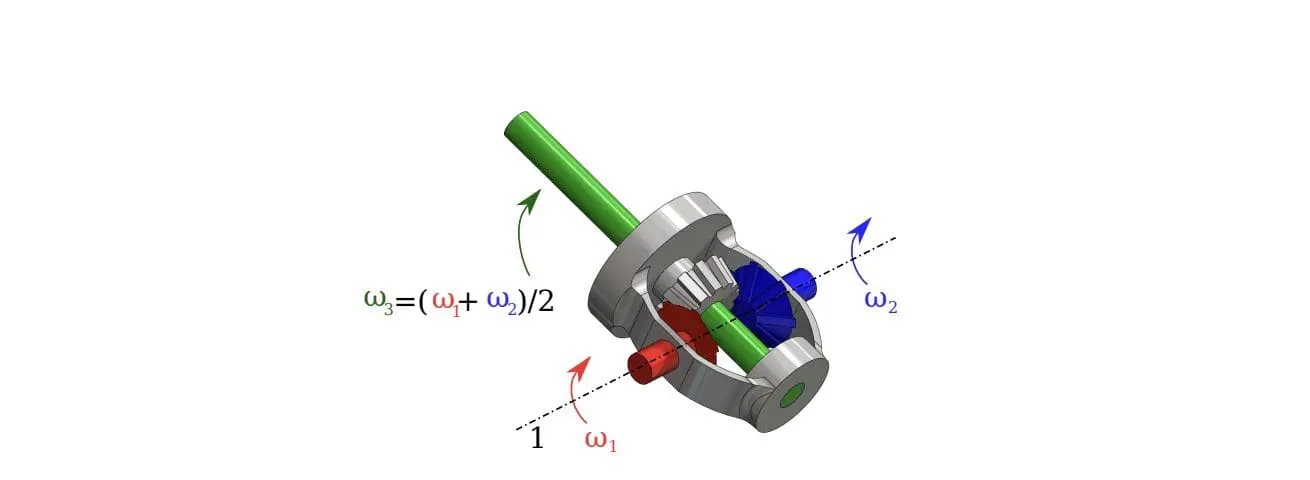
Designing large interacting quantum systems is a significant challenge in the field of gate-model quantum computing. The article discusses the similarities between modern superconducting qubits and mechanical mass-spring systems, with the aim of gaining a better understanding of each design. The author, Trevor McCourt, examines superconducting qubits that are inherently protected from noise and links this protection to features of the corresponding mechanical system. The goal is to use the insights gained from these mechanical systems to intuitively design effective superconducting circuits in the future. The article also explores the role of the Josephson Junction in superconducting qubits.
What is the Challenge in Designing Large Interacting Quantum Systems?
The engineering of large interacting quantum systems is a significant challenge in realizing the potential of gate-model quantum computing. The dynamics of continuous variable quantum systems are generally unintuitive, and brute-force numerical solutions are difficult to impossible in more than a few dimensions. This article discusses the analogies between modern superconducting qubits and mechanical mass-spring systems to gain a simple intuition for what makes each design special. The author, Trevor McCourt, analyzes superconducting qubits that are inherently protected from noise and connects this protection to features of the corresponding mechanical system. The hope is that intuition gained from analyzing these systems mechanically will allow for intuitive design of useful superconducting circuits in the future.
How Does Quantum Mechanics Predict the Physical World?
Quantum mechanics most accurately predicts how the physical world behaves on the smallest scales. For example, cutting-edge quantum electrodynamics calculations of the fine structure constant, which governs the strength of interaction between fundamental charged particles, agree with experimental measurements to less than a part-per-billion. It is therefore desirable to develop improved tools for studying its implications. While computing technology based on the logical bit has undoubtedly improved life over the last century, it is hopelessly inefficient at simulating generic quantum mechanical systems and therefore the natural world. This motivates the development of a qubit, an abstract two-level quantum system that is completely controllable and behaves perfectly unitarily. A large system of interacting qubits could be used to efficiently emulate some natural system of interest. This was the founding premise of quantum computing.
What are the Challenges in Realizing Qubits?
Realizing such qubits is extremely challenging. Any quantum system that can actually be built in a lab generally does not behave like a perfect qubit and cannot be controlled perfectly. Real qubits couple to the surrounding environment which is uncontrolled, leading to a loss of control over the qubit state. The solution to this is quantum error correction, which generally attempts to encode imperfect qubits in physical qubits. However, the number of physical qubits required per logical qubit and therefore the engineering burden of building a system based on quantum error correction tends to grow rapidly as physical qubit quality decreases. Therefore, it is desirable to make physical qubits as good as possible before attempting to build an error correction system around them. This generally involves trying to encode qubits in so-called decoherence-free subspaces of physical systems, which are parts of a physical system that do not easily couple to their surroundings.
How are Physical Qubits Realized?
Physical qubits can be realized using a number of different quantum systems such as trapped ions, neutral atoms, photons, spins, and superconducting electric circuits. Each has its merits. In particular, atomic qubits generally take advantage of selection rules between electronic states to encode qubits in states that couple very weakly to the environment. Atomic qubits can stay decoupled from the environment (coherent) for seconds at a time. The story is similar for photonic qubits. The tradeoff is that these states are fundamentally equally hard to influence via external controls, meaning that logical operation times tend to scale with coherence time. There is no free lunch to be had from systems given to us by nature. Engineering quantum systems from the ground up presents a possible escape from this proportionality. In essence, if we are the designers of a quantum system, we may build in a back door inaccessible to simple natural forces that allows us to rapidly modify the system state while it remains protected from noise. This is one of the general goals of modern superconducting qubit design, which will be the topic of this work.
What is the Role of the Josephson Junction in Superconducting Qubits?
Superconducting qubits are based on the Josephson Junction, which is a nonlinear electric circuit element with the constitutive current-voltage relation. The Hamiltonian for a junction characterized by its Josephson energy shunted by a capacitance is therefore similar to the Hamiltonian for the traditional harmonic oscillator with the harmonic potential replaced by the cosine potential. The harmonic oscillator has equally spaced energy levels and therefore does not straightforwardly implement a qubit as the energy levels are not uniquely addressable. The cosine potential breaks this equal spacing and, for example, the lowest two levels of such a circuit may be used to encode a qubit. This is the operating principle of the cooper-pair box, the first superconducting qubit to be realized. Modern superconducting qubits involve more complicated circuits. This is the circuit of the 0 π-qubit, a type of protected qubit. This circuit has 4 total nodes which implies 3 degrees of freedom. Therefore, exactly finding its energy levels will correspond to solving a continuous variable Schrodinger equation in three dimensions.
Publication Date: 2024-03-05
Authors: Trevor McCourt
Source: arXiv (Cornell University)
DOI: https://doi.org/10.48550/arxiv.2403.03451