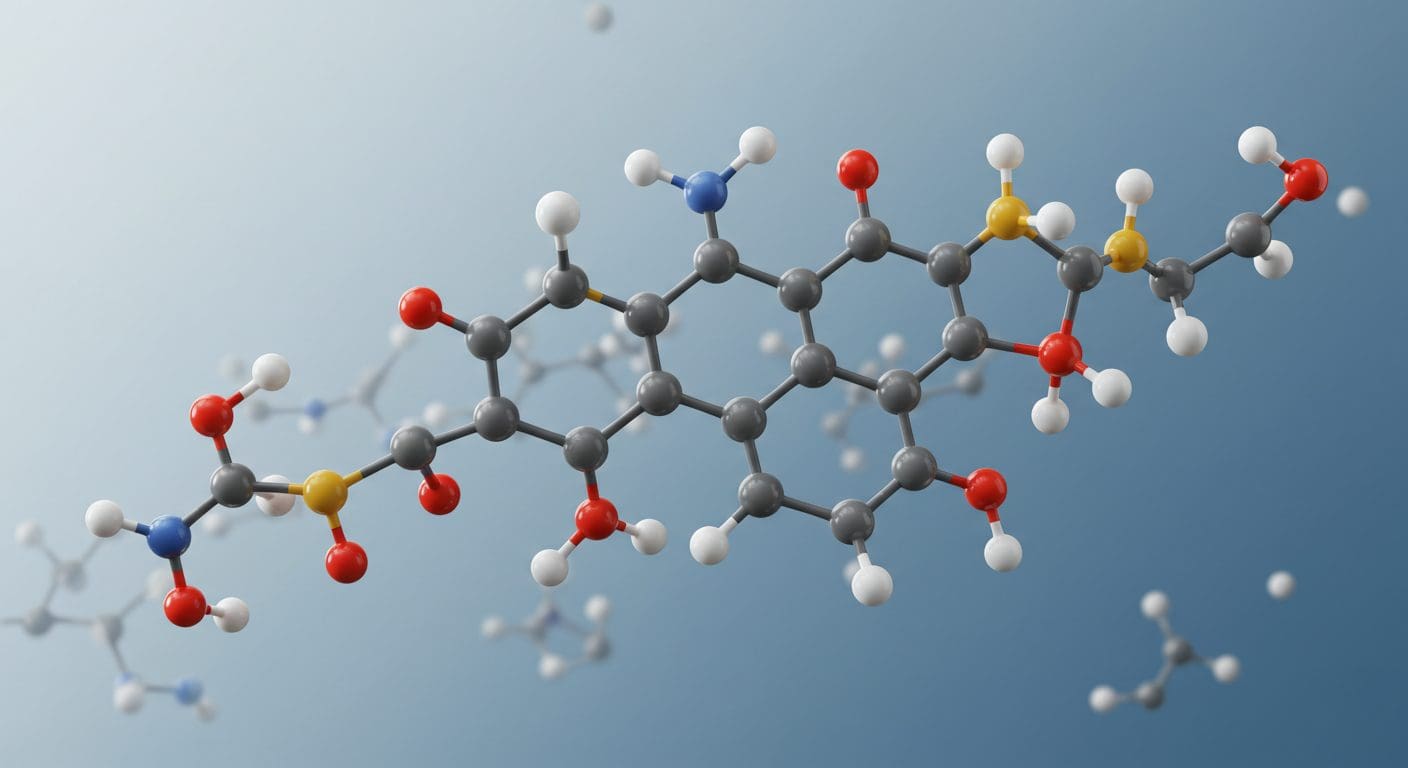
The complex interplay between nitrous oxide and unsaturated hydrocarbons receives increasing scrutiny due to its relevance to advanced propulsion systems, combustion processes, and atmospheric pollution, and a team led by Hongqing Wu, Guojie Liang and Tianzhou Jiang from The Hong Kong Polytechnic University, alongside Rongpei Jiang from the Research Institute for Smart Energy, now sheds new light on these interactions. Their research addresses existing discrepancies between predicted and observed combustion behaviour at low temperatures by identifying previously unknown reaction pathways. The team demonstrates that nitrous oxide directly interacts with hydrocarbons like ethylene, propylene, acetylene, and butadiene via a unique mechanism involving five-membered ring intermediates, differing between alkenes and alkynes due to subtle variations in bond lengths. By incorporating these newly determined reactions into comprehensive kinetic models, the researchers achieve significantly improved accuracy in predicting autoignition and reveal a promoting effect on overall reactivity, offering a more complete understanding of both combustion and atmospheric chemistry.
N2O Oxidation of Unsaturated Hydrocarbons Studied
This research investigates how nitrous oxide (N₂O) interacts with unsaturated hydrocarbons, compounds containing multiple bonds, to improve the accuracy of combustion models, particularly for alternative fuels and environmentally friendly propellants. Understanding these interactions is crucial for predicting how fuels burn and reducing harmful emissions. Current models often lack detailed information about these reactions, leading to inaccuracies. The team employed advanced computational techniques and kinetic modeling to address this gap. Researchers performed detailed quantum chemical calculations to determine the energies and pathways of key reactions involving N₂O and unsaturated hydrocarbons.
These calculations revealed how molecules interact and transform during combustion. They then used the Master Equation Method to account for the complex interplay of reactions occurring simultaneously, allowing them to calculate the rates at which these reactions proceed. A sensitivity analysis identified the most important reactions influencing the overall oxidation process, enabling researchers to focus on the critical steps. The study provides detailed reaction mechanisms for N₂O oxidation of unsaturated hydrocarbons, identifying key intermediate molecules and transition states. The research highlights the importance of initial hydrogen atom abstraction by nitrogen dioxide as a crucial step in initiating the oxidation process.
The degree of unsaturation, whether the hydrocarbon is an alkyne, diene, or triene, significantly influences the reaction pathways and rates. By incorporating the calculated rate constants into existing kinetic models, researchers achieved improved predictions of ignition delay times and flame speeds. This research provides valuable data for developing more accurate combustion models, leading to better predictions of engine performance, emissions, and safety. The findings are relevant to the development of environmentally friendly propellants based on N₂O and unsaturated hydrocarbons. The study also contributes to a better understanding of the combustion chemistry of alternative fuels, paving the way for more sustainable energy solutions.
Nitrous Oxide Reactions with Unsaturated Hydrocarbons
Researchers have uncovered previously unknown direct interactions between nitrous oxide and unsaturated hydrocarbons, specifically ethylene, propylene, acetylene, and allene, revealing crucial details about combustion and atmospheric chemistry. This work establishes, for the first time, the pathways and rate parameters governing these interactions, filling a significant gap in existing chemical models. Experiments and detailed calculations demonstrate that N₂O reacts with these unsaturated hydrocarbons via a unique mechanism involving the addition of an oxygen atom to the double bond, forming five-membered ring intermediates that subsequently decompose into nitrogen and hydrocarbon-specific products. The team discovered distinct mechanistic differences between alkenes and alkynes, stemming from variations in bond lengths within the intermediate structures.
Shorter bonds in alkynes require more energy to break, leading to a stepwise decomposition process compared to the simultaneous bond breaking observed in alkenes. Using sophisticated computational methods, including high-level quantum chemical calculations and hindered rotor treatments, researchers determined the rate coefficients for these reactions across a wide temperature range of 298 to 2000 Kelvin. These newly calculated rate coefficients were then integrated into four widely used kinetic models to assess their impact on predicting autoignition behavior. Results demonstrate that incorporating these direct interaction pathways significantly improves the accuracy of predicting ignition delay times, particularly at lower temperatures where discrepancies were previously observed. Flux analysis reveals that these new pathways suppress inhibiting reactions while simultaneously promoting pathways that form aldehydes and ketones, ultimately enhancing overall reactivity. This breakthrough delivers a more complete and accurate description of N₂O and unsaturated hydrocarbon interactions, advancing predictive capabilities for both combustion engine design and atmospheric chemistry modeling, with implications for understanding pollutant formation and climate change.
Nitrous Oxide Reactions with Unsaturated Hydrocarbons
Researchers have detailed previously uncharacterized chemical interactions between nitrous oxide and unsaturated hydrocarbons, specifically alkenes and alkynes. The study identifies direct reaction pathways involving the addition of an oxygen atom from nitrous oxide to these hydrocarbons, forming five-membered ring intermediates that ultimately decompose into nitrogen and hydrocarbon-specific products. A key finding is the mechanistic difference between alkenes and alkynes, stemming from variations in the length of the nitrogen-carbon bond within the intermediate structures; shorter bonds in alkynes require more energy to break, leading to a stepwise decomposition process compared to the simultaneous bond breaking observed in alkenes. The team determined rate coefficients for these reactions and incorporated them into kinetic models, demonstrating improved agreement between simulations and experimental data, particularly at lower temperatures. Analysis reveals these new pathways enhance overall reactivity by suppressing inhibiting channels and promoting the formation of aldehydes and ketones. This work provides a more complete understanding of nitrous oxide and hydrocarbon interactions, advancing predictive capabilities for both combustion and atmospheric chemistry.
Nitrous Oxide Reactions with Unsaturated Hydrocarbons
Researchers meticulously investigated the interaction between nitrous oxide and unsaturated hydrocarbons, ethylene, propylene, acetylene, and butyne, to understand their roles in propulsion systems, combustion processes, and atmospheric chemistry. Discrepancies between experimental measurements and model predictions at low temperatures motivated this detailed study of direct interaction pathways. The team employed a multi-faceted approach, combining high-level computational chemistry, kinetic modeling, and experimental validation to characterize these reactions. Scientists performed extensive calculations of potential energy surfaces using advanced computational methods to map the energy landscape of each reaction.
This involved determining the geometries, vibrational frequencies, and energies of all species involved, reactants, products, intermediates, and transition states, ensuring the lowest energy structures were identified. Intrinsic reaction coordinate calculations then verified that transition states connected the correct reactants and products, confirming the reaction pathways. Researchers accounted for molecular flexibility by treating low-frequency motions as hindered rotors, refining the accuracy of energy calculations. The team calculated rate coefficients for each reaction using sophisticated software that solves the Master Equation.
This involved solving complex equations based on the chemically significant eigenstate approach, incorporating hindered rotor potentials to accurately represent molecular motion. Quantum mechanical tunneling corrections were applied to obtain rate coefficients over a wide temperature range, from 298 to 2000 Kelvin. These rate coefficients were then fitted to a modified Arrhenius equation, providing a convenient form for implementation into kinetic models. Kinetic modeling was conducted using a fast solver, allowing for a comprehensive evaluation of the improved model accuracy.
👉 More information
🗞 Unravelling the unique kinetic interactions between N2O and unsaturated hydrocarbons
🧠 ArXiv: https://arxiv.org/abs/2509.02251